


No products in the cart.
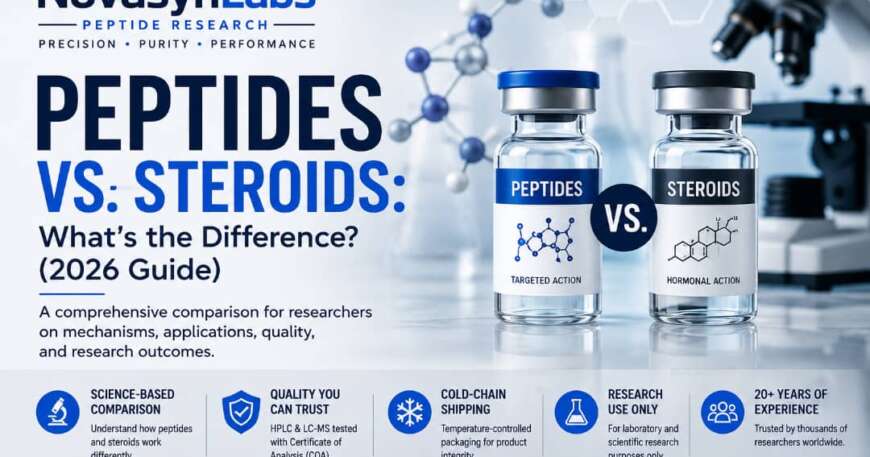
Peptides Vs Steroids: What’s the Difference? (2026 Guide)
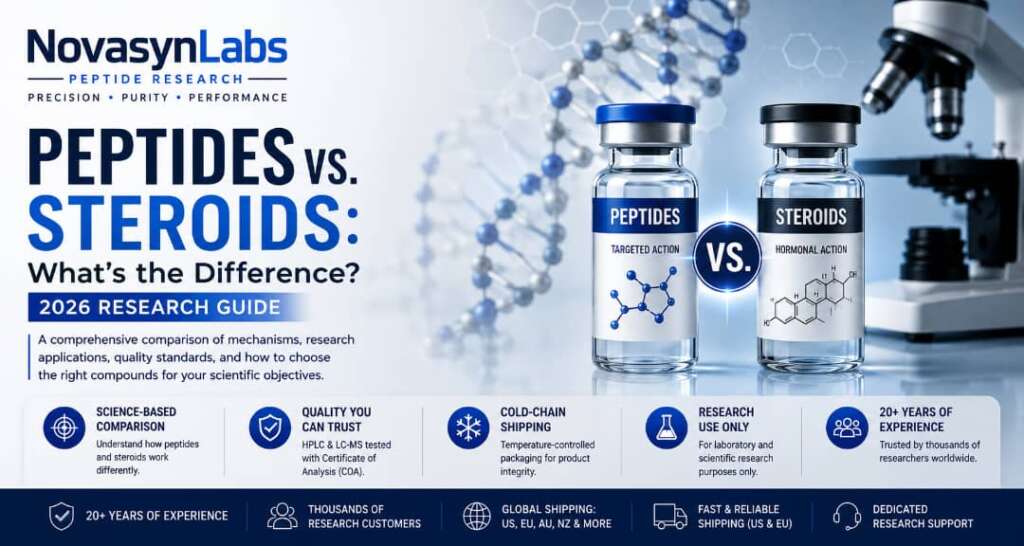
Table of Contents
Peptides vs. Steroids: What’s the Difference? (2026 Guide)
The debate surrounding peptides vs. steroids has become increasingly common as scientific interest in muscle physiology, metabolism, recovery biology, and endocrinology continues to expand. Despite this growing interest, one of the biggest misconceptions is that peptides and anabolic steroids are the same—or that they work in similar ways. In reality, they are fundamentally different classes of compounds with distinct molecular structures, biological targets, and research applications.
Peptides are short chains of amino acids that researchers investigate because they interact with specific receptors and signaling pathways throughout the body. Steroids, by contrast, are cholesterol-derived hormone compounds that primarily interact with intracellular hormone receptors, influencing gene expression and broader endocrine responses.
Understanding these differences is essential for researchers designing laboratory studies. Selecting the wrong compound—or applying research methods developed for one class of compounds to another—can reduce experimental consistency and make biological findings more difficult to interpret.
At NovaSynLabs, we have spent more than 20 years supplying research peptides to thousands of research customers across the United States, Europe, Australia, and New Zealand. Throughout that time, we’ve worked with universities, biotechnology laboratories, and independent researchers who rely on verified research materials, responsive technical support, and consistent product quality. Our high repeat-customer rate reflects our commitment to analytical verification, cold-chain shipping, and helping researchers choose compounds based on sound scientific objectives rather than common misconceptions.
In this comprehensive guide, we’ll explain the differences between peptides vs. steroids, compare how they work, discuss their respective research applications, examine common myths, review quality-control standards, and provide practical guidance for selecting research compounds that align with specific biological objectives.
Research Use Only: All compounds discussed in this article are intended solely for laboratory and scientific research. They are not approved for human consumption, therapeutic use, or performance enhancement.
Quick Takeaways
- Peptides and steroids are not the same. They differ in molecular structure, biological targets, and research applications.
- Peptides are short amino acid chains commonly investigated for specific signaling pathways.
- Steroids are cholesterol-derived hormone compounds that primarily influence androgen or other hormone receptors.
- Many research peptides are studied for growth hormone biology, metabolism, tissue repair, recovery, and body composition.
- Research quality depends on HPLC testing, LC-MS verification, Certificates of Analysis (COAs), proper storage, and standardized laboratory protocols.
- Researchers should select compounds based on scientific objectives rather than popularity or price.
What Are Peptides?
Peptides are short chains of amino acids linked together by peptide bonds. Because amino acids are the building blocks of proteins, peptides serve as important biological messengers that participate in numerous cellular communication pathways.
Researchers investigate peptides because many interact with specific receptors or signaling mechanisms, allowing scientists to study targeted biological processes rather than broad hormonal systems. This specificity has made peptides valuable tools across disciplines such as endocrinology, metabolism, regenerative biology, sports science, and molecular medicine.
Unlike larger proteins, peptides generally consist of relatively small amino acid sequences, enabling researchers to examine well-defined biological pathways under controlled laboratory conditions.
Current peptide research commonly investigates:
- Growth hormone signaling
- Muscle physiology
- Protein synthesis
- Recovery biology
- Connective tissue physiology
- Fat metabolism
- Body composition
- Cellular communication
- Endocrine signaling
- Energy regulation
Examples of widely researched peptides include:
- CJC-1295
- Ipamorelin
- IGF-1 LR3
- BPC-157
- TB-500
- Semaglutide
- Retatrutide
Each of these compounds is investigated for different biological mechanisms, reinforcing why researchers should define their study objectives before selecting a peptide.
Common Areas of Peptide Research
Although peptides are often associated with bodybuilding discussions online, scientific research extends far beyond muscle physiology. Universities and laboratories investigate peptides across multiple disciplines to better understand complex biological systems.
Some of the most common research areas include:
| Research Area | Examples of Peptides Commonly Studied |
| Growth Hormone Biology | CJC-1295, Ipamorelin |
| Muscle Physiology | IGF-1 LR3 |
| Recovery Biology | BPC-157, TB-500 |
| Body Composition | Tesamorelin |
| Metabolic Research | Semaglutide, Retatrutide |
| Fat Metabolism | AOD-9604 |
| Cellular Signaling | Multiple research peptides |
This diversity illustrates why the term “research peptide” encompasses many different compounds with distinct biological roles.
What Are Steroids?
Steroids are a separate class of compounds characterized by a four-ring carbon structure derived from cholesterol. Within the body, naturally occurring steroid hormones play important roles in regulating growth, reproduction, metabolism, immune function, and numerous physiological processes.
In research, scientists often investigate anabolic steroids because of their interactions with androgen receptors, which can influence gene expression and hormone-regulated biological responses.
Unlike peptides, which generally target specific signaling pathways, steroids are commonly studied for their broader endocrine effects.
Research involving steroids frequently examines:
- Hormone biology
- Androgen receptor signaling
- Skeletal muscle physiology
- Bone metabolism
- Endocrine regulation
- Cellular adaptation
Although peptides and steroids may occasionally be discussed together in sports science literature, their biological mechanisms differ significantly.
Peptides vs. Steroids at a Glance
The table below summarizes some of the most important differences between peptides and steroids.
| Feature | Research Peptides | Steroids |
| Molecular Structure | Short amino acid chains | Cholesterol-derived compounds |
| Primary Biological Target | Specific receptors and signaling pathways | Hormone receptors, including androgen receptors |
| Main Research Focus | Targeted biological pathways | Hormonal and endocrine responses |
| Common Research Areas | Growth hormone biology, recovery, tissue biology | Hormone physiology, muscle biology, endocrinology |
| Examples | CJC-1295, Ipamorelin, IGF-1 LR3, BPC-157, Semaglutide | Testosterone and other anabolic steroid compounds |
| Laboratory Verification | HPLC, LC-MS, COA | Laboratory-specific analytical methods |
Why Understanding the Difference Matters
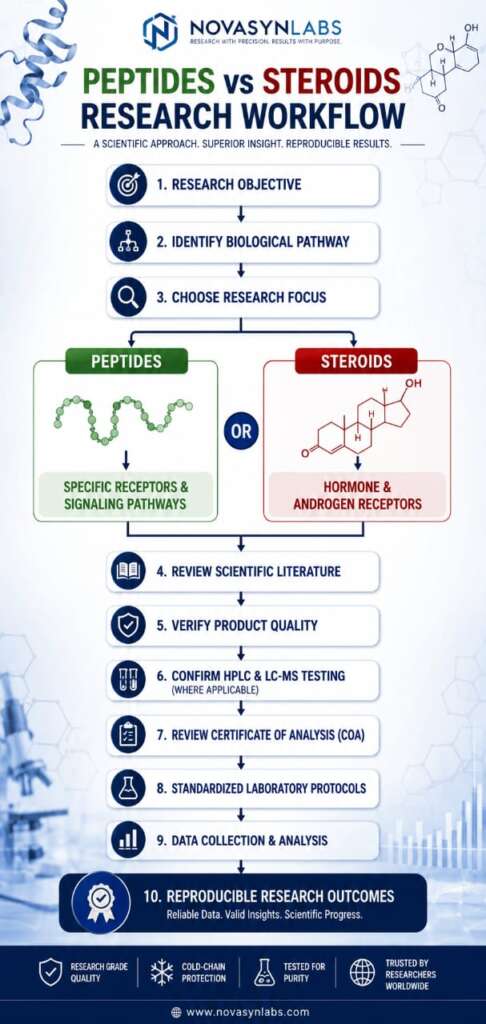
Choosing between peptides vs. steroids is not simply a matter of preference—it is a scientific decision based on the biological question being investigated.
Researchers studying growth hormone signaling, tissue repair, metabolism, or receptor-specific pathways often select peptides because these compounds enable focused investigations into defined molecular mechanisms.
Researchers investigating hormonal regulation or androgen receptor biology may instead design studies around steroid compounds that influence endocrine signaling.
Confusing these two categories can lead to inappropriate study designs, inconsistent endpoints, and findings that are difficult to interpret. As scientific literature continues to expand, selecting compounds according to their biological mechanisms rather than their popularity remains one of the most effective ways to improve research quality.
How Do Peptides Work?
To understand peptides vs. steroids, it’s important to first understand how peptides function at the molecular level.
Peptides are short chains of amino acids that often act as biological signaling molecules. Rather than broadly influencing hormone systems, many peptides interact with specific receptors located on the surface of target cells. When a peptide binds to its receptor, it can initiate a signaling cascade that regulates particular cellular processes.
Researchers investigate these signaling pathways to better understand biological functions such as:
- Growth hormone regulation
- Muscle physiology
- Tissue repair biology
- Connective tissue physiology
- Metabolic regulation
- Appetite signaling
- Fat metabolism
- Cellular communication
One reason peptides are widely studied is their ability to help researchers investigate specific biological mechanisms instead of broad endocrine responses.
For example:
CJC-1295 and Ipamorelin are commonly investigated in studies of growth hormone signaling.
IGF-1 LR3 is frequently researched for muscle physiology and protein synthesis pathways.
BPC-157 and TB-500 are commonly studied in recovery and connective tissue biology.
Semaglutide and Retatrutide are investigated in metabolic regulation and energy balance research.
Each compound targets different biological systems, reinforcing the importance of selecting a peptide that aligns with the research objective.
How Do Steroids Work?
Steroids operate through a different biological mechanism.
Unlike peptides, which generally bind to receptors on or near the cell surface, steroid molecules are able to pass through the cell membrane because of their chemical structure. Once inside the cell, they bind to intracellular receptors, such as androgen receptors, forming complexes that influence gene expression.
This mechanism enables researchers to investigate broader hormonal and endocrine responses, including:
- Hormone signaling
- Muscle physiology
- Bone metabolism
- Endocrine regulation
- Cellular adaptation
Because steroids act through hormone receptor pathways, their biological effects differ significantly from those of peptides.
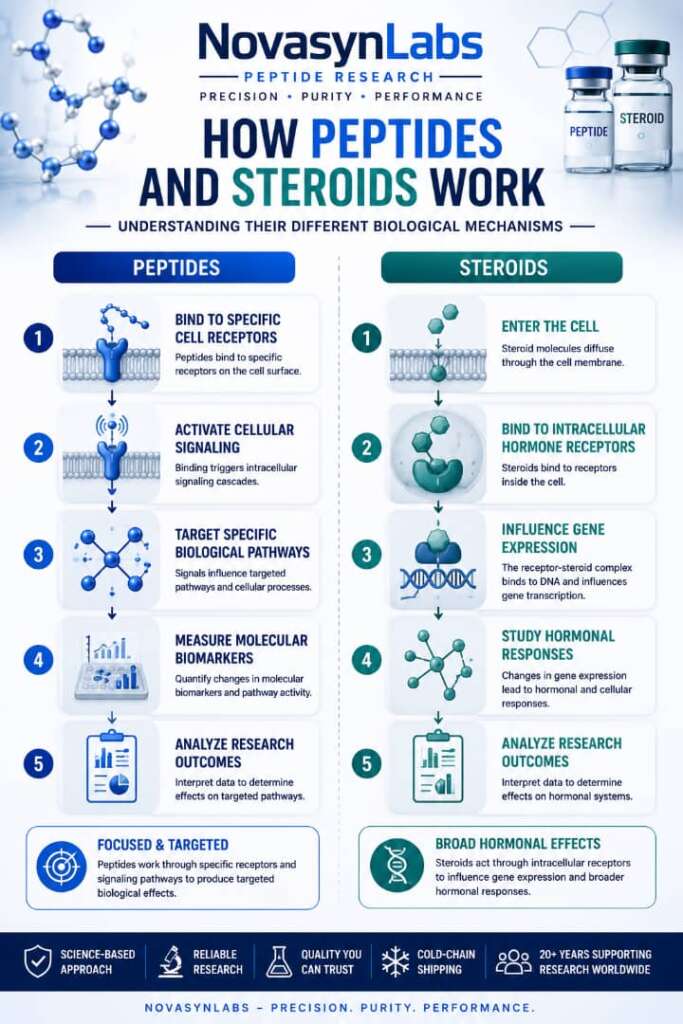
Peptides vs. Steroids: Mechanism of Action Comparison
Understanding the difference in biological mechanisms is essential when selecting compounds for laboratory research.
| Feature | Research Peptides | Steroids |
| Primary Structure | Amino acid chains | Cholesterol-derived molecules |
| Initial Target | Cell-surface or specific receptors | Intracellular hormone receptors |
| Biological Activity | Cell signaling | Gene regulation |
| Research Focus | Targeted pathways | Hormonal systems |
| Typical Research Areas | Growth hormone biology, metabolism, recovery | Hormonal physiology, androgen biology |
| Pathway Specific | Often highly targeted | Broader endocrine effects |
The table highlights why peptides and steroids are not interchangeable research tools.
Peptides vs. Steroids: Key Differences
Although discussions about peptides vs. steroids often focus on muscle-related research, the differences extend much further. Their chemistry, mechanisms of action, and scientific applications are distinct.
1. Molecular Structure
Peptides are composed of amino acids linked together by peptide bonds, while steroids share a characteristic four-ring carbon structure derived from cholesterol.
This structural difference influences how each compound behaves in biological systems.
2. Biological Targets
Many peptides interact with specific receptors or signaling pathways, allowing researchers to investigate focused biological processes.
Steroids typically interact with intracellular hormone receptors, influencing broader endocrine functions.
3. Research Applications
Researchers often select peptides when they want to investigate:
- Growth hormone signaling
- Recovery biology
- Metabolic regulation
- Tissue physiology
- Cellular communication
Steroid research may instead focus on:
- Hormone biology
- Endocrine regulation
- Androgen receptor activity
- Muscle physiology
- Bone metabolism
4. Experimental Design
Because peptides and steroids influence different biological systems, research protocols should also differ.
Applying steroid-based methodologies to peptide studies may produce inconsistent or difficult-to-interpret findings.
Instead, researchers should tailor experimental design to the biological mechanisms under investigation.
5. Quality Verification
Regardless of compound selection, research quality depends on analytical verification.
Before beginning any study, researchers should review:
- HPLC purity testing
- LC-MS verification
- Certificate of Analysis (COA)
- Batch consistency
- Storage recommendations
- Shipping conditions
Analytical verification helps improve confidence in material quality and supports reproducible laboratory research.
Detailed Comparison Table
| Category | Peptides | Steroids |
| Chemical Composition | Amino acid chains | Steroid nucleus derived from cholesterol |
| Main Biological Target | Specific receptors and signaling pathways | Hormone receptors, including androgen receptors |
| Research Focus | Targeted molecular pathways | Hormonal and endocrine physiology |
| Growth Hormone Research | Common | Not a primary focus |
| Recovery Biology Research | Common | Less common |
| Metabolic Research | Common | Limited |
| Muscle Physiology Research | Common | Common, through different biological mechanisms |
| Laboratory Quality Checks | HPLC, LC-MS, COA | Appropriate analytical testing depending on the compound |
Common Misconceptions About Peptides vs. Steroids
Misunderstandings about peptides vs. steroids remain widespread. Clarifying these misconceptions helps researchers select appropriate compounds and design better studies.
Myth 1: Peptides Are Steroids
Fact: Peptides and steroids are chemically different compounds with distinct structures and mechanisms of action.
Myth 2: Every Peptide Is Studied for Muscle Growth
Fact: Research peptides are investigated for a wide range of biological functions, including metabolism, endocrine signaling, tissue biology, recovery, and cellular communication. Muscle physiology is only one area of peptide research.
Myth 3: Growth Hormone Peptides Are Anabolic Steroids
Fact: Growth hormone–related peptides and anabolic steroids act through different biological pathways and should not be considered the same category of compounds.
Myth 4: Lower Prices Mean Better Value
Fact: Research quality depends on analytical verification, product consistency, and supplier reliability—not simply price. Verified HPLC and LC-MS testing, Certificates of Analysis, and consistent manufacturing practices are essential considerations.
Myth 5: Quality Testing Isn’t Necessary
Fact: Independent analytical verification helps researchers confirm identity and purity before beginning laboratory studies. Reviewing HPLC data, LC-MS reports, and batch-specific Certificates of Analysis supports reliable and reproducible research.
Myth vs. Fact Table
| Myth | Scientific Fact |
| Peptides are steroids. | They are different classes of compounds with different molecular structures and biological mechanisms. |
| All peptides build muscle. | Different peptides are studied for diverse biological pathways, including metabolism, recovery, and endocrine signaling. |
| Growth hormone peptides are steroids. | Growth hormone-related peptides act through different signaling mechanisms than anabolic steroids. |
| The cheapest product is the best choice. | Product quality, analytical testing, and supplier reliability are more important than price alone. |
| Laboratory testing is optional. | HPLC, LC-MS, and Certificates of Analysis are valuable tools for verifying research material. |
Real-World Research Case Studies
Understanding the differences between peptides vs. steroids goes beyond molecular structure and receptor biology. The following real-world research examples demonstrate why selecting the appropriate research compound—and designing studies around its unique biological mechanisms—is essential for producing meaningful scientific data.
Case Study 1: Confusing Peptide Research with Steroid Research
Research Objective
A university laboratory was investigating tissue repair signaling using research peptides. Initially, the research team developed the experimental protocol using methods commonly applied in anabolic steroid research.
The investigators assumed that dosing schedules, biological responses, and endpoint measurements would be comparable between the two compound classes.
Challenge
As the study progressed, researchers observed inconsistent findings.
Some biological markers varied considerably between experimental groups, while several anticipated hormonal endpoints failed to provide meaningful insight into peptide activity.
After reviewing the protocol, the team realized they had unintentionally applied research methods developed for steroid studies to peptide research.
Solution
The laboratory redesigned the project after reviewing current scientific literature on peptide pharmacology.
Instead of focusing primarily on endocrine responses, the revised protocol emphasized:
- Peptide-specific receptor interactions
- Cellular signaling pathways
- Molecular biomarkers
- Standardized laboratory procedures
- Consistent sample collection
Outcome
Following the redesign, variability decreased significantly, allowing researchers to obtain more reproducible data and clearer biological insights.
Lesson Learned
Peptide research should be designed around peptide biology rather than adapting protocols originally developed for steroid research.
Case Study 2: Transitioning from Broad Hormone Studies to Targeted Peptide Research
Research Objective
A biotechnology laboratory wanted to better understand specific signaling pathways involved in metabolic regulation.
Challenge
Previous research relied on broad hormone-response measurements, making it difficult to isolate individual molecular mechanisms.
The researchers found that numerous endocrine variables complicated data interpretation.
Solution
The research team transitioned toward carefully selected research peptides chosen for their interactions with defined receptors and biological pathways.
Each peptide was evaluated according to published scientific literature before laboratory testing began.
Outcome
The targeted approach reduced experimental variability and enabled investigators to examine specific biological mechanisms more effectively.
Lesson Learned
Selecting research compounds according to clearly defined biological pathways often produces more focused and reproducible scientific data.
Why These Case Studies Matter
Although peptides and steroids may occasionally be discussed together in scientific literature, these examples demonstrate why they should not be treated as interchangeable research tools.
Successful laboratory research depends on:
- Understanding compound biology
- Selecting appropriate experimental endpoints
- Standardizing laboratory procedures
- Choosing verified research materials
- Following published scientific evidence
Researchers who align their study design with the biology of the compound being investigated are better positioned to generate meaningful and reproducible results.
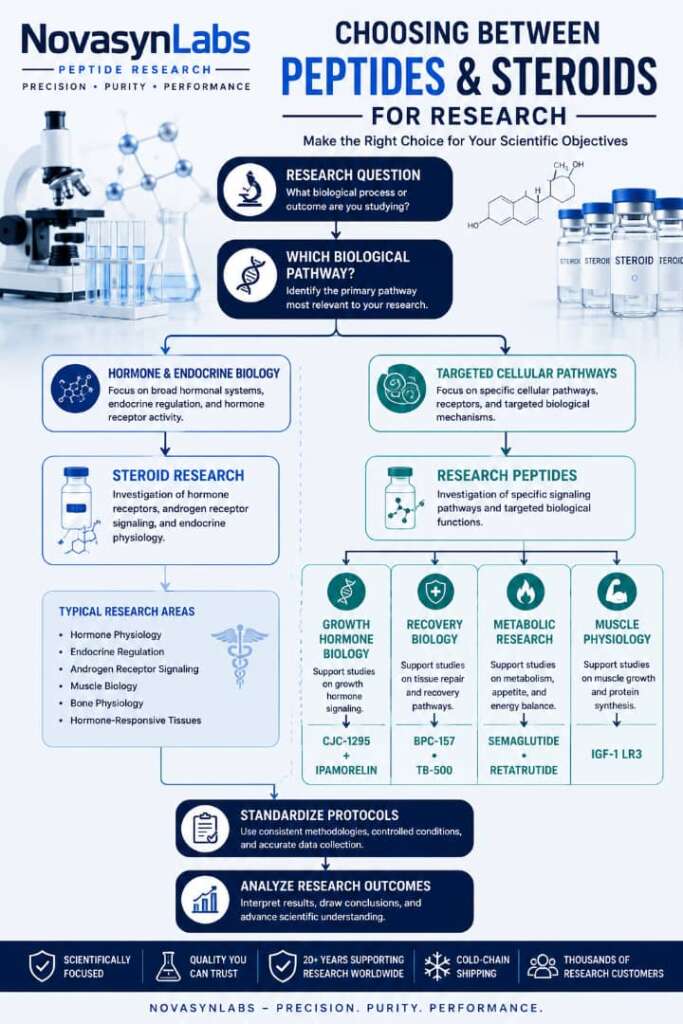
Choosing Between Peptides and Steroids for Research
The decision should always begin with one question:
What biological process are you investigating?
Rather than choosing compounds based on popularity or assumptions, researchers should define their scientific objective first.
Research Questions That May Align with Peptide Studies
Researchers commonly investigate peptides when studying:
- Growth hormone signaling
- Cellular communication
- Recovery biology
- Connective tissue physiology
- Body composition
- Metabolic regulation
- Appetite signaling
- Energy balance
Examples include:
- CJC-1295
- Ipamorelin
- IGF-1 LR3
- BPC-157
- TB-500
- Semaglutide
- Retatrutide
Research Questions That May Align with Steroid Studies
Researchers may investigate steroid compounds when studying:
- Hormone physiology
- Endocrine regulation
- Androgen receptor signaling
- Muscle biology
- Bone physiology
- Hormone-responsive tissues
The appropriate compound depends on the specific biological pathway being investigated.
Choosing High-Quality Research Peptides
Even the best-designed study can be affected by poor-quality research materials.
At NovaSynLabs, we have spent more than 20 years supporting laboratories and researchers by supplying high-quality research peptides backed by analytical verification and responsive customer support.
Researchers consistently choose NovaSynLabs because of our:
- High repeat-customer rate
- Verified analytical testing
- Fast shipping throughout the United States and Europe
- Regular shipping to Australia and New Zealand
- Research-focused customer support
- Consistent product quality
- Cold-chain packaging practices
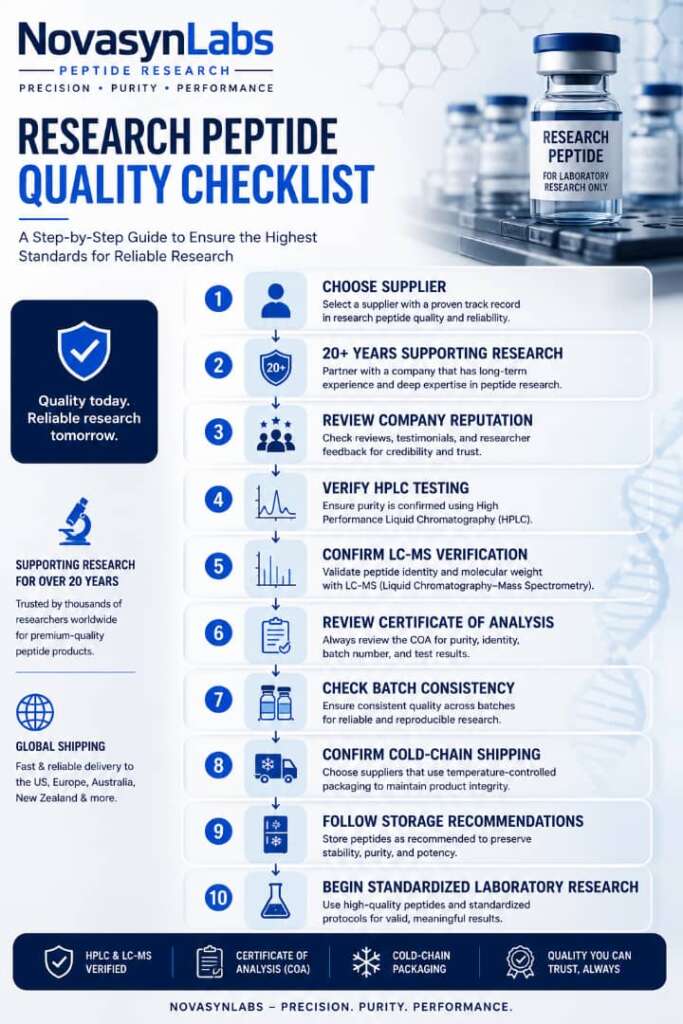
Essential Quality Standards
Before beginning any peptide research project, researchers should verify several quality-control measures.
1. HPLC Testing
High-Performance Liquid Chromatography (HPLC) is widely used to evaluate peptide purity and identify potential impurities.
Reviewing HPLC reports helps researchers confirm analytical quality before beginning laboratory work.
2. LC-MS Verification
Liquid Chromatography-Mass Spectrometry (LC-MS) confirms molecular identity and helps verify that a peptide matches its expected composition.
Together, HPLC and LC-MS provide complementary analytical information.
3. Certificate of Analysis (COA)
Every batch should include a Certificate of Analysis documenting testing results.
Researchers should review:
- Batch number
- Analytical purity
- Identity verification
- Testing methodology
4. Batch Consistency
Reliable suppliers maintain consistent manufacturing standards to help minimize variation between production batches.
Consistency is especially important for long-term research projects.
5. Cold-Chain Shipping
Temperature-sensitive research materials should be packaged appropriately during transit.
Cold-chain shipping helps maintain product integrity throughout transportation.
6. Proper Storage
Storage recommendations should always be followed.
Researchers can improve consistency by:
- Following manufacturer guidance
- Avoiding unnecessary freeze-thaw cycles
- Using appropriate storage temperatures
- Labeling samples carefully
- Maintaining organized laboratory records
Comparison Table
Selecting Research Peptides
| Quality Factor | Why It Matters |
| HPLC Testing | Verifies analytical purity |
| LC-MS Verification | Confirms molecular identity |
| Certificate of Analysis | Documents batch-specific testing |
| Batch Consistency | Supports reproducible experiments |
| Cold-Chain Shipping | Helps preserve product integrity during transport |
| Proper Storage | Reduces variability caused by degradation |
| Research Support | Assists with product information and best practices |
Why Researchers Choose NovaSynLabs
Choosing a research peptide supplier involves more than comparing product catalogs. Researchers need confidence that every batch has been analytically verified, carefully handled, and backed by knowledgeable support.
For more than 20 years, NovaSynLabs has supplied research peptides to thousands of research customers across the United States, Europe, Australia, and New Zealand. Our focus has always been on helping researchers obtain dependable materials that support reproducible laboratory investigations.
Researchers continue to choose NovaSynLabs because of our commitment to:
- Over 20 years of experience supporting peptide research
- Thousands of research customers worldwide
- High repeat-customer rate built on consistency and reliability
- Independent HPLC purity testing
- LC-MS identity verification
- Batch-specific Certificates of Analysis (COAs)
- Cold-chain packaging for temperature-sensitive products
- Fast shipping throughout the United States and Europe
- Regular international shipping to Australia and New Zealand
- Responsive research support
- Consistent product quality across batches
Our goal is to provide researchers with materials that help support well-designed scientific studies, backed by transparent quality-control practices.
Common Mistakes Researchers Make
Whether comparing peptides vs. steroids or selecting a research supplier, avoiding common mistakes can improve study quality and reproducibility.
1. Assuming Peptides and Steroids Are Interchangeable
One of the most common misconceptions is that peptides and steroids produce similar biological responses.
In reality, they differ in:
- Chemical structure
- Biological targets
- Mechanisms of action
- Research applications
- Experimental design requirements
Selecting the wrong compound for a study can complicate data interpretation.
2. Choosing Products Based Only on Price
Price should never be the primary factor when selecting research materials.
Researchers should instead evaluate:
- Product purity
- HPLC reports
- LC-MS verification
- Certificates of Analysis
- Supplier reputation
- Batch consistency
- Technical support
3. Ignoring Scientific Literature
Before selecting a peptide or steroid for research, investigators should review current scientific literature to understand:
- Biological mechanisms
- Appropriate biomarkers
- Study limitations
- Experimental endpoints
- Standard laboratory practices
4. Overlooking Product Quality
Analytical verification helps ensure confidence in research materials.
Researchers should always request:
- HPLC purity reports
- LC-MS verification
- Certificates of Analysis
- Batch identification
5. Improper Storage Practices
Incorrect storage can negatively affect research consistency.
Best practices include:
- Following manufacturer storage recommendations
- Maintaining appropriate temperatures
- Minimizing repeated freeze-thaw cycles
- Organizing laboratory inventory
- Recording storage conditions
Quick Comparison Table
Peptides vs. Steroids
| Feature | Research Peptides | Steroids |
| Molecular Structure | Amino acid chains | Cholesterol-derived compounds |
| Biological Target | Specific receptors and signaling pathways | Hormone receptors |
| Primary Research Focus | Targeted biological mechanisms | Endocrine and hormonal systems |
| Growth Hormone Research | ✔ Frequently studied | ✘ Not a primary focus |
| Recovery Biology | ✔ Frequently studied | Limited |
| Metabolic Research | ✔ Common | Limited |
| Hormonal Research | Limited | ✔ Common |
| Product Verification | HPLC, LC-MS, COA | Appropriate analytical verification |
Frequently Asked Questions (FAQs)
1. Are peptides the same as steroids?
No. Peptides are short chains of amino acids that interact with specific biological pathways, while steroids are cholesterol-derived compounds that primarily act through hormone receptors.
2. What is the biggest difference between peptides and steroids?
The primary difference is their biological mechanism. Peptides typically act through receptor-mediated signaling pathways, whereas steroids enter cells and influence gene expression through intracellular hormone receptors.
3. Are all peptides studied for muscle growth?
No. Researchers investigate peptides for many areas, including metabolism, endocrine signaling, recovery biology, tissue physiology, appetite regulation, and cellular communication.
4. Which research peptides are commonly investigated for growth hormone biology?
Examples include CJC-1295 and Ipamorelin, which are commonly studied in relation to growth hormone signaling pathways.
5. Which peptides are commonly researched for recovery biology?
BPC-157 and TB-500 are frequently investigated in studies involving connective tissue and recovery-related biological processes.
6. Which peptides are commonly researched for metabolic regulation?
Researchers commonly investigate Semaglutide and Retatrutide in studies involving metabolism, energy balance, and body composition.
7. Why are HPLC and LC-MS testing important?
HPLC helps evaluate peptide purity, while LC-MS confirms molecular identity. Together, these analytical methods help researchers verify product quality before beginning laboratory studies.
8. What is a Certificate of Analysis (COA)?
A COA is a batch-specific document that summarizes analytical testing results, including product identity and purity. Reviewing a COA helps researchers verify the quality of research materials.
9. How should research peptides be stored?
Storage recommendations vary by product, but researchers should follow the supplier’s instructions, maintain appropriate temperatures, and avoid repeated freeze-thaw cycles whenever possible.
10. What should researchers look for in a peptide supplier?
Researchers should consider:
- Independent analytical testing
- Certificates of Analysis
- Batch consistency
- Cold-chain shipping
- Scientific support
- Industry experience
- Product quality
- Reliable customer service
11. Why is standardized experimental design important?
Standardized protocols help reduce variability, improve reproducibility, and make scientific findings easier to interpret across experimental groups.
12. Why do researchers choose NovaSynLabs?
Researchers choose NovaSynLabs because of our 20+ years of experience, thousands of research customers, high repeat-customer rate, verified HPLC and LC-MS testing, Certificates of Analysis, cold-chain shipping, and dedicated research support.
Key Takeaways
- Peptides and steroids are fundamentally different classes of research compounds.
- Peptides are studied for targeted biological pathways, while steroids are primarily investigated for hormone-related mechanisms.
- Research objectives should guide compound selection—not popularity or misconceptions.
- HPLC testing, LC-MS verification, Certificates of Analysis, and proper storage contribute to reliable laboratory research.
- Standardized protocols improve reproducibility and data quality.
- Choosing an experienced supplier with strong quality-control standards can support more consistent scientific outcomes.
Conclusion
Understanding the differences between peptides vs. steroids is essential for designing scientifically sound research. While both classes of compounds are valuable in laboratory investigations, they differ significantly in their molecular structures, mechanisms of action, and research applications.
Throughout this guide, we’ve explored how peptides interact with specific receptors and signaling pathways, while steroids primarily influence hormone receptor activity and gene expression. These distinctions are important because selecting the appropriate compound should always be based on the biological pathway or research question being investigated.
We’ve also highlighted the importance of analytical verification, including HPLC testing, LC-MS verification, and batch-specific Certificates of Analysis, along with proper cold-chain shipping and storage practices. These quality-control measures help researchers obtain dependable materials and support reproducible experimental outcomes.
For more than 20 years, NovaSynLabs has proudly supplied research peptides to thousands of research customers across the United States, Europe, Australia, and New Zealand. Our commitment to consistent product quality, responsive research support, rigorous analytical verification, and reliable international shipping has made us a trusted partner for laboratories and researchers worldwide.
Whether your work focuses on growth hormone biology, metabolism, recovery, endocrine signaling, or other targeted biological pathways, beginning with verified, high-quality research materials and a well-designed experimental protocol is one of the best ways to generate meaningful scientific data.
Research Use Only: All products offered by NovaSynLabs are intended exclusively for laboratory and scientific research. They are not approved for human consumption, therapeutic use, or performance enhancement.
Continue Your Reading?
Check our related articles on:
External References

