


No products in the cart.
Where to Buy GHK-Cu Raw Powder in Europe (2026): Complete Research Buyer’s Guide
Table of Contents
Where to Buy GHK-Cu Raw Powder in Europe (2026): Complete Research Buyer’s Guide
As interest in peptide research continues to grow, GHK-Cu raw powder has become one of the most sought-after research compounds among laboratories, universities, biotechnology organizations, and independent research professionals throughout Europe. Demand has increased steadily over recent years, particularly within cosmetic science, skin biology, regenerative research, and biohacking-related laboratory investigations.
However, finding where to buy GHK-Cu raw powder in Europe is no longer simply about choosing the lowest-priced supplier. Researchers today place far greater emphasis on product quality, batch consistency, documentation, reliable shipping, and long-term supplier relationships. A low-cost product that lacks proper testing or documentation can introduce unnecessary uncertainty into laboratory workflows and make inventory management more challenging.
After supplying research-grade GHK-Cu for more than 15 years, we’ve worked with thousands of research customers across Europe and the United States. During that time, we’ve seen firsthand how purchasing priorities have evolved. Modern laboratories increasingly request comprehensive Certificates of Analysis (COAs), standardized documentation, consistent packaging, and dependable quality-control processes rather than focusing solely on price.
This guide explains everything researchers should know before purchasing GHK-Cu raw powder in Europe in 2026, including:
- What GHK-Cu raw powder is
- Why demand continues to grow across Europe
- How to identify a trustworthy supplier
- What quality indicators to evaluate
- How Certificates of Analysis help support procurement decisions
- Common purchasing mistakes to avoid
- Expert recommendations based on more than 15 years of supplying research peptides
Whether you’re ordering GHK-Cu for the first time or reviewing potential suppliers for an ongoing research program, this guide will help you make a more informed purchasing decision.
Research Use Only: GHK-Cu raw powder discussed in this article is intended exclusively for laboratory and scientific research. It is not intended for human or veterinary use.
What Is GHK-Cu Raw Powder?
GHK-Cu (Glycyl-L-Histidyl-L-Lysine Copper) is a naturally occurring copper-binding peptide that has been widely studied in laboratory settings for decades. Because of its unique biochemical characteristics, it has become an important research peptide across several scientific disciplines.
Researchers commonly investigate GHK-Cu in areas such as:
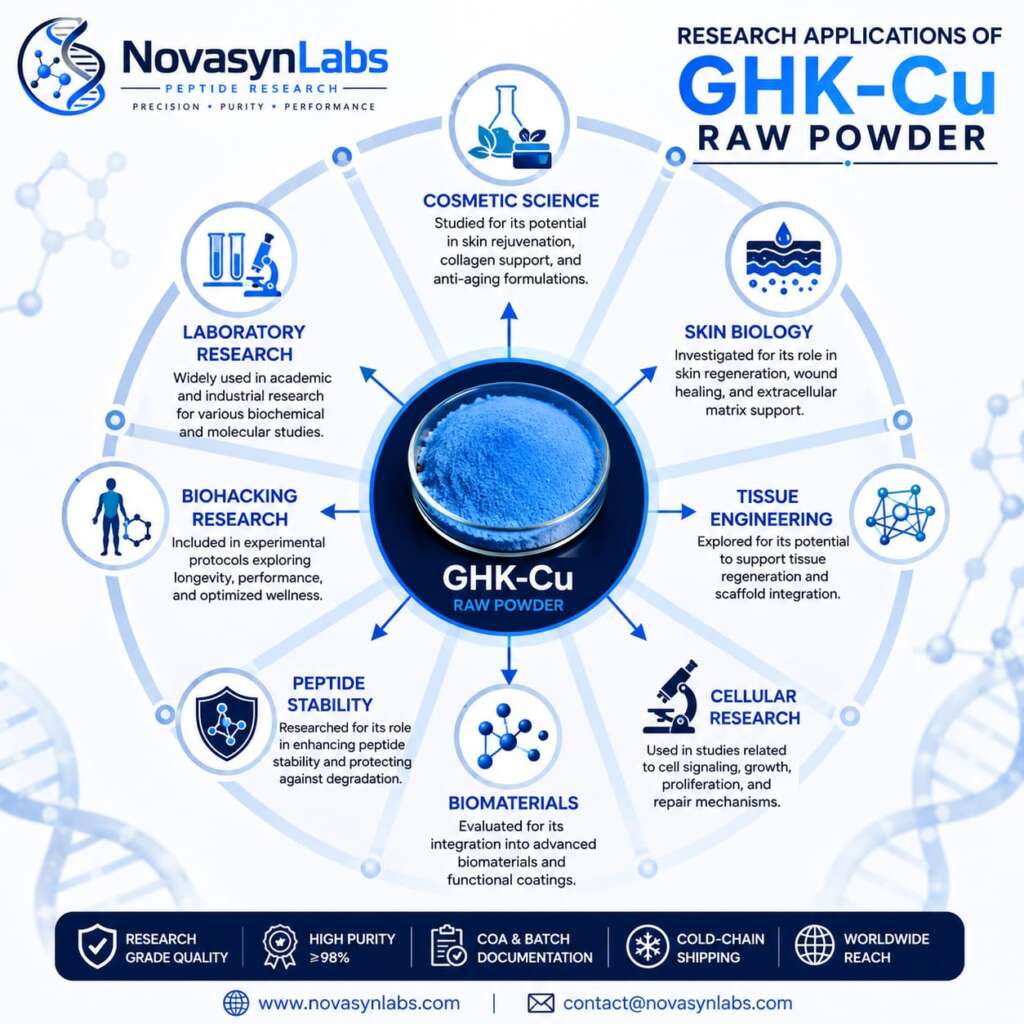
- Skin biology research
- Cosmetic formulation research
- Tissue engineering studies
- Cellular signaling research
- Extracellular matrix research
- Biomaterials research
- Peptide stability studies
- Biohacking-related laboratory investigations
Unlike finished cosmetic formulations, GHK-Cu raw powder allows laboratories to prepare experimental formulations and conduct controlled research according to their own study protocols.
One reason for its popularity is its versatility. Research groups studying cosmetic science may examine formulation stability, while biotechnology laboratories may investigate peptide interactions under controlled laboratory conditions. This broad research interest continues to drive demand throughout Europe.
Why Researchers Prefer Raw Powder
Many laboratories choose raw powder rather than pre-prepared formulations because it offers greater flexibility for experimental design.
Potential advantages include:
- Greater control over laboratory preparation
- Easier long-term inventory management
- Reduced formulation variables
- Better compatibility with customized research protocols
- More efficient storage before experimental preparation
These characteristics have helped make GHK-Cu raw powder a common choice among research institutions that require consistency across multiple studies.
Table: Raw Powder vs Pre-Formulated Products
| Feature | GHK-Cu Raw Powder | Pre-Formulated Product |
| Research flexibility | Excellent | Limited |
| Custom formulation | Yes | No |
| Long-term inventory control | Excellent | Moderate |
| Batch tracking | Easy | Depends on manufacturer |
| Documentation | Usually extensive | Often limited |
| Laboratory customization | High | Low |
Why Documentation Matters
Professional laboratories increasingly evaluate suppliers based not only on peptide purity but also on the quality of accompanying documentation.
Reliable documentation commonly includes:
- Certificate of Analysis (COA)
- Batch identification
- Lot number
- Product labeling
- Storage recommendations
- Quality-control records
Consistent documentation supports inventory management and helps laboratories maintain organized procurement records throughout long-term research projects.
Why Demand for GHK-Cu Raw Powder Is Growing Across Europe
The European peptide research market has expanded significantly over the past decade. Universities, biotechnology companies, contract research organizations, and private laboratories continue to increase their interest in high-quality research peptides.
From our experience supplying GHK-Cu for more than 15 years, demand has remained particularly strong across Western and Northern Europe.
Countries where we regularly serve research customers include:
- Germany
- France
- Spain
- Italy
- Netherlands
- Belgium
- Switzerland
- Norway
- Sweden
- Poland
While research priorities vary between institutions, laboratories consistently look for suppliers that can provide dependable quality, clear documentation, and reliable shipping.
Growing Interest in Cosmetic and Skin Research
One major driver of demand is ongoing research involving cosmetic science and skin biology.
Laboratories studying peptide-based formulations often prioritize:
- Consistent peptide quality
- Reliable documentation
- Batch reproducibility
- Stable storage conditions
- Standardized packaging
As research becomes more collaborative across European institutions, standardized procurement practices have become increasingly important.
Biohacking and Emerging Laboratory Research
Interest in biohacking-related laboratory research has also contributed to growing demand.
Although research goals differ between organizations, laboratories generally seek suppliers capable of delivering:
- High-purity material
- Reliable batch consistency
- Appropriate documentation
- Professional customer support
- Consistent product availability
Table: Research Demand Across Europe
| Country | Research Interest | Typical Procurement Priorities |
| Germany | Biotechnology & peptide research | Documentation, consistency, quality |
| France | Cosmetic and laboratory research | COAs, purity, packaging |
| Spain | Academic research | Batch tracking, supplier support |
| Italy | Regenerative laboratory studies | Reliable shipping, documentation |
| Netherlands | Biotechnology | Batch consistency |
| Belgium | Laboratory procurement | Standardized documentation |
| Switzerland | Scientific research | Quality assurance |
| Norway | University research | Product traceability |
| Sweden | Biotechnology | Reliable long-term suppliers |
| Poland | Research institutions | Quality and customer support |
Why Long-Term Supplier Relationships Matter
Many laboratories eventually move away from purchasing from multiple vendors and instead establish relationships with suppliers that consistently meet their quality and documentation requirements.
Long-term supplier relationships can help provide:
- Consistent labeling
- Predictable documentation
- Easier procurement workflows
- More efficient inventory management
- Improved batch traceability
- Simplified quality assurance processes
Rather than re-evaluating documentation with every purchase from different vendors, laboratories often prefer suppliers that maintain standardized quality systems.
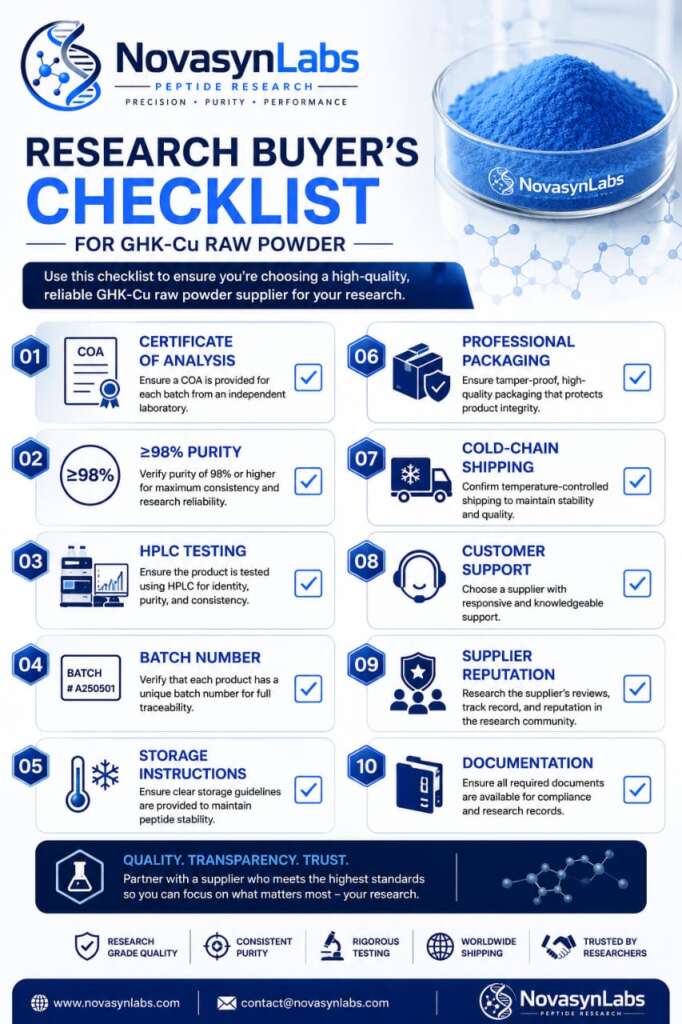
How to Choose the Best GHK-Cu Supplier in Europe
With many peptide suppliers operating online, selecting the right source requires more than comparing prices. A professional supplier should demonstrate transparency, consistency, and a commitment to quality throughout the procurement process.
Below are the key factors to evaluate.
- Certificate of Analysis (COA)
A COA should accompany each batch and provide clear quality information relevant to that specific production lot. Researchers should verify that the documentation aligns with the product received, including batch identification and testing details.
- Purity
Purity is one of the most commonly reviewed specifications. For research applications, many laboratories seek GHK-Cu raw powder with a purity of ≥98%, supported by appropriate analytical testing.
- Batch Consistency
Consistent batches help support reproducible laboratory workflows. Suppliers should maintain standardized manufacturing and quality-control procedures to reduce unnecessary variability between production runs.
- Packaging
Professional packaging helps protect product integrity during transport and storage. Clear labeling, durable containers, and proper sealing also make inventory management easier for research teams.
- Cold-Chain Shipping
Temperature-sensitive research materials benefit from shipping practices designed to help maintain product quality throughout transit. Researchers should review how suppliers package and transport products, particularly during warmer months.
- Customer Support
Reliable suppliers should be able to answer questions about documentation, storage recommendations, and order handling promptly and professionally.
- Supplier Reputation
Experience, transparency, and consistent service are often stronger indicators of long-term reliability than price alone. Suppliers with a proven history of serving research laboratories are generally better positioned to support ongoing procurement needs.
Supplier Evaluation Checklist
| Evaluation Factor | Why It Matters |
| Certificate of Analysis | Supports batch verification |
| Purity (≥98%) | Indicates product quality specifications |
| Batch Consistency | Helps maintain reproducible workflows |
| Professional Packaging | Protects product during shipping |
| Cold-Chain Handling | Supports product stability in transit |
| Storage Guidance | Helps preserve quality after delivery |
| Customer Support | Assists with procurement questions |
| Supplier Reputation | Indicates long-term reliability |
| Clear Product Labeling | Improves inventory management |
| Standardized Documentation | Simplifies laboratory record-keeping |
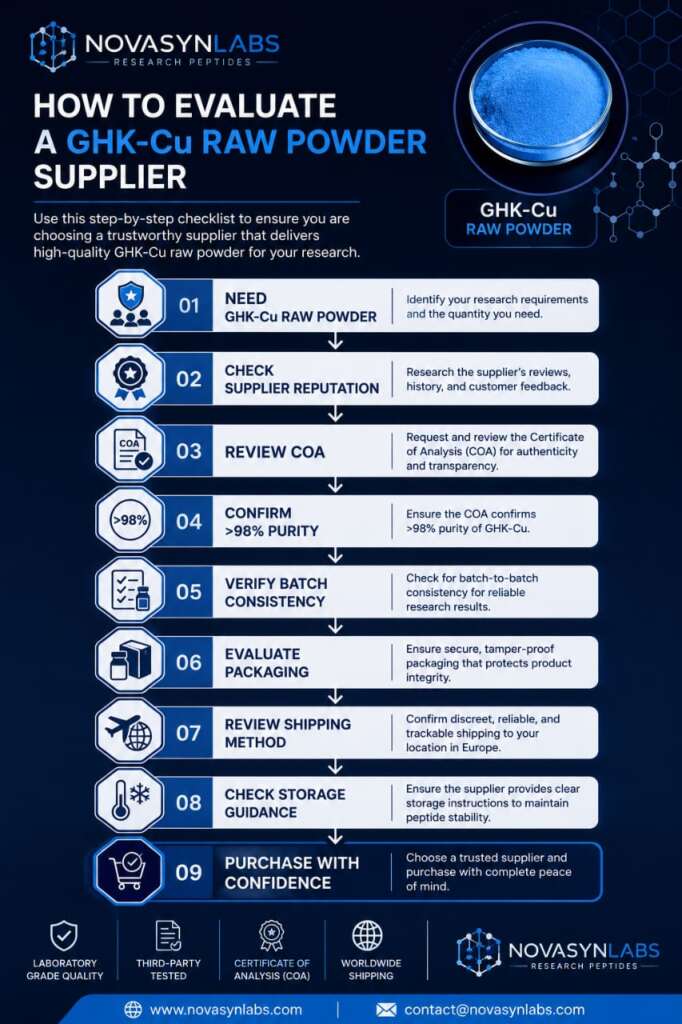
How Research-Grade GHK-Cu Raw Powder Is Manufactured and Quality Verified
When evaluating where to buy GHK-Cu raw powder in Europe, one of the most important considerations is how the product is manufactured and tested before it reaches your laboratory. While pricing often attracts attention, experienced researchers know that consistent quality assurance, documentation, and analytical testing are what ultimately support reliable laboratory workflows.
Professional suppliers typically follow a structured manufacturing and quality-control process designed to help ensure every batch meets established specifications before release.
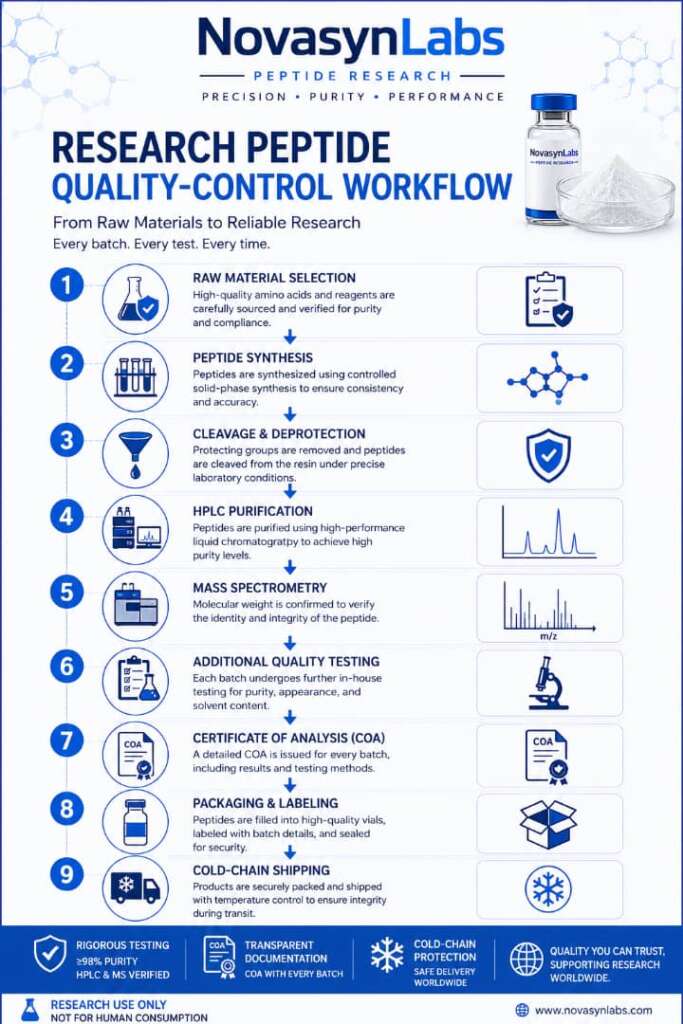
Typical Research Peptide Manufacturing Workflow
Although manufacturing procedures vary slightly between facilities, a professional quality-control process commonly includes the following stages:
- Raw Material Selection
Every batch begins with carefully selected raw materials that meet predefined quality specifications. Starting with high-quality materials helps establish a strong foundation for the peptide synthesis process.
- Peptide Synthesis
GHK-Cu is produced using established peptide synthesis techniques under carefully controlled laboratory conditions. During this stage, reaction parameters are monitored to support consistent production.
- Purification
Following synthesis, purification removes unwanted by-products and impurities. High-quality purification contributes to improved batch consistency and helps laboratories receive material that aligns with expected purity specifications.
- HPLC Testing
High-Performance Liquid Chromatography (HPLC) is one of the primary analytical methods used to evaluate peptide purity.
Researchers frequently review HPLC chromatograms to understand:
- Overall purity
- Peak consistency
- Presence of impurities
- Batch quality
For many research applications, laboratories commonly look for GHK-Cu raw powder with ≥98% purity, supported by analytical documentation.
- Mass Spectrometry
Mass spectrometry provides additional confirmation by verifying the molecular mass of the synthesized peptide.
This complementary analysis helps confirm that the expected peptide has been produced before release.
- Additional Quality Control
Many professional suppliers perform further internal quality assessments before approving a batch.
These additional checks may include:
- Visual inspection
- Packaging inspection
- Label verification
- Documentation review
- Batch record verification
- Certificate of Analysis Approval
Once testing has been completed, a Certificate of Analysis (COA) is prepared for the batch.
A professional COA typically includes:
- Batch number
- Product identification
- Purity result
- Analytical method
- Testing date
- Quality approval
- Packaging
Proper packaging helps protect GHK-Cu raw powder during storage and transportation.
Professional packaging often includes:
- Clear labeling
- Batch identification
- Lot number
- Storage recommendations
- Secure containers
- Cold-Chain Shipping
Temperature management during shipping is particularly important, especially during warmer seasons.
Cold-chain shipping practices help support product quality while materials are in transit to research laboratories.
Why Quality-Control Matters
A structured quality-control program benefits laboratories in several ways.
Consistent testing can help provide:
- More predictable procurement
- Better documentation
- Easier inventory tracking
- Standardized laboratory records
- Greater confidence during project planning
Researchers working on long-term projects often prefer suppliers with transparent quality systems because documentation remains consistent from one shipment to the next.
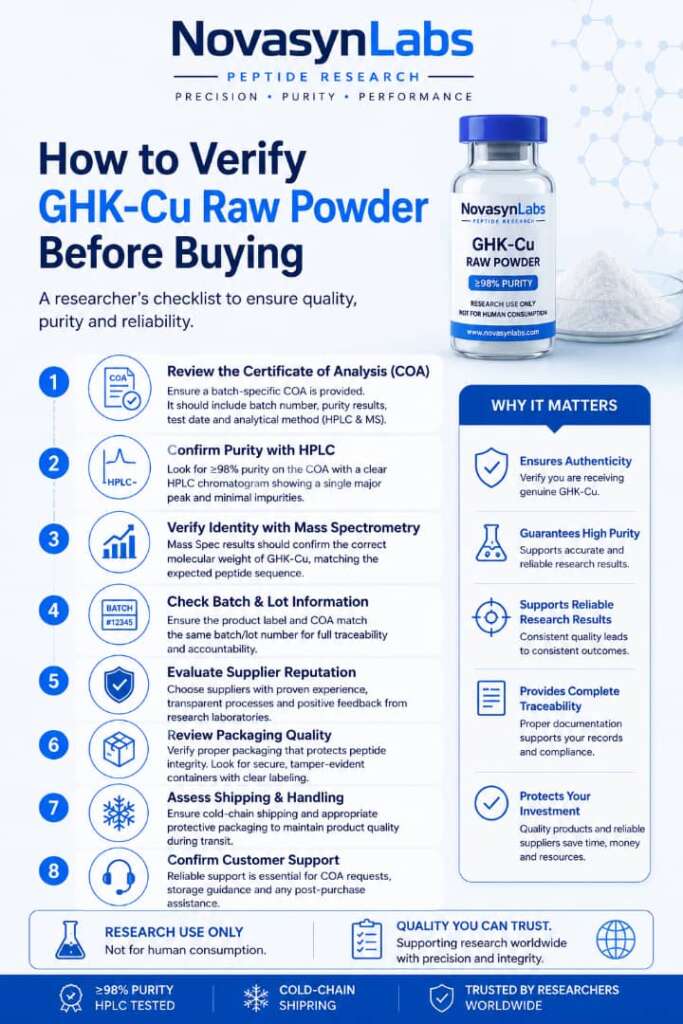
How to Verify GHK-Cu Raw Powder Before Buying
Knowing where to buy GHK-Cu raw powder in Europe also means knowing how to evaluate the supplier before placing an order.
Experienced researchers rarely rely on marketing claims alone. Instead, they review objective quality indicators that help distinguish professional suppliers from less established sources.
Review the Certificate of Analysis (COA)
A Certificate of Analysis is one of the first documents researchers should request.
The COA helps verify that a specific production batch has undergone analytical testing and provides documented quality information.
When reviewing a COA, look for:
- Product name
- Batch number
- Lot number
- Purity results
- Testing methodology
- Date of analysis
- Quality approval
Suppliers that consistently provide batch-specific COAs demonstrate greater transparency in their quality assurance process.
Verify Purity Specifications
Purity remains one of the most important product characteristics.
Many research laboratories seek GHK-Cu raw powder with a purity of at least 98%, supported by HPLC testing.
Rather than relying solely on advertised purity claims, researchers should review the supporting analytical documentation whenever possible.
Confirm Batch Consistency
Long-term studies often require multiple purchases over several months.
Consistent manufacturing practices help laboratories maintain continuity between batches and simplify project documentation.
Suppliers with standardized production and quality-control procedures are generally better positioned to support ongoing research programs.
Evaluate Packaging Quality
Professional packaging serves more than an aesthetic purpose.
Researchers should confirm that packaging includes:
- Product identification
- Batch number
- Lot number
- Storage guidance
- Secure sealing
Proper labeling also simplifies inventory management and laboratory record-keeping.
Review Shipping Practices
Shipping conditions can influence product handling during transit.
Questions researchers may wish to ask include:
- Is temperature-sensitive packaging available?
- Are products protected during summer shipments?
- How are products packaged internationally?
- What shipping methods are offered across Europe?
Professional suppliers typically explain their shipping procedures clearly before purchase.
Assess Customer Support
Reliable customer support often reflects a supplier’s overall professionalism.
Researchers may need assistance with:
- Documentation requests
- Product specifications
- Storage guidance
- Shipping updates
- Batch information
Responsive support can simplify procurement and reduce delays.
Supplier Evaluation Checklist
| Evaluation Item | Why It Matters |
| Certificate of Analysis | Confirms documented testing |
| HPLC Results | Supports purity verification |
| Purity ≥98% | Common research specification |
| Batch Numbers | Supports traceability |
| Consistent Packaging | Simplifies inventory management |
| Storage Instructions | Helps preserve product quality |
| Cold-Chain Shipping | Supports product integrity during transit |
| Professional Customer Support | Assists with procurement questions |
| Supplier Reputation | Indicates long-term reliability |
| Documentation Consistency | Improves laboratory record-keeping |
Common Mistakes Researchers Make When Buying GHK-Cu Raw Powder
Even experienced laboratories occasionally encounter procurement challenges. Many of the most common issues can be avoided by following a structured supplier evaluation process.
1. Buying Solely on Price
A lower price may seem attractive, but it should never be the only factor considered.
Researchers should also evaluate:
- Documentation
- Quality testing
- Supplier reputation
- Batch consistency
- Customer support
A supplier offering thorough quality assurance may provide greater long-term value than one competing primarily on price.
2. Purchasing Through Online Marketplaces
Marketplace listings often provide limited information about manufacturing practices, documentation, or batch testing.
Purchasing directly from established research peptide suppliers can make it easier to obtain consistent documentation and product support.
3. Improper Storage After Delivery
Even high-quality research peptides should be stored according to the supplier’s recommendations once received.
Researchers are encouraged to review storage guidance immediately after delivery and incorporate it into their laboratory inventory procedures.
4. Confusing Cosmetic Products with Research-Grade Material
Some products marketed for cosmetic applications may differ in labeling, documentation, or intended use compared with research-grade materials.
Before purchasing, researchers should confirm that the supplier provides appropriate documentation, quality records, and specifications relevant to laboratory research.
Table: Common Purchasing Mistakes
| Mistake | Potential Issue | Better Practice |
| Buying only on price | May overlook quality documentation | Compare testing, COAs, and supplier reliability |
| Buying from marketplaces | Limited traceability | Purchase from established research suppliers |
| Poor storage after delivery | May affect product quality | Follow supplier storage recommendations |
| Confusing cosmetic and research-grade products | Documentation may differ | Review specifications before ordering |
Our Experience Supplying GHK-Cu Research Peptides
For more than 15 years, NovasynLabs has supplied research-grade GHK-Cu raw powder to laboratories, universities, biotechnology companies, and independent researchers across Europe and the United States.
During this time, we have served thousands of research customers, with growing demand driven by cosmetic science, skincare research, peptide biology, and biohacking-related laboratory studies.
Throughout these years, we have found that researchers consistently prioritize:
- Reliable product quality
- Batch consistency
- Clear Certificates of Analysis
- Professional labeling
- Secure packaging
- Dependable customer support
Rather than focusing solely on price, many long-term customers value suppliers that provide standardized documentation and a predictable procurement experience. These priorities have become increasingly important as laboratories expand collaborative projects and strengthen internal quality assurance procedures.
Our approach emphasizes transparent documentation, careful quality-control practices, consistent packaging, and reliable cold-chain shipping to support laboratories throughout Europe and beyond.
Anonymous Laboratory Case Study #1: Improving Documentation Consistency
Laboratory Background
A biotechnology research laboratory conducting peptide-based studies sourced materials from several suppliers. Over time, inconsistent documentation and varying labeling formats complicated inventory management.
Challenges
- Different documentation formats between suppliers
- Inconsistent product labeling
- Additional time verifying incoming materials
- Increased administrative workload
Why They Chose a Single Supplier
The laboratory sought standardized procurement supported by:
- Certificate of Analysis (COA)
- Clear batch and lot identification
- Professional labeling
- Consistent documentation
Observed Improvements
After consolidating purchases with one supplier:
- Receiving procedures became more efficient.
- Documentation was easier to archive alongside project records.
- Product labeling remained consistent across shipments.
Why They Continued Ordering
The laboratory valued the predictable documentation and procurement process, which aligned well with its internal quality assurance procedures.
Anonymous Laboratory Case Study #2: Standardizing Long-Term Inventory Management
Laboratory Background
An academic research laboratory was beginning a multi-month peptide research project that required careful tracking of research materials over an extended period. Maintaining consistent procurement records was essential for supporting laboratory workflows and internal documentation.
Challenges
The research team encountered several administrative difficulties when sourcing materials from multiple vendors:
- Inconsistent inventory documentation
- Different labeling formats
- Varying packaging styles
- Additional effort required to reconcile batch information
- Increased complexity during internal reviews
Why They Switched Suppliers
The laboratory selected a supplier that consistently provided:
- Batch-specific documentation
- Clear product labeling
- Standardized packaging
- Certificate of Analysis (COA)
- Supporting quality records
Improvements They Observed
Following the transition to a single supplier, the laboratory reported several operational improvements:
- Inventory tracking became more organized.
- Batch numbers were easier to reference in laboratory notebooks.
- Procurement records were simpler to archive.
- Internal documentation became more standardized throughout the project.
Why They Continued Ordering
The research team appreciated the predictable documentation, reliable packaging, and consistent quality records, which supported more efficient laboratory workflows during their long-term study.
Research Peptides Commonly Purchased Alongside GHK-Cu
While GHK-Cu remains one of the most widely researched peptides in cosmetic science and skin biology, many laboratories purchase additional research peptides depending on the objectives of their studies.
Although each peptide serves different research interests, sourcing them from the same trusted supplier can help simplify procurement, documentation, and inventory management.
| Research Peptide | Common Area of Laboratory Research |
| BPC-157 | Tissue repair and regenerative research |
| TB-500 | Cellular migration and regeneration studies |
| MOTS-c | Metabolic and mitochondrial research |
| Epitalon | Cellular aging and longevity research |
| SS-31 (Elamipretide) | Mitochondrial function research |
Many laboratories prefer working with a single supplier when ordering multiple research peptides because it provides:
- Standardized Certificates of Analysis
- Consistent packaging
- Unified documentation
- Easier inventory management
- Streamlined procurement procedures
Expert Tips for Buying GHK-Cu Raw Powder in Europe (2026)
After supplying research-grade GHK-Cu to laboratories across Europe and the United States for more than 15 years, we’ve observed several practices that consistently help researchers make better purchasing decisions.
1. Look Beyond Purity Claims
A supplier advertising high purity should also be able to provide supporting analytical documentation. Purity claims are most meaningful when backed by batch-specific testing and a Certificate of Analysis.
2. Choose Long-Term Reliability Over Short-Term Savings
Price is only one factor when selecting a supplier. Laboratories conducting ongoing research often benefit more from a supplier that consistently provides:
- Reliable documentation
- Stable quality
- Responsive customer support
- Consistent packaging
- Batch traceability
Long-term consistency can simplify procurement and reduce administrative work over time.
3. Store Products Promptly After Delivery
Once GHK-Cu raw powder arrives, it should be stored according to the supplier’s recommendations. Prompt and appropriate storage helps support product quality throughout its intended storage period.
Developing a standard receiving procedure can also improve inventory management and reduce handling errors.
4. Consider Shipping Conditions During Warmer Months
Higher ambient temperatures during summer can make shipping conditions more challenging. When ordering temperature-sensitive research materials, ask suppliers about their packaging methods and cold-chain handling procedures.
5. Review Import Requirements Before Ordering
Researchers ordering across international borders should verify any applicable customs or import requirements before placing an order. Understanding these requirements in advance can help avoid unnecessary delays.
Expert Buyer’s Checklist
Before Purchasing ✓
Review the Certificate of Analysis ☐
Confirm purity specification ☐
Check batch identification ☐
Evaluate supplier reputation ☐
Review storage recommendations ☐
Confirm shipping methods ☐
Assess customer support ☐
Verify documentation quality ☐
Review packaging standards ☐
Understand import considerations ☐
Frequently Asked Questions
What is GHK-Cu raw powder intended for?
GHK-Cu raw powder is supplied for laboratory and scientific research. Researchers investigate it across areas such as cosmetic science, skin biology, peptide chemistry, tissue engineering, and related laboratory disciplines.
How do I verify the quality of GHK-Cu raw powder?
Researchers should review the supplier’s Certificate of Analysis, purity specification, batch identification, documentation quality, storage guidance, and overall reputation before purchasing.
Is a Certificate of Analysis (COA) included?
Professional research peptide suppliers commonly provide a batch-specific Certificate of Analysis that documents analytical testing and product specifications.
What purity level should I look for?
Many laboratories seek GHK-Cu raw powder with a purity of ≥98%, supported by appropriate analytical testing and documentation.
How should GHK-Cu raw powder be stored?
Storage should always follow the supplier’s recommendations. Proper storage immediately after delivery helps support product quality throughout the storage period.
How long is GHK-Cu raw powder stable during storage?
Stability depends on factors such as storage conditions, packaging, and handling. Researchers should consult the supplier’s documentation for storage recommendations specific to each product.
What packaging is best for shipping GHK-Cu raw powder?
Professional suppliers typically use secure packaging with clear labeling, batch identification, and shipping methods designed to help protect product quality during transport.
How can I verify batch consistency?
Review batch-specific documentation, Certificates of Analysis, product labeling, and quality records. Consistent documentation over multiple purchases is often a good indicator of standardized manufacturing practices.
What information should appear on the product label?
A professionally labeled product commonly includes:
- Product name
- Batch number
- Lot number
- Storage recommendations
- Supplier identification
- Quantity
What is the difference between raw powder and lyophilized peptides?
Raw powder refers to peptide material supplied before experimental preparation, while lyophilized peptides have undergone a freeze-drying process for storage and handling. Researchers should select the format most appropriate for their laboratory protocols.
Final Thoughts
As demand for GHK-Cu raw powder in Europe continues to grow, selecting the right supplier has become increasingly important. While price may influence purchasing decisions, experienced researchers recognize that consistent quality, reliable documentation, and dependable customer support often provide greater long-term value.
Throughout this guide, we’ve explored the key factors that laboratories should evaluate when deciding where to buy GHK-Cu raw powder in Europe, including Certificates of Analysis, purity specifications, batch consistency, packaging, cold-chain shipping, and supplier reputation.
Drawing on more than 15 years of experience supplying research-grade GHK-Cu to thousands of research customers across Europe and the United States, we’ve seen that laboratories benefit most from suppliers who emphasize transparency, standardized documentation, and consistent quality-control procedures.
Whether you’re purchasing GHK-Cu for a new research project or reviewing suppliers for an ongoing procurement program, taking the time to evaluate documentation, manufacturing standards, and long-term reliability can support more efficient laboratory workflows and stronger quality assurance practices.
When these factors are considered together, researchers are better equipped to make informed purchasing decisions and establish dependable supplier relationships that support future scientific work.
Conclusion
Finding where to buy GHK-Cu raw powder in Europe involves much more than comparing prices. The most reliable suppliers distinguish themselves through transparent quality-control systems, batch-specific Certificates of Analysis, consistent manufacturing practices, secure packaging, and responsive customer support.
By focusing on documentation, purity verification, storage recommendations, shipping methods, and supplier reliability, research laboratories can make procurement decisions with greater confidence. As peptide research continues to expand across Europe in 2026 and beyond, partnering with a trusted supplier committed to quality and consistency can help support efficient, well-documented laboratory operations while laying the foundation for long-term research success.
Check Our Related Articles
- Where Do Researchers Buy Peptides in the USA
- Buying Research Peptides Online in Europe
- What Are Research Peptides?
External References


Comment
What Role Do Growth Factors Play In Tissue Repair Studies? (2026 Deep Dive)
[…] GHK-Cu is a copper-binding peptide complex that has attracted research interest in skin biology, extracellular-matrix regulation, wound-related models, and cellular signaling. […]