



No products in the cart.
Most Studied Peptides for Tissue Repair Research: A Comprehensive Guide for Researchers
Most Studied Peptides for Tissue Repair Research
Tissue repair is one of the most active areas of peptide research today. Scientists continue to investigate how naturally occurring and synthetic peptides interact with cellular signaling pathways involved in inflammation, collagen production, angiogenesis, and tissue remodeling.
Among the many peptides studied in laboratory settings, compounds such as BPC-157, TB-500, GHK-Cu, KPV, ARA-290, and LL-37 have attracted significant scientific interest because of their diverse biological properties and broad range of experimental applications.
Whether the goal is to better understand wound healing mechanisms, extracellular matrix remodeling, or inflammatory signaling, selecting high-purity laboratory-grade peptides is essential for generating reliable and reproducible research data.
At NovaSynLabs, we’ve supplied laboratory-grade research peptides to researchers worldwide since 2000. Through years of serving universities, biotechnology companies, contract research organizations, and independent laboratories, we’ve observed that consistency in peptide quality, documentation, and storage plays a critical role in supporting successful research workflows.
This guide explores:
- The most studied tissue repair peptides
- Their primary laboratory research focuses
- Biological pathways scientists investigate
- Why peptide purity matters
- Proper storage practices
- Common misconceptions
- Representative laboratory experiences
- How NovaSynLabs supports research professionals
Research Use Only Disclaimer: All peptides discussed in this article are intended strictly for laboratory and scientific research purposes. They are not approved medicines, are not intended for human consumption, and should only be handled by qualified research professionals.
What Are Tissue Repair Research Peptides?
Research peptides are short chains of amino acids that scientists use to investigate biological processes involved in tissue maintenance, cellular communication, and regeneration. Unlike approved pharmaceutical products, research peptides are supplied exclusively for laboratory investigation.
Many tissue repair peptides are studied because they may influence biological pathways involved in:
- Cellular signaling
- Fibroblast activity
- Angiogenesis
- Collagen synthesis
- Inflammatory responses
- Extracellular matrix remodeling
- Cellular migration
- Tissue organization
These pathways are fundamental to understanding how tissues respond to injury and how cells communicate during repair processes.
Because peptide research often requires precise experimental conditions, laboratories depend on high-quality materials with verified purity, batch documentation, and proper storage protocols.
Why Tissue Repair Peptide Research Matters
Tissue repair is not a single event—it is a coordinated series of biological processes involving many different cell types, signaling molecules, and structural proteins.
Researchers investigate these mechanisms to better understand how tissues respond under controlled laboratory conditions.
Common areas of scientific interest include:
- Skin tissue research
- Tendon and ligament models
- Muscle biology
- Bone remodeling studies
- Gastrointestinal tissue research
- Peripheral nerve research
- Cellular aging
- Regenerative medicine
- Biomaterials research
- Laboratory wound-healing models
Each peptide offers unique characteristics, which is why researchers often select compounds based on the biological pathway they intend to study rather than expecting identical behavior across all peptides.
Biological Processes Scientists Commonly Study
Understanding tissue repair requires examining several interconnected biological mechanisms.
Inflammation
Inflammation is one of the earliest responses following tissue injury. Researchers study peptides that may influence inflammatory signaling pathways to better understand how cellular responses are regulated during the initial stages of tissue repair.
Angiogenesis
Angiogenesis refers to the formation of new blood vessels from existing vascular structures.
Scientists investigate this process because newly formed blood vessels help deliver oxygen and nutrients to repairing tissues within experimental models.
Fibroblast Activity
Fibroblasts are specialized cells responsible for producing structural components such as collagen and other extracellular matrix proteins.
Many tissue repair peptides are studied for their interactions with fibroblast signaling and behavior.
Collagen Synthesis
Collagen is one of the body’s primary structural proteins.
Researchers examine how various peptides interact with collagen-related pathways to better understand tissue organization, mechanical strength, and extracellular matrix development.
Extracellular Matrix Remodeling
The extracellular matrix (ECM) provides structural support for tissues.
Scientists investigate how peptides may influence ECM remodeling, organization, and turnover in controlled laboratory environments.
Cell Signaling
Every tissue repair process depends on communication between cells.
Peptides are frequently studied because they may participate in signaling pathways that regulate cellular migration, differentiation, proliferation, and organization during laboratory research.
Comparison of the Most Studied Tissue Repair Peptides
| Peptide | Primary Research Focus | Typical Laboratory Applications | Storage |
| BPC-157 | Cellular signaling and tissue models | Gastrointestinal, tendon, muscle, connective tissue research | Refrigerate after reconstitution |
| TB-500 | Cell migration and tissue organization | Muscle, tendon, connective tissue research | Refrigerate after reconstitution |
| GHK-Cu | Collagen synthesis and skin biology | Skin, cosmetic, extracellular matrix studies | Refrigerate after reconstitution |
| KPV | Inflammatory pathway research | Immune response and skin research | Refrigerate after reconstitution |
| ARA-290 | Cellular signaling | Nerve and inflammatory research models | Refrigerate after reconstitution |
| LL-37 | Innate immune response | Skin biology and microbiology research | Refrigerate after reconstitution |
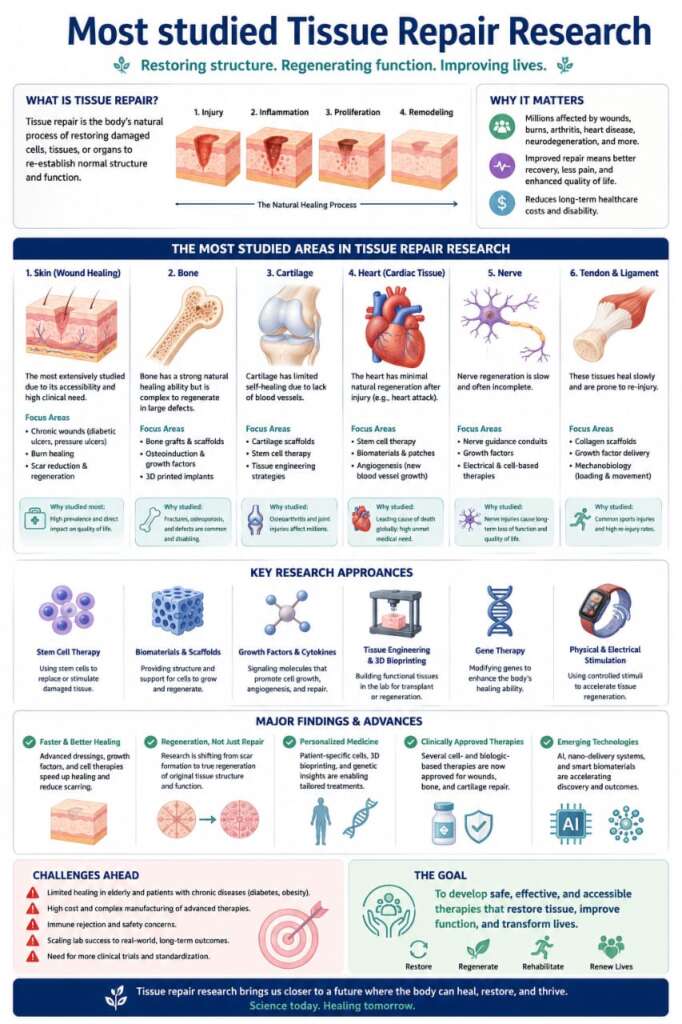
Individual Peptide Profiles
In laboratory research, each peptide is selected based on the biological pathways scientists intend to investigate. Although some peptides are often mentioned together, they are not interchangeable. Each has unique characteristics that make it suitable for different experimental models.
The following sections summarize some of the most studied tissue repair research peptides and the biological processes they are commonly investigated for.
Research Use Only Disclaimer: The information below is provided for educational purposes related to scientific research. These peptides are intended for laboratory and research use and are not approved medicines or intended for human consumption.
BPC-157
Overview
BPC-157 is one of the most widely discussed peptides in tissue repair research. Derived from a protein sequence originally identified in gastric tissue, it has become a common subject of studies exploring cellular communication and tissue organization.
Researchers frequently include BPC-157 in laboratory investigations involving connective tissue, gastrointestinal tissue models, and musculoskeletal biology.
Primary Research Focus
- Cellular signaling
- Connective tissue research
- Tendon and ligament models
- Muscle tissue research
- Gastrointestinal biology
- Experimental wound-healing models
Why Researchers Study It
Scientists continue to investigate BPC-157 because of its potential interactions with biological pathways involved in:
- Cell migration
- Angiogenesis
- Tissue organization
- Extracellular matrix remodeling
- Inflammatory signaling
These investigations aim to understand fundamental biological mechanisms under controlled laboratory conditions.
TB-500 (Thymosin Beta-4 Fragment)
Overview
TB-500 is a synthetic peptide based on a fragment of the naturally occurring protein Thymosin Beta-4. It is commonly studied for its role in cellular movement and tissue organization.
Researchers often incorporate TB-500 into experimental models examining connective tissue and musculoskeletal biology.
Primary Research Focus
- Cell migration
- Tissue organization
- Connective tissue models
- Muscle biology
- Tendon research
- Cytoskeletal dynamics
Why Researchers Study It
TB-500 is frequently investigated because cell movement plays an essential role in tissue maintenance and remodeling.
Research often examines:
- Cellular migration pathways
- Cytoskeletal organization
- Tissue remodeling
- Cell communication
- Experimental tissue models
GHK-Cu (Copper Peptide)
Overview
GHK-Cu is a naturally occurring copper-binding peptide that has been extensively investigated in studies involving skin biology, extracellular matrix remodeling, and collagen-related pathways.
It remains one of the most researched peptides in cosmetic and regenerative biology.
Primary Research Focus
- Collagen synthesis
- Skin biology
- Fibroblast activity
- Extracellular matrix research
- Cosmetic science
- Cellular aging research
Why Researchers Study It
Scientists investigate GHK-Cu because fibroblasts play an important role in producing structural proteins such as collagen and elastin.
Research commonly explores:
- Fibroblast behavior
- Extracellular matrix organization
- Collagen-related pathways
- Cell signaling
- Tissue architecture
KPV
Overview
KPV is a short peptide fragment derived from alpha-melanocyte-stimulating hormone. It has attracted scientific interest because of its association with inflammatory signaling pathways.
Primary Research Focus
- Inflammatory pathway research
- Immune signaling
- Skin biology
- Gastrointestinal laboratory models
Why Researchers Study It
Research involving KPV often examines:
- Cellular inflammatory signaling
- Immune system communication
- Tissue homeostasis
- Skin research
- Gastrointestinal biology
Scientists continue exploring how inflammatory signaling influences tissue maintenance and repair.
ARA-290
Overview
ARA-290 is a synthetic peptide that has been investigated in laboratory studies involving cellular signaling and nerve-related biology.
Although structurally different from many tissue repair peptides, it is included in regenerative research because of the signaling pathways scientists continue to explore.
Primary Research Focus
- Cellular signaling
- Peripheral nerve research
- Inflammatory biology
- Experimental regenerative models
Why Researchers Study It
Researchers investigate ARA-290 to better understand:
- Cell communication
- Tissue signaling
- Experimental nerve biology
- inflammatory mechanisms
LL-37
Overview
LL-37 is a naturally occurring antimicrobial peptide found within the innate immune system. It is frequently studied in microbiology and skin biology because of its role in host defense and cellular communication.
Why Researchers Study It
Scientific investigations commonly focus on:
- Host defense mechanisms
- Cell signaling
- Tissue biology
- Inflammatory pathways
- Skin research
Additional Peptides Commonly Studied in Tissue Repair Research
Although the six peptides above receive significant attention, several others also appear regularly in scientific literature.
| Peptide | Common Research Interest |
| Thymosin Alpha-1 | Immune system research |
| MOTS-c | Cellular metabolism and mitochondrial biology |
| Epitalon | Cellular aging and longevity research |
| IGF-1 LR3 | Cell growth and tissue biology |
| PEG-MGF | Muscle tissue research |
| CJC-1295 | Growth hormone signaling research |
These peptides are investigated in specific experimental contexts and should be selected according to the objectives of the research project.
Comparing Their Primary Research Focus
| Peptide | Main Biological Process Studied |
| BPC-157 | Cell signaling and tissue organization |
| TB-500 | Cell migration and remodeling |
| GHK-Cu | Collagen synthesis and fibroblast activity |
| KPV | Inflammatory signaling |
| ARA-290 | Cellular communication and nerve biology |
| LL-37 | Innate immune response |
Choosing the Right Research Peptide
The “best” peptide depends entirely on the biological question being investigated. Researchers typically choose peptides based on the pathways they wish to study rather than expecting one peptide to perform every role.
For example:
- Studies focused on collagen synthesis and fibroblast activity often include GHK-Cu.
- Projects investigating cell migration and tissue organization frequently explore TB-500.
- Research centered on cell signaling in connective tissue models may incorporate BPC-157.
- Experiments examining inflammatory pathways often investigate KPV.
- ARA-290 is commonly selected for studies involving cellular signaling and nerve biology.
- LL-37 is widely used in innate immune skin biology research.
Understanding these distinctions helps researchers design experiments that are aligned with their scientific objectives.
Why Peptide Quality Matters, Laboratory Experiences and Storage Best Practices
One factor that can significantly influence laboratory workflows is the quality and consistency of the research materials being used. Even well-designed studies can be complicated by inconsistent documentation, uncertain purity, or poor storage practices. For this reason, experienced researchers often evaluate suppliers just as careful as they evaluate their experimental protocol.
Why Peptide Purity Matters in Scientific Resesarch
Peptide purity is more than a number on a product label. It provides researchers with greater confidence that the material used in an experiment matches the expected composition described in the accompanying documentation.
When impurities or inconsistencies are present, they may introduce unnecessary variables into analytical work, making it more difficult to compare results across experiments or between laboratories.
High-quality research peptides can support:
- Better experimental consistency
- Easier batch-to-batch comparisons
- Reliable analytical verification
- Improved laboratory documentation
- Greater confidence during material qualification
For this reason, many laboratories request Certificates of Analysis (COAs) and review quality documentation before begining a study.
How NovaSynLabs Supports Research Quality
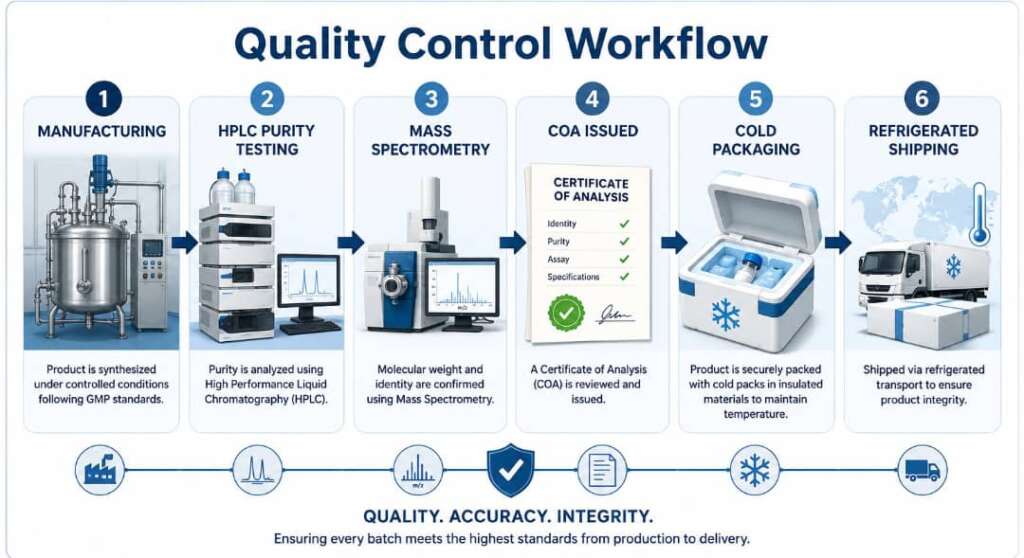
Since 2000, NovaSynLabs has supplied laboratory-grade peptides to researchers around the world. Our focus extends beyond providing research materials—we also emphasize documentation, quality verification, and educational resources to help laboratories maintain organized research workflows.
Our quality process includes:
| Quality Control Step | Purpose |
| Manufacturing | Peptides are produced under controlled laboratory processes. |
| HPLC Purity Testing | Verifies peptide purity and helps confirm product consistency. |
| Mass Spectrometry | Confirms molecular identity by verifying molecular mass. |
| Batch Traceability | Each batch is documented for easier tracking and verification. |
| Certificate of Analysis (COA) | Provides researchers with batch-specific quality documentation. |
| Cold-chain Packaging | Helps maintain product stability during transportation. |
| Refrigerated Shipping | Supports appropriate temperature handling throughout delivery. |
This combination of analytical testing and documentation allows researchers to verify materials before incorporating them into laboratory studies.
Why Batch Traceability Is Important
Scientific research depends on reproducibility. When experiments are repeated weeks or months later, researchers benefit from being able to identify the exact batch used in earlier work.
Batch traceability helps laboratories:
- Organize inventory efficiently
- Simplify record keeping
- Compare experimental data
- Verify documentation
- Maintain consistent sourcing practices
Combined with Certificates of Analysis, traceability supports more standardized laboratory procedures.
Representative Laboratory Experiences
The following representative scenarios illustrate common laboratory workflows and the value researchers place on consistency, documentation, and quality assurance.
Representative Laboratory Experience 1: Transitioning from a Lower-Purity Supplier
An independent research laboratory reported inconsistent chromatographic results when working with peptides sourced from multiple suppliers. After adopting NovaSynLabs research peptides for subsequent analytical work, the laboratory observed more consistent batch documentation, professionally labeled packaging, and Certificates of Analysis that simplified quality verification before experiments.
Observed Benefits
- Consistent product documentation
- Clear batch identification
- Secure, laboratory-focused packaging
- Improved confidence during material verification
Representative Laboratory Experience 2: Improved Workflow Consistency
A small biotechnology research group required peptide materials with consistent labeling and reliable packaging for routine laboratory studies. After incorporating NovaSynLabs products into their workflow, the team reported smoother inventory management and greater confidence in lot traceability thanks to standardized labeling and accompanying quality documentation.
Observed Benefits
- Reliable packaging integrity
- Consistent labeling across batches
- Easier inventory tracking
- Streamlined laboratory workflow
Representative Laboratory Experience 3: Supporting Experimental Reproducibility
A molecular biology research team sought to reduce variables associated with sourcing research peptides from different vendors. By standardizing procurement through NovaSynLabs, researchers noted improved consistency in documentation, packaging quality, and storage preparation, helping maintain standardized laboratory procedures throughout their research program.
Observed Benefits
- Consistent sourcing practices
- Professional packaging suitable for laboratory storage
- Batch-specific documentation
- Greater confidence in research workflow consistency
Disclaimer: These representative laboratory scenarios are provided for educational and illustrative purposes to demonstrate common research workflows. They do not represent clinical outcomes or guarantee specific research results. All NovaSynLabs products are intended strictly for laboratory and scientific research use only.
Common Misconceptions About Tissue Repair Research Peptides
As a supplier serving researchers since 2000, we’ve encountered several recurring misconceptions. Clarifying these points can help researchers make more informed decisions.
| Myth | Reality |
| Every peptide works the same way. | Different peptides are studied for different biological pathways and experimental objectives. |
| Purity isn’t important. | High-purity peptides and verified documentation help reduce unnecessary experimental variables. |
| Storage doesn’t matter after delivery. | Proper storage is essential for maintaining peptide stability and preserving research materials. |
| Research peptides are approved medicines. | Research peptides are supplied strictly for laboratory and scientific research unless approved by regulatory authorities for other uses. |
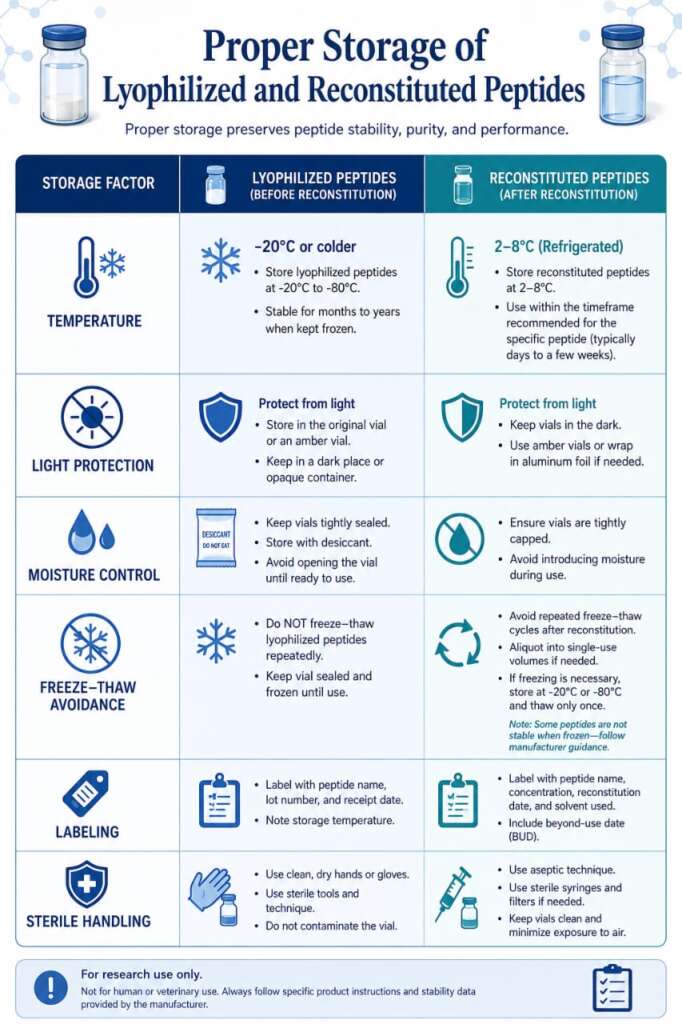
Proper Storage Practices for Research Peptides
Proper storage is a critical part of maintaining peptide integrity throughout a research project.
Before Reconstitution
- Store lyophilized peptides according to the manufacturer’s recommendations.
- Protect from excessive heat, moisture, and direct sunlight.
- Minimize unnecessary exposure to room temperature.
- Keep vials sealed until ready for laboratory use.
After Reconstitution
- Refrigerate according to the manufacturer’s storage guidance.
- Avoid repeated freeze–thaw cycles whenever possible.
- Label the vial with the preparation date and batch number.
- Use sterile laboratory techniques to reduce the risk of contamination.
Following appropriate storage procedures helps preserve sample quality and supports consistent laboratory workflows.
Why Researchers Around the World Choose NovaSynLabs
Researchers choose NovaSynLabs because we focus on the practical needs of laboratories:
- Laboratory-grade peptides with 98%+ purity
- HPLC purity testing
- Mass spectrometry verification
- Batch-specific Certificates of Analysis
- Batch traceability
- Cold-chain packaging
- Refrigerated shipping
- Discreet worldwide shipping
- Affordable pricing
- Educational resources for both beginners and experienced researchers
- Serving the scientific research community since 2000
Our goal is to support research professionals with reliable products, transparent documentation, and educational content that promotes informed laboratory practices.
Frequently Asked Questions (FAQ)
1. What are tissue repair research peptides?
Tissue repair research peptides are short chains of amino acids studied in laboratory settings to better understand biological processes such as cell signaling, inflammation, collagen synthesis, angiogenesis, fibroblast activity, and extracellular matrix remodeling. They are intended strictly for scientific research and are not approved medicines.
2. Which peptides are most commonly studied for tissue repair research?
Among the most frequently studied peptides are:
- BPC-157
- TB-500
- GHK-Cu
- KPV
- ARA-290
- LL-37
Researchers select these peptides based on the biological pathways they intend to investigate rather than expecting identical properties across all compounds.
3. Why is peptide purity important?
High-purity peptides help researchers reduce unnecessary experimental variables. Analytical testing methods such as High-Performance Liquid Chromatography (HPLC) and Mass Spectrometry, combined with Certificates of Analysis (COAs), provide greater confidence in material verification before experiments begin.
4. What is a Certificate of Analysis (COA)?
A Certificate of Analysis is a batch-specific quality document that typically includes information about purity testing, peptide identity, and other analytical results. Many laboratories review COAs as part of their material qualification process.
5. How should research peptides be stored?
Storage recommendations depend on the product and manufacturer’s guidance. In general:
- Keep lyophilized peptides sealed until use.
- Protect them from heat, moisture, and direct sunlight.
- Refrigerate reconstituted peptides according to the recommended storage conditions.
- Avoid repeated freeze-thaw cycles whenever possible.
- Label samples clearly to support inventory management and traceability.
6. Are all tissue repair research peptides the same?
No. Each peptide is studied for different biological pathways and research objectives. For example, GHK-Cu is commonly investigated in collagen and skin biology research, while TB-500 is often explored in studies of cell migration and tissue organization.
7. Why do researchers request batch traceability?
Batch traceability allows laboratories to identify the specific production lot used in an experiment. This supports reproducibility, inventory management, and more consistent documentation across research projects.
8. Why is cold-chain shipping important?
Cold-chain packaging and refrigerated shipping help maintain product stability during transport. Proper temperature handling is an important component of preserving research materials before they reach the laboratory.
9. How does NovaSynLabs support researchers?
NovaSynLabs supports researchers by providing:
- Laboratory-grade peptides
- ≥98% purity
- HPLC purity testing
- Mass spectrometry verification
- Batch-specific
- Batch traceability
- Cold-chain packaging
- Refrigerated shipping
- Discreet worldwide shipping
- Affordable pricing
- Educational resources for beginners and experienced researchers
10. Are NovaSynLabs peptides intended for human use?
No. All products supplied by NovaSynLabs are intended strictly for laboratory and scientific research purposes. They are not approved medicines and are not intended for human consumption.
Conclusion
Tissue repair research remains one of the most dynamic areas of peptide science. From investigations into cell signaling and inflammation to studies of collagen synthesis, fibroblast activity, angiogenesis, and extracellular matrix remodeling, researchers continue to expand our understanding of these complex biological processes.
Peptides such as BPC-157, TB-500, GHK-Cu, KPV, ARA-290, and LL-37 each to contribute to different areas of scientific investigation. Selecting the appropriate peptide depends on the specific research question, experimental model, and biological pathway being explored.
Equally important is the quality of the research material itself. Verified purity, batch traceability, Certificate of Analysis, and proper storage practices help laboratories maintain organized, reproducible workflows and confidence in their experimental materials.
Since 2000, NobaSynLabs has been committed to supporting the scientific community with laboratory-grade research peptides, comprehensive quality documentation, and educational resources designed to help researchers make informed decisions. By combining analytical testing, reliable packaging, and a focus on consistency, we strive to be a trusted partner for laboratories worldwide.
Whether you are beginning a new research project or expanding an existing program, choosing high-quality, well-documented research peptides is an important step toward maintaining rigorous laboratory standards.
Research Use Only Reminder: All NovaSynLabs products are intended strictly for laboratory and scientific research purposes. They are not approved for human consumption or therapeutic use.
Explore NovaSynLabs Research Peptides
Looking for high-quality research peptides backed by comprehensive quality documentation?
NovaSynLabs offers:
- Laboratory-grade peptides
- ≥98% purity
- HPLC purity testing
- Mass spectrometry verification
- Batch-specific Certificates of Analysis
- Cold-chain packaging
- Refrigerated shipping
- Batch traceability
- Discreet worldwide shipping
- Affordable pricing
- Educational resources for researchers
Browse our catalog to find the research peptides that best match your laboratory objectives.
For further research check related articles:
References

