




No products in the cart.
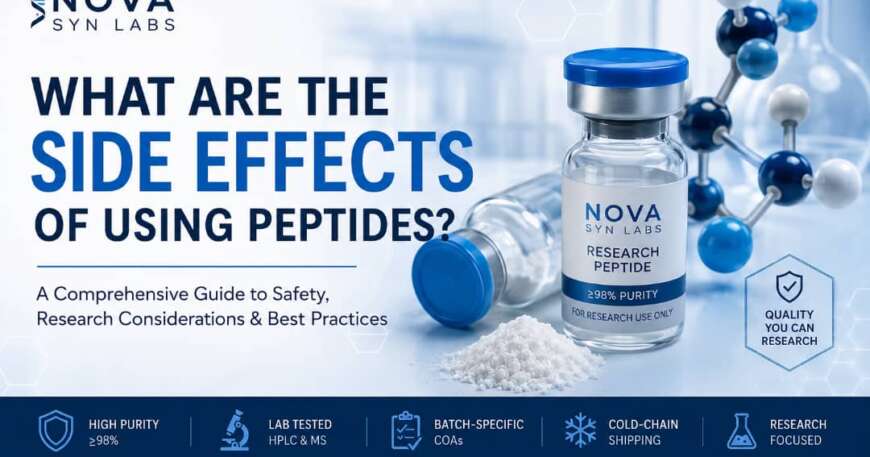
What Are The Side Effects of Using Peptides?
What Are the Side Effects of Using Peptides?
Peptides have become one of the fastest-growing areas of scientific research, with applications spanning cellular biology, metabolism, tissue regeneration, healthy aging, endocrinology, and mitochondrial function. As interest in research peptides continues to grow, so do questions surrounding peptide safety and potential side effects.
The answer, however, is more complex than simply listing possible adverse effects.
Unlike conventional drugs, peptides represent a broad class of molecules with diverse biological functions. Each peptide has its own structure, mechanism of action, and research focus. As a result, potential adverse effects observed in research settings vary depending on the peptide being studied, its purity, storage conditions, handling procedures, dosage used in experimental protocols, and the overall quality of the research material.
At NovaSyn Labs, we have supplied laboratory-grade peptides since 2000. Over the years, we’ve observed that many concerns attributed to “peptide side effects” actually stem from avoidable factors such as improper storage, poor handling practices, degraded peptides, counterfeit products, inconsistent purity, or the use of materials without comprehensive analytical documentation.
This guide examines the scientific factors that may influence peptide safety in research environments while providing practical recommendations for maintaining peptide quality and supporting reproducible laboratory workflows. This article is intended for educational and research purposes and does not constitute medical advice.
What Are Peptides?
Peptides are short chains of amino acids linked together by peptide bonds. They occur naturally throughout the body and participate in numerous biological processes, including cell signaling, hormone regulation, immune function, tissue maintenance, and metabolism.
Because peptides can interact with highly specific biological targets, researchers study them across many scientific disciplines, including:
- Healthy aging research
- Mitochondrial biology
- Tissue regeneration
- Metabolic research
- Endocrinology
- Neuroscience
- Exercise physiology
- Cosmetic peptide research
- Immunology
Their specificity makes peptides valuable research tools, but it also means that different peptides may have different biological effects and different safety considerations.
Why Side Effects Vary Between Peptides
One of the biggest misconceptions in peptide research is assuming that all peptides have the same safety profile.
In reality, peptides differ in:
- Amino acid sequence
- Molecular structure
- Biological targets
- Pharmacological properties
- Stability
- Research applications
For example, a peptide investigated for mitochondrial function behaves very differently from one being studied for growth hormone signaling or tissue repair.
Understanding these differences is essential when interpreting research findings.
Major Categories of Research Peptides
| Peptide Category | Examples | Primary Research Focus |
| GLP-1 Peptides | Semaglutide, Tirzepatide | Metabolic regulation |
| Growth Hormone Secretagogues | CJC-1295, Ipamorelin, GHRP-2, GHRP-6 | Growth hormone signaling |
| Recovery Peptides | BPC-157, TB-500, KPV | Tissue biology |
| Longevity Peptides | Epitalon, MOTS-c | Healthy aging |
| Mitochondrial Peptides | SS-31, Humanin | Mitochondrial biology |
| Cosmetic Peptides | GHK-Cu | Skin and extracellular matrix research |
Each category is associated with distinct mechanisms of action and different research considerations.
How Peptides Interact with Biological Systems
Peptides influence cellular activity by binding to specific receptors or interacting with defined molecular pathways.
Depending on the peptide, researchers investigate interactions involving:
- Cell surface receptors
- Intracellular signaling proteins
- Hormonal pathways
- Mitochondrial function
- Immune signaling
- Gene expression
- Growth factor pathways
Because these pathways differ substantially, it is inaccurate to generalize potential side effects across all peptide classes.
Understanding Peptide Pharmacology
Pharmacology is the study of how molecules interact with biological systems.
When researchers investigate peptides, they consider several important characteristics:
Receptor Selectivity
Some peptides bind very specifically to one receptor, while others may interact with multiple signaling pathways.
Higher receptor selectivity generally allows researchers to investigate targeted biological mechanisms more precisely.
Biological Half-Life
Peptides vary considerably in how long they remain stable under experimental conditions.
Some are rapidly broken down by naturally occurring enzymes, while others are modified to increase stability.
This is one reason why storage and handling recommendations differ between peptides.
Biological Activity
Each peptide is designed or selected for a specific research purpose.
Examples include:
- Metabolic signaling
- Cellular repair pathways
- Mitochondrial biology
- Hormonal regulation
- Immune function
Different biological activities may be associated with different observations in laboratory studies.
Why Biological Variability Matters
Even under carefully controlled laboratory conditions, biological responses are rarely identical.
Experimental outcomes may be influenced by:
- Cell type
- Experimental model
- Environmental conditions
- Peptide concentration
- Exposure duration
- Laboratory technique
This variability explains why researchers emphasize reproducibility and standardized protocols rather than relying on isolated observations.
Factors That Can Influence Observed Side Effects
Potential adverse observations in peptide research are not determined solely by the peptide itself.
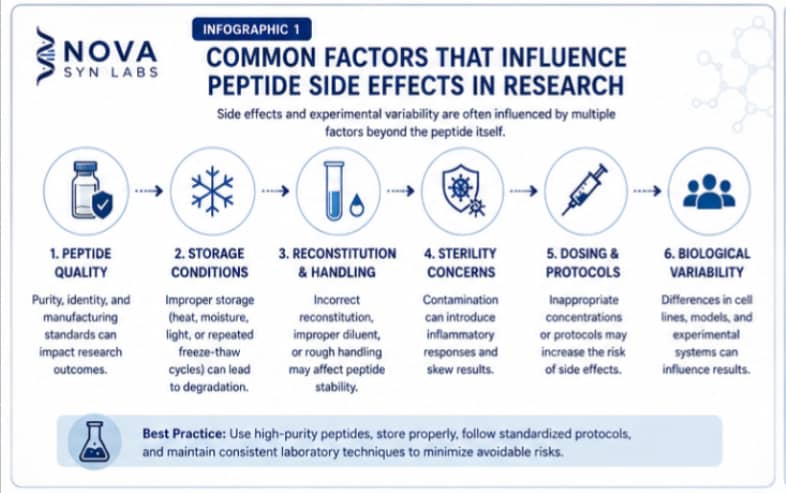
Researchers also consider:
- Peptide purity
- Manufacturing quality
- Storage conditions
- Sterility
- Reconstitution technique
- Shipping conditions
- Laboratory handling
- Experimental design
Many of these factors can be controlled through appropriate laboratory practices.
Product Quality Matters
At NovaSyn Labs, one of the most common concerns raised by customers involves peptide quality rather than the peptide molecule itself.
Poor-quality materials may introduce unnecessary variability into laboratory experiments.
For this reason, high-quality research peptides should include:
- High purity
- Batch-specific Certificates of Analysis (COAs)
- HPLC analytical data
- Mass spectrometry verification
- Appropriate packaging
- Proper storage recommendations
These quality measures help researchers better understand the materials being used in their studies.
Common Questions Researchers Ask
Over the years, NovaSyn Labs has received recurring questions related to peptide safety and handling.
The most common include:
- Can peptide purity influence research outcomes?
- Why do injection site reactions occur in some studies?
- How important is proper storage?
- Does repeated freezing and thawing affect peptide stability?
- How can counterfeit products be identified?
- Why do some laboratories report inconsistent results?
Many of these questions relate to research methodology and product quality rather than inherent properties of peptides themselves.
Common Misconceptions
Several misconceptions continue to circulate within peptide research.
Misconception 1: All Peptides Have the Same Side Effects
False.
Different peptide classes interact with different biological pathways.
Misconception 2: Higher Doses Always Produce Better Results
Higher concentrations do not automatically improve experimental outcomes.
Appropriate study design remains far more important.
Misconception 3: Natural Peptides Cannot Produce Adverse Effects
Naturally occurring peptides still interact with complex biological systems.
Their effects depend on the experimental context.
Misconception 4: Side Effects Are Caused Only by the Peptide
Observed issues may also result from:
- Low purity
- Contamination
- Improper storage
- Incorrect handling
- Degraded material
Misconception 5: Product Quality Doesn’t Matter
High-quality analytical documentation helps researchers verify peptide identity and purity while supporting reproducible laboratory work.
Why Researchers Should Choose Reputable Suppliers
Selecting a reliable supplier is one of the simplest ways to reduce avoidable variability.
NovaSyn Labs supports researchers by providing:
- ≥98% purity
- Batch-specific Certificates of Analysis
- High-Performance Liquid Chromatography (HPLC) testing
- Mass Spectrometry (MS) verification
- Cold-chain shipping where appropriate
- Secure packaging
- Detailed storage guidance
These measures help researchers maintain confidence in the quality of their research materials.
Comparison Table: Factors That Influence Peptide Safety
| Factor | Why It Matters | Best Practice |
| Purity | Helps reduce unwanted variability | Choose peptides with ≥98% purity |
| HPLC Testing | Confirms peptide composition | Review analytical chromatograms |
| Mass Spectometry | Verifies molecular identity | Check batch-specific MS data |
| Storage | Supports peptide stability | Follow recommended temperatures |
| Freeze-Thaw Cycles | Repeated cycles may reduce stability | Prepare single-use aliquots where appropriate |
| Reconstitution | Incorrect preparation may affect experiments | Follow product-specific guidance |
| Sterility | Important for laboratory integrity | Use appropriate aseptic techniques |
| Supplier Quality | Influences confidence in research materials | Purchase from reputable suppliers with COAs |
NovaSyn Labs Insight
Since 2000, we have observed that laboratories achieving the most consistent results typically share several practices: they select well-characterized peptides with verified analytical documentation, maintain recommended storage conditions, minimize repeated freeze-thaw cycles, and follow standardized laboratory protocols. While no quality system can eliminate all experimental variability, careful attention to these fundamentals helps support reliable and reproducible peptide research.
Key Takeaways
- Peptides are a diverse group of molecules with different biological targets and research applications.
- Potential side effects and research observations vary between peptide classes and experimental conditions.
- Product purity, storage, handling, sterility, and experimental design all influence research quality.
- Choosing high-purity peptides with comprehensive analytical documentation can help reduce avoidable variability.
- Understanding peptide pharmacology provides essential context for interpreting laboratory findings.
Injection Site Reactions
Injection site reactions are among the most frequently reported observations when injectable peptides are used in research.
Common observations may include:
- Redness
- Mild swelling
- Temporary discomfort
- Localized itching
- Minor bruising
These reactions are often temporary and may be influenced by factors beyond the peptide itself.
Factors That May Contribute
Researchers consider several possible causes, including:
- Injection technique
- Injection volume
- Solution concentration
- Sterility
- Product purity
- Individual biological variability
- Repeated injections into the same location
Using standardized laboratory procedures helps reduce variability related to administration techniques.
Immunogenicity
What Is Immunogenicity?
Immunogenicity refers to the ability of a substance to trigger an immune response.
Although many peptides are designed to resemble naturally occurring biological molecules, researchers still evaluate whether certain peptides may stimulate immune responses under specific experimental conditions.
Potential observations under investigation include:
- Antibody formation
- Local inflammatory responses
- Changes in immune signaling
Immunogenicity depends on multiple factors, including peptide structure, experimental model, and duration of exposure.
Product Purity and Experimental Variability
One of the most overlooked contributors to inconsistent research outcomes is peptide purity.
Peptides containing unwanted impurities may introduce unnecessary variability into experiments.
This is why reputable suppliers perform analytical testing before products are released.
NovaSyn Labs provides:
- ≥98% purity
- High-Performance Liquid Chromatography (HPLC) testing
- Mass Spectrometry (MS) verification
- Batch-specific Certificates of Analysis (COAs)
These measures help researchers verify peptide identity and quality before beginning experimental work.
Sterility Considerations
Sterility plays an important role in maintaining laboratory integrity.
Researchers should ensure:
- Sterile handling techniques
- Appropriate laboratory environments
- Proper storage after reconstitution
- Suitable laboratory equipment
Maintaining sterility helps reduce the risk of contamination that could affect experimental results.
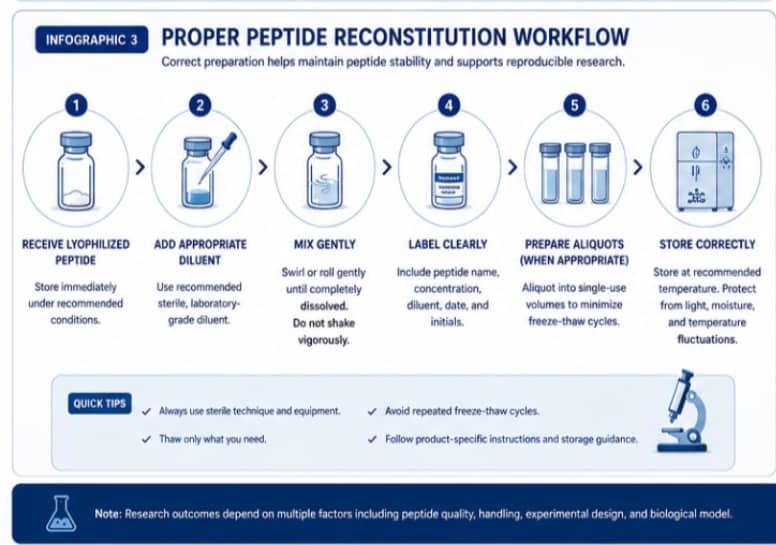
Incorrect Reconstitution
Many research peptides are supplied in lyophilized (freeze-dried) form and require reconstitution before use.
Improper reconstitution may affect:
- Peptide concentration
- Experimental consistency
- Sample stability
- Reproducibility
Best practices include:
- Using appropriate laboratory-grade diluents
- Following product-specific instructions
- Mixing gently rather than shaking vigorously
- Clearly labeling prepared solutions
Peptide Degradation
Peptides are biological molecules that may degrade over time if not stored correctly.
Potential causes of degradation include:
- Heat exposure
- Moisture
- Repeated freeze-thaw cycles
- Extended room-temperature exposure
- Improper storage containers
Degraded peptides may no longer perform consistently in laboratory experiments.
Counterfeit Products
The increasing popularity of peptides has unfortunately led to an increase in counterfeit and poorly characterized products.
Potential concerns include:
- Unknown purity
- Incorrect peptide identity
- Missing analytical documentation
- Inconsistent concentrations
- Inadequate packaging
Selecting suppliers that provide comprehensive quality documentation helps researchers evaluate the materials used in their studies.
Dosing Misunderstandings
Another common misconception is that increasing peptide concentration automatically improves research outcomes.
In reality, experimental protocols are carefully designed to investigate specific concentration ranges.
Appropriate concentration selection depends on:
- Research objectives
- Published literature
- Experimental model
- Study design
Using concentrations outside validated protocols may introduce unnecessary variability without improving data quality.
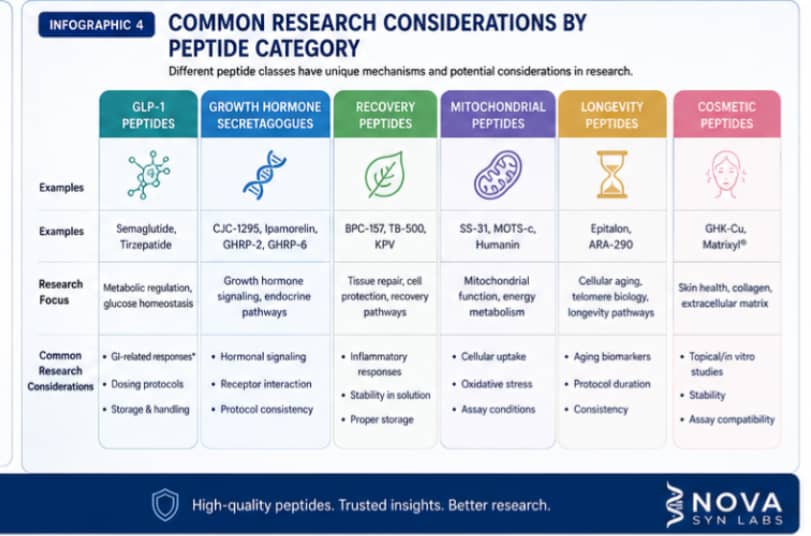
Commonly Reported Research Considerations by Peptide Category
| Peptide Category | Examples | Research Considerations |
| GLP-1 Peptides | Semaglutide, Tirzepatide | Gastrointestinal effects are commonly evaluated in clinical contexts; handling and purity remain important in research. |
| Growth Hormone Secretagogues | CJC-1295, Ipamorelin, GHRP-2 | Researchers investigate endocrine signaling and protocol consistency. |
| Recovery Peptides | BPC-157, TB-500, KPV | Focus on tissue biology, storage stability, and reproducibility. |
| Mitochondrial Peptides | SS-31, MOTS-c, Humanin | Mitochondrial assays require high-quality materials and standardized handling. |
| Longevity Peptides | Epitalon | Cellular aging studies depend on carefully controlled experimental conditions. |
| Cosmetic Peptides | GHK-Cu | Oxidative stress and extracellular matrix research require consistent peptide quality. |
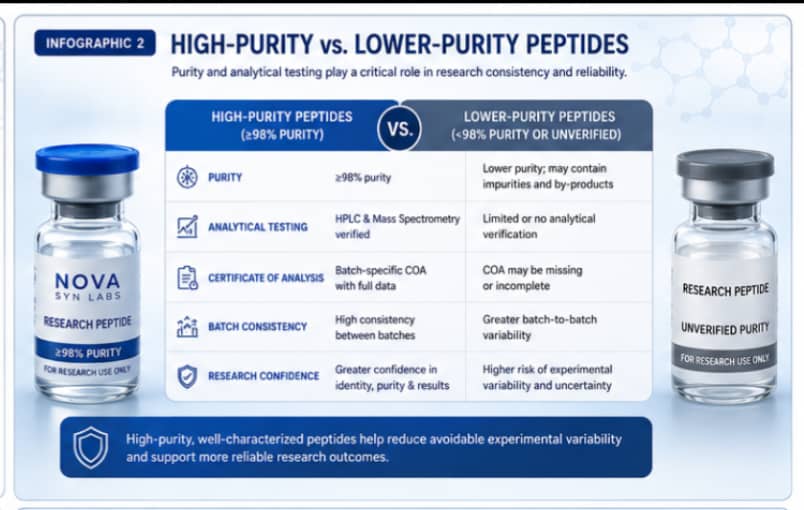
High-Purity vs. Lower-Purity Peptides
| High-Purity Peptides | Lower-Purity Peptides |
| Comprehensive analytical testing | Limited analytical verification |
| Greater confidence in identity | Greater uncertainty regarding composition |
| Batch-specific COAs | Documentation may be incomplete or absent |
| Reduced potential for impurity-related variability | Increased risk of inconsistent results |
| Better support for reproducible research | Greater variability between experiments |
Lyophilized vs. Pre-Mixed Peptides
| Lyophilized Peptides | Pre-Mixed Peptides |
| Generally offer improved long-term stability before reconstitution | May have shorter stability after preparation |
| Require reconstitution | Ready for use after appropriate handling |
| Easier to store for extended periods under recommended conditions | Require careful attention to storage throughout use |
| Widely used in laboratory research | Selected when compatible with study requirements |
Injectable vs. Oral Peptides
| Injectable Peptides | Oral Peptides |
| Often used because many peptides are broke down in the digestive system | Some peptide formulations are designed to improve oral delivery |
| Require appropriate sterile handling | Eliminate injection-related handling considerations |
| Injection-site observations may be evaluated | Different absorption characteristics are investigated |
| Common in laboratory research | Increasing area of pharmaceutical research |
Why Product Quality Matters
Researchers sometimes attribute inconsistent findings to the peptide itself when quality-related factors may also play a role.
Important quality indicators include:
- Peptide purity
- HPLC chromatograms
- Mass spectrometry verification
- Batch-specific COAs
- Cold-chain shipping
- Proper packaging
- Storage guidance
Together, these measures help support confidence in research materials.
Common Myths About Peptide Side Effects
| Myth | Scientific Perspective |
| All peptides produce the same side effects. | Different peptides interact with different biological pathways. |
| Natural peptides cannot cause adverse reactions. | Naturally occurring molecules may still produce biological responses depending on the experimental context. |
| Higher concentrations always improve results. | Experimental outcomes depend on study design, not simply concentration. |
| Product quality has little impact. | Quality and analytical verification contribute to research consistency. |
| Storage does not matter. | Improper storage may reduce peptide stability and affect reproducibility. |
NovaSyn Labs Insight
As demand for research peptides has grown, NovaSyn Labs has received increasing questions about injection-site reactions, peptide purity, storage practices, counterfeit products, and dosing misunderstandings. In our experience, many research challenges can be minimized by selecting well-characterized peptides, reviewing Certificates of Analysis, maintaining appropriate storage conditions, and following standardized laboratory procedures. These steps cannot eliminate all sources of variability, but they can help researchers work with materials that have been properly characterized and handled.
Key Takeaways
- The potential side effects and research considerations associated with peptides vary depending on the peptide class, experimental conditions, and study design.
- Injection-site reactions, immunogenicity, product purity, sterility, and proper reconstitution are all important considerations in peptide research.
- High-purity peptides supported by HPLC testing, mass spectrometry, and batch-specific COAs help improve confidence in research materials.
- Proper storage and handling practices are essential for maintaining peptide stability and supporting reproducible laboratory results.
Why Peptide Purity Matters
Peptide purity is one of the most important quality indicators in research.
Purity refers to the percentage of the final product that consists of the intended peptide sequence rather than unwanted by-products or impurities from the manufacturing process.
Lower-purity materials may contain:
- Incomplete peptide fragments
- Manufacturing by-products
- Oxidized peptides
- Truncated sequences
- Other impurities
These may introduce unnecessary variability into laboratory experiments.
For this reason, NovaSyn Labs supplies peptides manufactured to ≥98% purity.
How Purity Is Verified
Purity should never be assumed—it should be verified through analytical testing.
Every batch supplied by NovaSyn Labs includes analytical documentation to help researchers evaluate product quality.
High-Performance Liquid Chromatography (HPLC)
HPLC is used to separate peptide components and estimate purity.
Researchers review chromatograms to determine whether the sample predominantly contains the intended peptide.
Mass Spectrometry (MS)
Mass spectrometry verifies molecular identity by measuring molecular weight.
This provides additional confidence that the supplied material matches the intended peptide sequence.
Certificates of Analysis (COAs)
Every batch includes a Certificate of Analysis documenting:
- Peptide identity
- Batch number
- Purity
- HPLC results
- Mass spectrometry verification
This documentation supports traceability and quality assurance throughout research projects.
Comparison: High-Purity vs Lower-Purity Peptides
| High-Purity Peptides | Lower-Purity Peptides |
| ≥98% purity | Greater uncertainty in composition |
| HPLC verified | Limited analytical documentation |
| MS verified | Molecular identity may not be confirmed |
| Batch-specific COAs | Documentation may be incomplete |
| Better batch consistency | Greater variability between batches |
| Supports reproducible research | May introduce unnecessary experimental variability |
Why Proper Storage Matters
Even high-quality peptides can lose stability if stored improperly.
Researchers often focus heavily on purity while overlooking storage conditions.
Important environmental factors include:
- Temperature
- Moisture
- Light exposure
- Oxygen
- Repeated freeze-thaw cycles
Proper storage helps preserve peptide integrity throughout the study.
Avoiding Repeated Freeze-Thaw Cycles
One of the most common handling mistakes involves repeatedly freezing and thawing the same peptide solution.
Each freeze-thaw cycle may contribute to gradual degradation.
To minimize this risk, researchers often:
- Prepare single-use aliquots
- Thaw only the amount required for each experiment
- Return unused lyophilized material to recommended storage promptly
These practices help maintain sample consistency over time.
Cold-Chain Shipping
Maintaining recommended temperatures during shipping is another important aspect of peptide quality.
NovaSyn Labs uses cold-chain shipping where appropriate to help protect peptide stability during transit.
Temperature control is especially important for peptides that may be sensitive to prolonged exposure to elevated temperatures.
Proper Reconstitution
Many peptides are supplied in lyophilized form.
Proper reconstitution contributes to consistent laboratory workflows.
Recommended practices include:
- Use suitable laboratory-grade diluents.
- Follow product-specific reconstitution guidance.
- Mix gently rather than shaking vigorously.
- Label solutions with preparation dates.
- Store reconstituted peptides according to recommendations.
Standardized preparation helps reduce unnecessary variability between experiments.
Choosing a Reputable Supplier
Selecting a supplier should involve more than comparing prices.
Researchers should evaluate whether suppliers provide:
- Batch-specific COAs
- HPLC chromatograms
- Mass spectrometry verification
- High purity
- Cold-chain shipping where appropriate
- Secure packaging
- Clear storage recommendations
- Responsive technical support
Reliable documentation helps researchers understand exactly what materials are being used in their studies.
Laboratory Best Practices
Research quality depends on consistency.
Recommended laboratory practices include:
Before Beginning an Experiment
- Review the Certificate of Analysis.
- Confirm peptide identity.
- Inspect packaging.
- Verify storage conditions.
During Peptide Preparation
- Use sterile laboratory equipment.
- Follow standardized reconstitution procedures.
- Prepare aliquots when appropriate.
- Label all samples clearly.
During Storage
- Store according to recommended temperatures.
- Protect from moisture.
- Protect from unnecessary light exposure.
- Avoid repeated freeze-thaw cycles.
During Experimental Work
- Follow standardized laboratory protocols.
- Maintain detailed records.
- Use appropriate controls.
- Document any deviations from protocol.
Anonymous Case Study 1
Higher-Purity Peptides Improved Experimental Consistency
A research laboratory studying peptide interactions with mitochondrial proteins noticed inconsistent analytical results across several experimental batches.
Following a workflow review, the team identified differences in peptide purity between suppliers as one possible source of variability.
The laboratory transitioned to peptides accompanied by:
- HPLC chromatograms
- Mass spectrometry verification
- Comprehensive analytical documentation
Observations
During subsequent experiments, researchers reported:
- Improved consistency in peptide characterization
- Reduced variability between batches
- Greater confidence in research materials
Although experimental outcomes continued to depend on assay design, instrumentation, and laboratory technique, improved analytical documentation helped standardize their workflow.
Key takeaway: Well-characterized, high-purity peptides supported by analytical testing can help reduce one potential source of experimental variability.
Anonymous Case Study 2
Improved Reproducibility Through Proper Storage and Handling
A university research group investigating mitochondrial signaling experienced inconsistent results across repeated peptide assays.
An internal review found several handling issues, including:
- Repeated freeze-thaw cycles
- Extended room-temperature exposure
- Inconsistent storage procedures
The laboratory introduced standardized handling protocols.
These included:
- Preparing single-use aliquots
- Storing lyophilized peptides under recommended conditions
- Protecting samples from moisture
- Minimizing unnecessary freeze-thaw cycles
Observations
Researchers later reported:
- Improved reproducibility
- More consistent assay performance
- Reduced variability between independent experiments
- Better preservation of sample integrity
Experimental outcomes continued to depend on many factors, including study design and instrumentation, but standardized handling procedures contributed to a more consistent research workflow.
Key takeaway: Proper storage and handling are important components of maintaining peptide quality and supporting reproducible laboratory research.
Why Experimental Design Still Matters Most
Even the highest-quality peptides cannot compensate for poor experimental design.
Reliable research requires:
- Clearly defined hypotheses
- Appropriate controls
- Validated analytical methods
- Standardized protocols
- Accurate record-keeping
- Proper statistical analysis
Quality materials and good laboratory practice work together to support meaningful scientific investigations.
NovaSyn Labs Quality Commitment
Since 2000, NovaSyn Labs has focused on supplying laboratory-grade peptides supported by comprehensive quality documentation.
Our quality process includes:
- ≥98% purity
- High-Performance Liquid Chromatography (HPLC)
- Mass Spectrometry (MS)
- Batch-specific Certificates of Analysis
- Cold-chain shipping where appropriate
- Secure packaging
- Proper storage guidance
These practices help researchers begin experiments with well-characterized materials and support confidence in laboratory workflows.
Comparison Table: Research Quality Checklist
| Quality Factor | Why It Matters | NovaSyn Labs Standard |
| Purity | Supports consistency | ≥98% purity |
| HPLC Testing | Confirms composition | Included |
| Mass Spectrometry | Verifies identity | Included |
| COA | Batch traceability | Included with every batch |
| Cold-chain Shipping | Helps maintain stability | Available where appropriate |
| Secure Packaging | Protects product integrity | Standard practice |
| Storage Guidance | Supports peptide stability | Included |
Key Takeaways
- High peptide purity, verified by HPLC and mass spectrometry, helps support reproducible laboratory research.
- Proper storage, cold-chain shipping, and minimizing freeze-thaw cycles are important for maintaining peptide stability.
- Standardized handling protocols and comprehensive analytical documentation can reduce avoidable experimental variability.
- Choosing a reputable supplier with transparent quality controls is a key step in supporting consistent research outcomes.
- Experimental design, appropriate controls, and good laboratory practices remain essential for producing meaningful scientific data.
Best Practices for Reducing Avoidable Risks in Peptide Research
Whether studying metabolic peptides, recovery peptides, longevity peptides, or mitochondrial peptides, following standardized procedures can help maintain peptide quality and support reproducible laboratory results.
1. Choose High-Purity Research Peptides
One of the simplest ways to improve confidence in research materials is selecting peptides supported by comprehensive analytical testing.
Look for suppliers that provide:
- ≥98% purity
- Batch-specific Certificates of Analysis (COAs)
- High-Performance Liquid Chromatography (HPLC) testing
- Mass Spectrometry (MS) verification
These documents help researchers confirm the identity and quality of the peptide before beginning experiments.
2. Store Peptides Correctly
Storage conditions have a direct impact on peptide stability.
General best practices include:
- Follow the manufacturer’s storage recommendations.
- Protect peptides from excessive heat and moisture.
- Limit unnecessary exposure to light where applicable.
- Store reconstituted peptides according to product guidance.
Proper storage helps preserve sample integrity throughout the study.
3. Minimize Freeze-Thaw Cycles
Repeated freeze-thaw cycles may contribute to peptide degradation over time.
Researchers commonly reduce this risk by:
- Preparing single-use aliquots
- Thawing only the quantity required
- Returning remaining material to recommended storage promptly
4. Follow Standardized Laboratory Protocols
Consistency is essential for reproducible research.
Standardize:
- Sample preparation
- Reconstitution procedures
- Storage conditions
- Laboratory documentation
- Instrument calibration
- Experimental controls
Reducing procedural variability improves confidence in experimental findings.
5. Purchase From Reputable Suppliers
Reliable suppliers provide more than a peptide vial.
Researchers should expect:
- Transparent quality documentation
- Batch traceability
- Proper packaging
- Cold-chain shipping where appropriate
- Technical information
- Storage recommendations
These practices support high-quality laboratory research.
Common Myths About Peptide Side Effects
| Myth | Reality |
| All peptides have identical side effects. | Different peptides interact with different biological pathways and should be evaluated individually. |
| Higher doses always improve results. | Appropriate study design and validated protocols are more important than simply increasing concentration. |
| Natural peptides cannot produce adverse biological responses. | Naturally occurring peptides can still influence complex biological systems. |
| Storage conditions don’t matter. | Improper storage may reduce peptide stability and contribute to inconsistent research results. |
| Product quality has little influence. | High-quality, analytically verified peptides help reduce avoidable experimental variability. |
Frequently Asked Questions
What are the most common side effects associated with peptide research?
Reported observations vary depending on the peptide and research model. Common considerations include injection-site reactions, product purity, sterility, storage conditions, and handling procedures.
Do all peptides produce the same side effects?
No. Each peptide has a unique amino acid sequence, biological target, and research application. Safety considerations differ between peptide classes.
Why is peptide purity important?
High-purity peptides help reduce unwanted variability in laboratory experiments and support reproducible research. NovaSyn Labs supplies peptides manufactured to ≥98% purity, with batch-specific analytical documentation.
What is a Certificate of Analysis (COA)?
A COA is a quality document that typically includes:
- Peptide identity
- Purity
- Batch number
- HPLC results
- Mass spectrometry verification
It provides important information about the characteristics of each peptide batch.
Why are HPLC and Mass Spectrometry important?
HPLC helps assess peptide purity, while mass spectrometry confirms molecular identity.
Together, these analytical methods help researchers verify the materials used in their experiments.
Can improper storage affect peptide quality?
Yes. Heat, moisture, prolonged room-temperature exposure, and repeated freeze-thaw cycles may reduce peptide stability.
Following recommended storage guidance helps maintain sample integrity.
Why do researchers prepare aliquots?
Aliquots reduce the need to repeatedly thaw the same sample, helping preserve peptide stability during long-term research projects.
How can researchers reduce experimental variability?
Researchers can improve consistency by:
- Selecting high-quality peptides
- Reviewing COAs
- Following standardized protocols
- Maintaining appropriate storage conditions
- Using proper laboratory techniques
- Carefully documenting experimental procedures
Are counterfeit peptides a concern?
Counterfeit or poorly characterized products may lack appropriate analytical documentation or quality verification. Purchasing from reputable suppliers that provide transparent quality information helps researchers evaluate the materials used in their studies.
What should researchers consider before selecting a peptide?
Researchers should evaluate:
- Research objectives
- Peptide mechanism of action
- Product purity
- Analytical documentation
- Storage requirements
- Supplier quality standards
Conclusion
Peptides have become essential tools in modern scientific research, supporting investigations into metabolism, tissue biology, healthy aging, mitochondrial function, endocrinology, and many other areas of life science.
Because peptides differ in structure and biological activity, there is no single answer to the question, “What are the side effects of using peptides?” Observations depend on the specific peptide under investigation, the experimental model, laboratory procedures, and the quality of the research materials.
At NovaSyn Labs, we have supplied laboratory-grade peptides since 2000 and have seen firsthand how quality assurance contributes to research consistency. Laboratories that prioritize high-purity peptides, comprehensive analytical documentation, proper storage, standardized handling, and carefully designed experiments are better positioned to generate reliable and reproducible data.
Ultimately, peptide quality is only one part of successful research. Equally important are rigorous scientific methods, appropriate controls, and adherence to established laboratory protocols. By combining these practices with well-characterized research materials, scientists can conduct studies with greater confidence in the integrity of their experimental workflows.
Related Articles
- How Do Peptides Influence Cellular Aging Pathways?
- What Role Do Peptides Play in Mitochondrial Research?
- How Is Peptide Purity Maintained During Storage?
Peer-Reviewed References
- López-Otín C, et al. The Hallmarks of Aging. Cell.
- López-Otín C, et al. Hallmarks of Aging: An Expanding Universe. Cell.
- Nature Reviews Molecular Cell Biology. Mitochondria as Signaling Organelles.
- Nature Reviews Molecular Cell Biology. Mitophagy Review.
References
- National Center for Biotechnology Information (NCBI)
- PubMed
- National Institute of Health (NIH)
- International Union of Pure and Applied Chemistry (IUPAC)

