


No products in the cart.
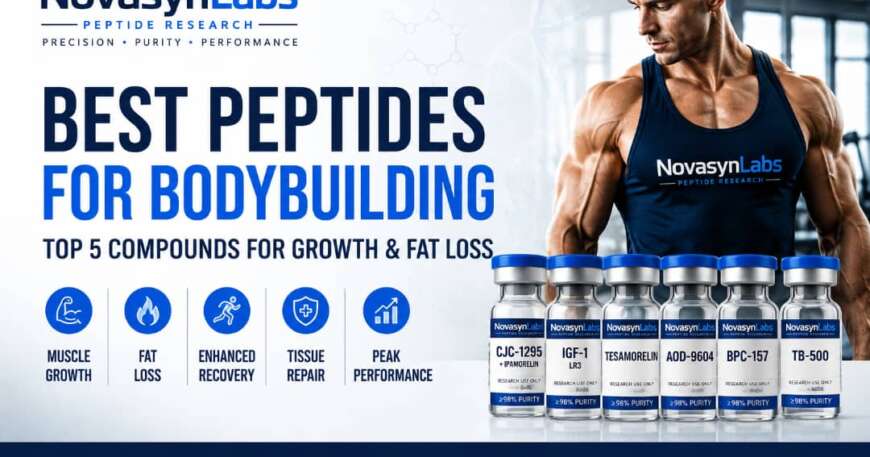
Best Peptides for Bodybuilding: Top 5 Compounds for Growth & Fat Loss (2026 Guide)
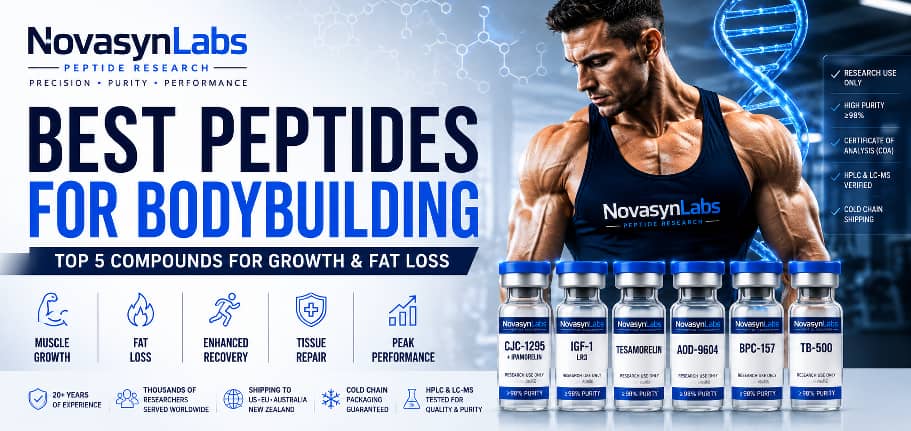
Table of Contents
Best Peptides for Bodybuilding: Top 5 Compounds for Growth & Fat Loss (2026 Guide)
The search for the best peptides for bodybuilding has grown rapidly as researchers continue investigating how specific peptide compounds interact with biological pathways involved in muscle physiology, recovery, metabolism, and body composition. Unlike traditional anabolic agents, peptides are short chains of amino acids that can interact with specific receptors or signaling pathways, making them valuable tools for scientific investigation.
Today’s research extends beyond muscle growth alone. Scientists are also exploring peptides that may influence protein synthesis, recovery from exercise-induced stress, connective tissue repair, growth hormone pathways, and fat metabolism. This broader approach helps researchers better understand the complex biological processes involved in body composition and physical performance.
With increasing interest comes an equally important challenge: choosing high-quality research peptides. Product purity, analytical testing, storage conditions, and supplier reliability all play significant roles in producing reproducible laboratory results. Even the most promising peptide can generate inconsistent data if quality control standards are inadequate.
At NovaSynLabs, we have spent more than 20 years supporting scientific research, supplying thousands of research customers across the United States, Europe, Australia, and New Zealand. Throughout this time, we’ve observed that successful peptide research depends not only on selecting the appropriate compound but also on standardized experimental protocols, rigorous quality verification, and proper sample handling.
In this guide, we’ll examine the best peptides for bodybuilding research, compare their primary areas of investigation, discuss quality considerations, share practical research insights, and highlight common mistakes that can affect experimental consistency.
Research Use Only: The peptides discussed in this article are intended exclusively for laboratory and scientific research. They are not approved for human consumption, therapeutic use, or performance enhancement. Researchers should comply with all applicable laws, institutional policies, and ethical guidelines.
Quick Takeaways
- The best peptides for bodybuilding vary depending on the research objective, whether investigating muscle physiology, recovery, fat metabolism, or body composition.
- CJC-1295 + Ipamorelin are frequently studied together for growth hormone pathway research.
- IGF-1 LR3 is widely investigated for its role in protein synthesis and muscle physiology.
- Tesamorelin and AOD-9604 are commonly explored in metabolic and body composition studies.
- BPC-157 and TB-500 remain popular in research involving recovery and connective tissue biology.
- Independent HPLC testing, LC-MS verification, and Certificates of Analysis (COAs) are essential indicators of product quality.
- Standardized protocols, proper storage, and careful sample handling contribute significantly to reproducible research outcomes.
What Are Bodybuilding Peptides?
Bodybuilding peptides are short chains of amino acids that researchers study because of their ability to interact with specific biological pathways related to muscle physiology, metabolism, recovery, and growth hormone signaling. Unlike larger proteins, peptides consist of relatively small amino acid sequences that can influence highly targeted cellular processes.
Rather than affecting multiple systems broadly, many peptides are investigated for their interactions with specific receptors or signaling mechanisms. This targeted nature makes them valuable tools in laboratory settings where researchers seek to better understand complex physiological responses.
Current scientific investigations commonly focus on areas such as:
- Growth hormone signaling pathways
- Muscle protein synthesis
- Exercise recovery
- Connective tissue biology
- Fat metabolism
- Body composition
- Cellular repair mechanisms
- Energy regulation
Although these research areas are often associated with bodybuilding and sports science, peptides are also studied in endocrinology, metabolic research, regenerative biology, and aging-related investigations.
Peptides vs. Anabolic Steroids
One of the most common misconceptions is that peptides function in the same manner as anabolic steroids. In reality, these two categories of compounds differ substantially in structure, biological targets, and research applications.
| Feature | Research Peptides | Anabolic Steroids |
| Molecular Structure | Short amino acid chains | Synthetic steroid hormones |
| Primary Research Focus | Specific biological signaling pathways | Androgen receptor activity |
| Research Areas | Growth hormone biology, metabolism, recovery, tissue repair | Muscle physiology, hormone biology |
| Biological Target | Highly specific receptors or pathways | Primarily androgen receptors |
| Laboratory Applications | Endocrinology, metabolism, regenerative biology, sports science | Hormonal and physiological research |
Understanding these differences helps researchers select compounds that align with their experimental objectives rather than relying on assumptions based on popularity or marketing claims.
Why Researchers Study Peptides for Bodybuilding
Interest in bodybuilding peptides has expanded because muscle development and body composition involve multiple biological systems rather than a single pathway. Researchers increasingly investigate how different peptides may interact with these systems under controlled laboratory conditions.
Some studies focus on:
- Growth hormone regulation.
- Protein synthesis pathways.
- Recovery following exercise-induced stress.
- Changes in body composition.
- Fat metabolism.
- Connective tissue biology.
- Cellular signaling associated with muscle adaptation.
Rather than expecting one peptide to address every research objective, investigators often select compounds based on the specific biological mechanism they wish to study.
For example:
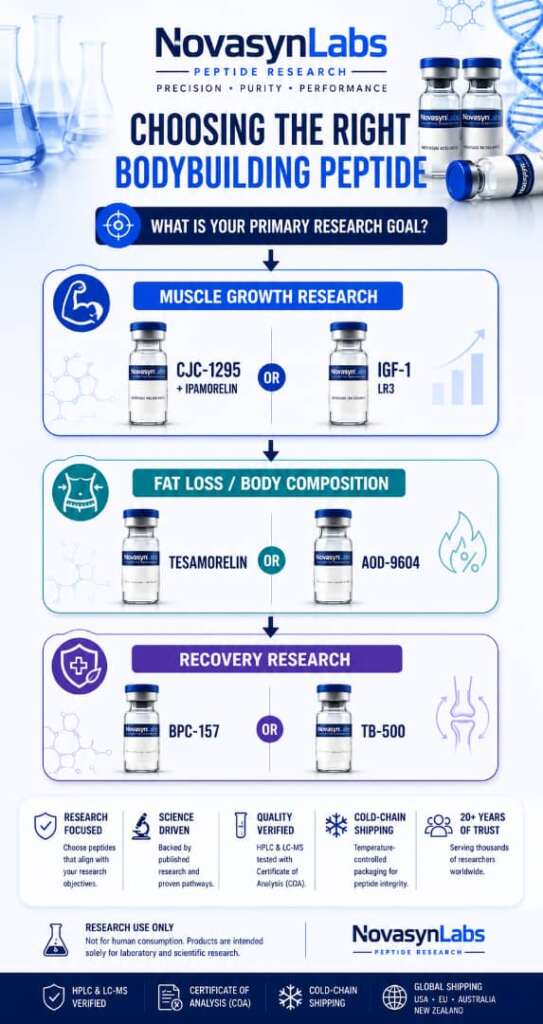
- A laboratory investigating muscle protein synthesis may prioritize IGF-1 LR3.
- Researchers examining growth hormone signaling frequently explore CJC-1295 combined with Ipamorelin.
- Studies involving body composition and metabolism often include Tesamorelin or AOD-9604.
- Investigations into exercise recovery and tissue biology commonly feature BPC-157 or TB-500.
Selecting the appropriate peptide begins with defining the research question—not following trends.
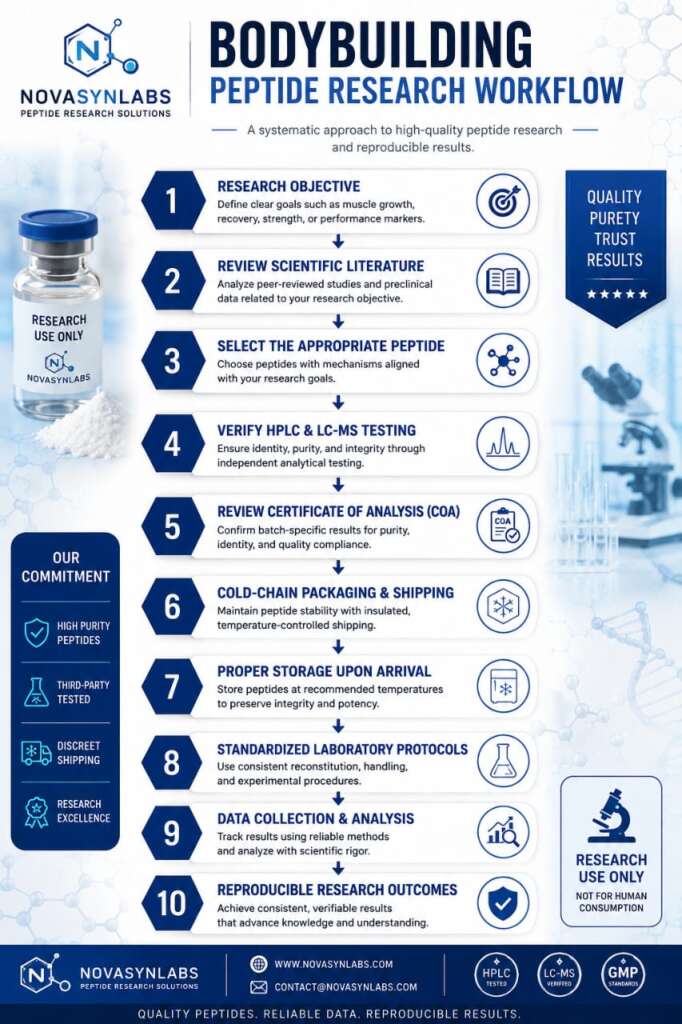
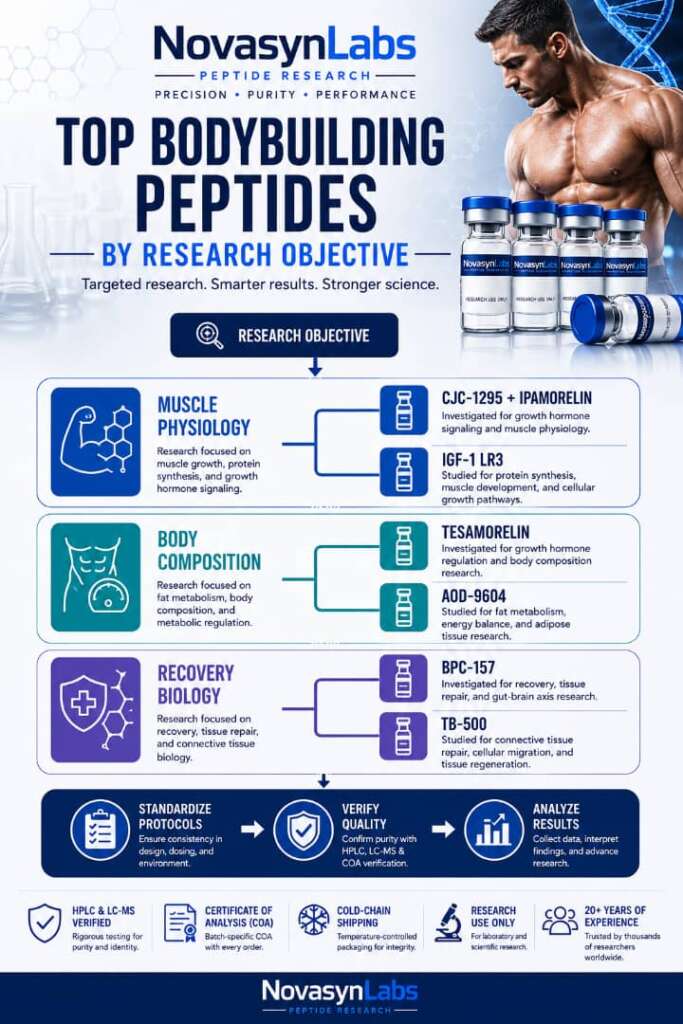
Purpose: This infographic reinforces that successful peptide research depends on quality assurance and standardized methodology—not simply the peptide selected.
Best Peptides for Bodybuilding at a Glance
Different peptides are investigated for different scientific objectives. The table below summarizes six of the most widely researched compounds discussed in this guide.
| Peptide | Primary Research Area | Muscle Physiology | Fat Metabolism | Recovery Research | Growth Hormone Pathways |
| CJC-1295 + Ipamorelin | Growth hormone signaling | ⭐⭐⭐⭐⭐ | ⭐⭐⭐ | ⭐⭐⭐⭐ | ⭐⭐⭐⭐⭐ |
| IGF-1 LR3 | Protein synthesis | ⭐⭐⭐⭐⭐ | ⭐⭐ | ⭐⭐⭐ | ⭐⭐⭐⭐ |
| Tesamorelin | Body composition | ⭐⭐⭐ | ⭐⭐⭐⭐⭐ | ⭐⭐ | ⭐⭐⭐⭐ |
| AOD-9604 | Metabolic research | ⭐⭐ | ⭐⭐⭐⭐⭐ | ⭐ | ⭐⭐ |
| BPC-157 | Recovery biology | ⭐⭐ | ⭐ | ⭐⭐⭐⭐⭐ | ⭐ |
| TB-500 | Connective tissue research | ⭐⭐ | ⭐ | ⭐⭐⭐⭐⭐ | ⭐ |
Note: The ratings above reflect the primary focus of published research areas and are intended as a general comparative overview, not measures of efficacy.
How to Choose the Right Peptide for Your Research
Selecting the best peptides for bodybuilding begins with defining your research objective. No single peptide is appropriate for every study, and choosing a compound based solely on popularity can lead to less meaningful outcomes. Researchers should instead align peptide selection with the biological pathway or physiological process they intend to investigate.
At NovaSynLabs, one of the most common questions we receive from researchers is, “Which peptide is the best?” Our answer is always the same: the best peptide is the one that best matches your research objective while meeting rigorous quality standards.
After supporting researchers for more than 20 years and supplying thousands of research customers throughout the United States, Europe, Australia, and New Zealand, we’ve consistently found that successful projects begin with careful planning rather than simply choosing the newest or most talked-about compound.
When selecting a peptide, consider the following questions:
- What biological pathway is the study investigating?
- Is the focus on muscle physiology, recovery, metabolism, or body composition?
- Is there sufficient published scientific literature supporting the compound?
- Has the peptide been independently verified using analytical testing?
- Can experimental variables be standardized throughout the study?
Defining these parameters before beginning research helps improve consistency and supports more reproducible findings.
Choosing a Peptide Based on Your Research Objective
Different peptides are studied for different biological mechanisms. The table below provides a quick reference for matching common research objectives with the peptides discussed in this guide.
| Research Objective | Recommended Peptide(s) | Primary Area of Investigation |
| Muscle physiology and growth hormone signaling | CJC-1295 + Ipamorelin | Growth hormone pathways |
| Muscle protein synthesis | IGF-1 LR3 | Protein synthesis and muscle physiology |
| Body composition | Tesamorelin | Growth hormone axis and body composition |
| Fat metabolism | AOD-9604 | Energy balance and metabolic research |
| Exercise recovery | BPC-157 | Recovery and tissue biology |
| Connective tissue research | TB-500 | Tissue repair and recovery biology |
Remember that researchers often investigate these peptides independently before designing studies that examine multiple biological pathways.
Top 5 Best Peptides for Bodybuilding
Although numerous peptides are currently being studied, the following compounds consistently appear in scientific literature related to muscle physiology, recovery, metabolism, and body composition.
1. CJC-1295 + Ipamorelin
Overview
Among the best peptides for bodybuilding, the combination of CJC-1295 and Ipamorelin is one of the most frequently investigated in growth hormone research. Rather than targeting muscle tissue directly, researchers study these peptides because of their interactions with the body’s natural growth hormone signaling pathways.
CJC-1295 is a growth hormone-releasing hormone (GHRH) analog, while Ipamorelin is a selective growth hormone secretagogue. Together, they are commonly investigated to better understand hormonal regulation, recovery, and physiological adaptation in controlled laboratory settings.
Why Researchers Study CJC-1295 + Ipamorelin
Research commonly focuses on:
- Growth hormone signaling
- IGF-1 pathway regulation
- Muscle physiology
- Recovery following exercise-induced stress
- Body composition
- Protein metabolism
Because each peptide targets a different part of the growth hormone pathway, researchers often investigate them together to better understand how multiple signaling mechanisms interact.
Key Research Characteristics
| Feature | Details |
| Primary Research Area | Growth hormone biology |
| Biological Target | Growth hormone signaling pathways |
| Frequently Studied With | IGF-1 biomarkers |
| Popular Research Field | Sports science and endocrinology |
| Common Laboratory Focus | Muscle physiology and recovery |
Advantages in Research
Researchers frequently select this combination because it:
- Investigates complementary biological pathways.
- Has extensive published scientific literature.
- Is commonly used in endocrine and sports science research.
- Supports studies involving growth hormone physiology.
- Can be incorporated into standardized laboratory protocols.
Research Considerations
Successful investigations typically require:
- Standardized sampling times.
- Consistent environmental conditions.
- Careful documentation.
- Verified peptide purity.
- Proper storage before and during experiments.
Expert Insight from NovaSynLabs
Over two decades of supplying research peptides have shown us that studies involving growth hormone biology achieve the most consistent results when researchers standardize every stage of their protocol—from peptide verification and storage to sample collection and data analysis. Quality assurance is just as important as selecting the appropriate peptide.
Related Product: CJC-1295 | Ipamorelin
2. IGF-1 LR3
Overview
IGF-1 LR3 is one of the most widely studied peptides in muscle physiology and protein synthesis research. As a modified form of insulin-like growth factor-1, it is frequently investigated for its role in cellular signaling pathways associated with muscle development and tissue adaptation.
Its popularity within sports science research stems from the central role that IGF-1 signaling plays in understanding muscle protein synthesis and physiological responses to exercise.
Primary Research Areas
Scientists commonly investigate IGF-1 LR3 in studies involving:
- Muscle protein synthesis
- Skeletal muscle physiology
- Cellular growth signaling
- Exercise adaptation
- Tissue development
- Recovery biomarkers
Key Research Characteristics
| Feature | Details |
| Primary Research Area | Protein synthesis |
| Biological Target | IGF-1 signaling pathway |
| Frequently Studied In | Muscle physiology research |
| Laboratory Applications | Sports, science, endocrinology, cell biology |
| Research Popularity | Very High |
Why Researchers Choose IGF-1 LR3
IGF-1 LR3 remains popular because it:
- Has been extensively investigated in scientific literature.
- Plays a central role in muscle physiology research.
- Supports studies involving protein synthesis pathways.
- Is relevant across several areas of biomedical research.
- Can complement investigations into growth hormone signaling.
Research Considerations
Researchers should ensure:
- Standardized experimental protocols.
- Appropriate sample handling.
- Proper temperature-controlled storage.
- Independent purity verification.
- Careful interpretation of biomarker data.
Expert Insight from NovaSynLabs
In our experience supporting thousands of research customers, investigators studying IGF-1 signaling achieve the most reproducible results when peptide quality is verified before experimentation. Reviewing the Certificate of Analysis, confirming HPLC and LC-MS testing, and maintaining proper storage conditions can significantly reduce unnecessary variability between experiments.
Related Product: IGF-1 LR3
3. Tesamorelin
Overview
Tesamorelin is widely studied for its role in growth hormone regulation, body composition, and metabolic research. As a synthetic growth hormone-releasing hormone (GHRH) analog, it is frequently investigated to better understand how growth hormone pathways influence fat distribution, energy metabolism, and physiological adaptation.
Among the best peptides for bodybuilding, Tesamorelin is commonly selected for studies where body composition and metabolic changes are primary research endpoints rather than muscle protein synthesis alone.
Researchers often incorporate Tesamorelin into studies examining body composition alongside carefully controlled nutrition, exercise, and metabolic assessments to better understand multiple physiological variables.
Why Researchers Study Tesamorelin
Scientific investigations commonly focus on:
- Growth hormone regulation
- Body composition
- Energy metabolism
- Fat distribution
- Endocrine physiology
- Metabolic biomarkers
Key Research Characteristics
| Feature | Details |
| Primary Research Area | Body composition |
| Biological Target | Growth hormone pathways |
| Frequently Studied In | Metabolic research |
| Laboratory Applications | Endocrinology and sports science |
| Research Popularity | High |
Advantages in Research
Researchers frequently choose Tesamorelin because:
- It has extensive published literature.
- It is commonly investigated in metabolic research.
- It complements studies involving growth hormone physiology.
- It supports body composition investigations.
- It provides measurable metabolic endpoints.
Research Considerations
To improve reproducibility:
- Maintain standardized nutrition protocols.
- Collect samples at consistent intervals.
- Monitor multiple biomarkers rather than body weight alone.
- Verify peptide purity before beginning research.
- Store peptides according to manufacturer recommendations.
Expert Insight from NovaSynLabs
Over two decades of supporting research laboratories have shown us that body composition studies are significantly strengthened when researchers evaluate multiple endpoints rather than relying on a single measurement. Tracking metabolic biomarkers, imaging data, and body composition together provides a more comprehensive understanding of physiological changes.
Related Product: Tesamorelin
4. AOD-9604
Overview
AOD-9604 is one of the most widely recognized peptides in metabolic and fat-loss research. Derived from a fragment of human growth hormone, it is commonly investigated for its potential role in energy balance, adipose tissue biology, and metabolic regulation.
Unlike peptides primarily researched for muscle physiology, AOD-9604 is generally selected for studies focused on understanding fat metabolism and body composition.
Why Researchers Study AOD-9604
Research commonly investigates:
- Fat metabolism
- Energy balance
- Body composition
- Adipose tissue biology
- Metabolic pathways
Key Research Characteristics
| Feature | Details |
| Primary Research Area | Fat metabolism |
| Biological Target | Metabolic pathways |
| Frequently Studied In | Obesity and metabolism research |
| Laboratory Applications | Endocrinology and metabolic science |
| Research Popularity | High |
Advantages in Research
Researchers value AOD-9604 because it:
- Has a focused research objective.
- Is widely studied in metabolic investigations.
- Complements body composition studies.
- Has an expanding scientific literature base.
- Can be evaluated using numerous metabolic biomarkers.
Research Considerations
Researchers should:
- Use standardized nutritional protocols.
- Monitor metabolic biomarkers throughout studies.
- Maintain consistent storage conditions.
- Confirm analytical testing before use.
- Document environmental variables carefully.
Expert Insight from NovaSynLabs
One lesson we’ve repeatedly observed is that successful metabolic research begins with clearly defined objectives. Selecting a peptide because it aligns with the biological pathway being studied—not because it is trending—often leads to more meaningful and reproducible scientific findings.
Related Product: AOD-9604
5. BPC-157
Overview
Among the best peptides for bodybuilding research, BPC-157 is particularly well known for investigations involving exercise recovery, tissue biology, and connective tissue physiology.
Rather than focusing primarily on muscle growth pathways, BPC-157 is frequently studied in laboratory models exploring recovery processes following mechanical stress or injury.
Its versatility has made it one of the most researched recovery peptides in sports science and regenerative biology.
Why Researchers Study BPC-157
Scientific investigations often include:
- Recovery biology
- Connective tissue physiology
- Exercise-induced stress
- Tendon and ligament research
- Cellular repair mechanisms
- Soft tissue biology
Key Research Characteristics
| Feature | Details |
| Primary Research Area | Recovery research |
| Biological Target | Tissue biology |
| Frequently Studied In | Sports science |
| Laboratory Applications | Regenerative and exercise research |
| Research Popularity | Very High |
Advantages in Research
Researchers frequently choose BPC-157 because:
- It is widely studied in recovery models.
- It supports investigations into connective tissue biology.
- It has broad applications across exercise science.
- It complements studies involving tissue adaptation.
- It has extensive scientific interest.
Research Considerations
Researchers should ensure:
- Proper cold storage.
- Minimal freeze-thaw cycles.
- Consistent sample handling.
- Standardized experimental timing.
- Independent quality verification.
Expert Insight from NovaSynLabs
One of the most common causes of inconsistent laboratory results is improper peptide handling rather than poor experimental design. Researchers who aliquot samples into single-use portions and maintain strict temperature control often experience significantly lower variability throughout long-term studies.
Related Product: BPC-157
6. TB-500
Overview
TB-500 is commonly investigated in studies involving tissue repair, mobility, connective tissue physiology, and recovery following physical stress.
Researchers frequently examine TB-500 to better understand biological processes associated with tissue remodeling and cellular migration in preclinical laboratory settings.
Together with BPC-157, TB-500 is often discussed in recovery-focused research because the two compounds are investigated for different yet complementary biological pathways.
Why Researchers Study TB-500
Current research includes:
- Tissue repair
- Connective tissue biology
- Cellular migration
- Exercise recovery
- Musculoskeletal physiology
- Regenerative biology
Key Research Characteristics
| Feature | Details |
| Primary Research Area | Tissue recovery |
| Biological Target | Connective tissue biology |
| Frequently Studied In | Regenerative research |
| Laboratory Applications | Sports science and cell biology |
| Research Popularity | High |
Advantages in Research
Researchers appreciate TB-500 because it:
- Has diverse research applications.
- Is commonly investigated in tissue biology.
- Complements recovery-focused studies.
- Has growing scientific literature.
- Supports investigations into musculoskeletal physiology.
Research Considerations
Best practices include:
- Following standardized protocols.
- Using validated analytical methods.
- Preventing repeated freeze-thaw cycles.
- Maintaining cold-chain storage.
- Reviewing Certificates of Analysis before experimentation.
Expert Insight from NovaSynLabs
Throughout our experience supplying researchers worldwide, we’ve found that studies involving recovery peptides benefit from evaluating each compound independently before designing combination experiments. Establishing reliable baseline data for every peptide helps researchers better interpret the contribution of each biological pathway.
Related Product: TB-500
Comparison Table: Which Peptide Best Matches Your Research?
| Research Goal | Recommended Peptide | Primary Scientific Focus |
| Growth hormone signaling | CJC-1295 + Ipamorelin | Growth hormone physiology |
| Muscle protein synthesis | IGF-1 LR3 | Protein synthesis pathways |
| Body composition | Tesamorelin | Growth hormone and metabolic research |
| Fat metabolism | AOD-9604 | Energy balance and adipose tissue biology |
| Exercise recovery | BPC-157 | Recovery and tissue biology |
| Connective tissue recovery | TB-500 | Tissue remodeling and regenerative biology |
Real-World Research Case Studies
One of the best ways to improve research quality is to learn from previous laboratory experiences. Although every research project is unique, these examples illustrate practical lessons that can help researchers design more reproducible and scientifically robust studies.
Case Study 1: Lean Muscle Growth Research
Objective
A university laboratory investigated changes in muscle protein synthesis markers using a peptide of interest in a controlled preclinical model.
Rather than evaluating muscle tissue alone, the researchers standardized several variables before collecting data, including:
- Nutritional protocols
- Exercise conditions
- Environmental factors
- Sample collection timing
- Laboratory handling procedures
By minimizing unnecessary variability, the team was able to generate more consistent measurements throughout the study.
Key Finding
The laboratory observed that standardized experimental protocols produced significantly more reproducible data than studies where variables changed between testing sessions.
Lesson Learned
Standardize protocols before comparing outcomes.
The peptide itself is only one component of successful research. Consistency across every stage of the experiment often has a greater impact on data quality.
Case Study 2: Fat-Loss and Metabolic Research
Objective
A metabolic research group investigated a peptide’s influence on energy metabolism and body composition during a multi-week study.
Instead of relying solely on body weight measurements, the researchers incorporated additional endpoints, including:
- Body composition analysis
- Metabolic biomarkers
- Hormonal markers
- Periodic physiological assessments
This broader approach provided a more complete understanding of metabolic adaptations over time.
Key Finding
Changes in body weight alone did not accurately reflect every physiological response observed during the study.
Lesson Learned
Multiple endpoints provide a clearer scientific picture than a single measurement.
Researchers studying metabolism should consider combining biochemical markers with body composition assessments whenever possible.
Case Study 3: Recovery After Intense Training
Objective
Researchers examined biomarkers associated with exercise-induced stress and recovery following repeated high-intensity training sessions.
Initially, sample collection occurred at varying times after exercise, resulting in inconsistent laboratory findings.
After modifying the protocol so that every sample was collected at identical time intervals following each training session, variability decreased substantially.
Key Finding
Sampling consistency significantly improved data reliability.
Lesson Learned
Collect samples at the same time after each experimental intervention.
Consistent timing reduces biological variability and improves comparison between research groups.
Case Study 4: Investigating Combination Research Strategies
Objective
A laboratory wanted to compare individual peptides with combination protocols to determine whether different biological pathways could be investigated simultaneously.
Rather than immediately combining compounds, the researchers first evaluated each peptide independently.
Only after baseline characteristics had been established were combination experiments introduced.
Key Finding
Understanding the individual behavior of each peptide made interpretation of combination studies considerably easier.
Lesson Learned
Establish baseline data before designing combination research.
Researchers can better identify pathway interactions when individual compounds have already been thoroughly characterized.
Case Study 5: Sample Storage Error
Objective
A research laboratory noticed inconsistent analytical results between experiments despite using identical protocols.
After reviewing laboratory procedures, investigators discovered that peptide samples had undergone multiple freeze-thaw cycles, which introduced unnecessary variability.
The laboratory changed its storage procedures by:
- Preparing single-use aliquots
- Improving temperature monitoring
- Reducing repeated sample handling
Following these changes, experimental consistency improved considerably.
Key Finding
Proper storage significantly reduced analytical variability.
Lesson Learned
Sample handling is just as important as experimental design.
Maintaining peptide stability begins long before data collection.
What Makes a High-Quality Research Peptide?
Selecting the best peptides for bodybuilding research involves much more than comparing product names or prices. High-quality research depends on analytical verification, manufacturing consistency, proper packaging, and reliable supplier practices.
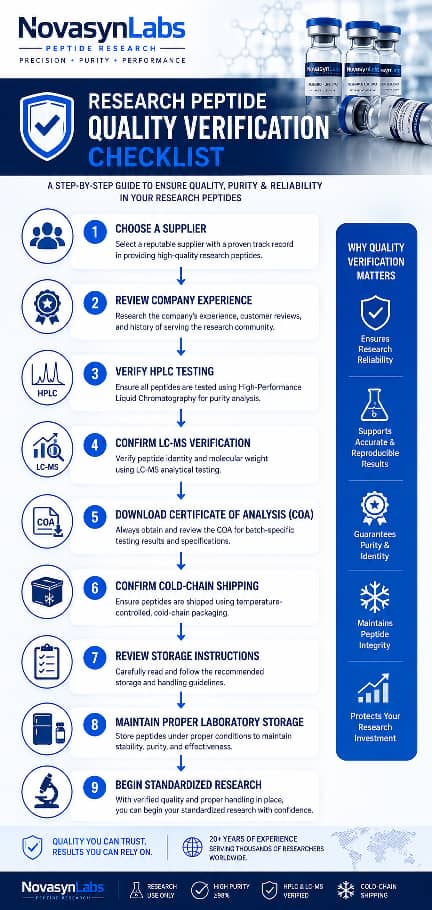
At NovaSynLabs, every batch is supported by quality-control measures designed to help researchers work with confidence.
Our Quality Standards
- Independent HPLC purity testing
- LC-MS analytical verification
- Certificate of Analysis (COA) for every batch
- Cold-chain packaging during shipment
- Storage guidance to preserve peptide integrity
- Consistent batch-to-batch quality
- Responsive research support
These practices help reduce variability and support reproducible laboratory outcomes.
Common Mistakes Researchers Make When Buying Peptides
Even experienced researchers can unintentionally introduce variability by overlooking basic quality-control principles. Avoiding these common mistakes can improve both data quality and experimental reproducibility.
1. Buying Based Only on Price
Lower-priced products may appear attractive, but cost alone should never determine supplier selection.
Instead, evaluate:
- Analytical testing
- Supplier reputation
- Batch consistency
- Scientific documentation
- Customer support
2. Ignoring Product Purity
High analytical purity is one of the most important factors affecting research reliability.
Always verify:
- HPLC results
- LC-MS reports
- Certificate of Analysis
- Batch identification
3. Improper Storage
Even a high-quality peptide can degrade if stored incorrectly.
Recommended practices include:
- Following manufacturer storage instructions.
- Refrigerating or freezing when appropriate.
- Avoiding prolonged exposure to heat or light.
- Using single-use aliquots after preparation when suitable for the research protocol.
4. Failing to Review the Scientific Literature
Researchers should understand the available evidence before selecting a peptide.
Review:
- Published studies
- Biological mechanisms
- Experimental limitations
- Appropriate outcome measures
5. Choosing a Peptide Based on Popularity
Popularity does not necessarily make a peptide the right choice for your study.
Instead, ask:
- What biological pathway am I investigating?
- Which peptide best aligns with this objective?
- Is there sufficient published research to support my study design?
Why Researchers Choose NovaSynLabs
For more than 20 years, NovaSynLabs has supported laboratories, universities, and independent researchers by supplying high-quality research peptides to customers across the United States, Europe, Australia, and New Zealand.
Researchers continue to choose NovaSynLabs because we prioritize:
- Rigorous HPLC and LC-MS quality verification
- Certificates of Analysis for every batch
- Reliable cold-chain packaging
- Consistent product quality
- Responsive research support
- Fast shipping to major international research markets
- A high repeat-customer rate built on reliability and consistency
Our goal is not simply to supply research peptides, but to help researchers obtain dependable materials that support reproducible scientific investigations.
Frequently Asked Questions (FAQs)
1. What are the best peptides for bodybuilding research?
The best peptides for bodybuilding depend on the specific research objective. Researchers commonly investigate:
- CJC-1295 + Ipamorelin for growth hormone signaling.
- IGF-1 LR3 for muscle protein synthesis.
- Tesamorelin for body composition.
- AOD-9604 for fat metabolism.
- BPC-157 for recovery biology.
- TB-500 for connective tissue research.
Each peptide targets different biological pathways, making research goals the most important factor when selecting a compound.
2. Which peptide is most commonly studied for muscle growth?
CJC-1295 + Ipamorelin and IGF-1 LR3 are among the most frequently investigated peptides in studies involving muscle physiology, growth hormone pathways, and protein synthesis.
3. Which peptide is commonly researched for fat loss?
Researchers studying fat metabolism and body composition frequently investigate Tesamorelin and AOD-9604 because of their relevance to metabolic pathways and energy balance.
4. Which peptides are commonly studied for recovery?
Recovery-focused research often includes BPC-157 and TB-500, particularly in studies involving connective tissue biology, exercise-induced stress, and musculoskeletal physiology.
5. Are bodybuilding peptides the same as anabolic steroids?
No. Peptides are short chains of amino acids that are studied for their interactions with specific biological pathways, while anabolic steroids are synthetic hormone compounds primarily associated with androgen receptor activity. They differ in structure, biological targets, and research applications.
6. Can multiple peptides be studied together?
Yes. Combination research is common, but researchers generally establish baseline data for each peptide individually before investigating combination protocols. This approach helps improve data interpretation and experimental design.
7. Why is HPLC testing important?
High-Performance Liquid Chromatography (HPLC) is widely used to verify peptide purity and detect impurities. Reviewing HPLC results helps researchers confirm product quality before beginning laboratory studies.
8. What is LC-MS testing?
Liquid Chromatography-Mass Spectrometry (LC-MS) is an analytical technique used to verify molecular identity and confirm that a peptide matches its expected composition. It complements HPLC as part of a comprehensive quality-control process.
9. Why is a Certificate of Analysis (COA) important?
A Certificate of Analysis provides batch-specific quality information, including analytical testing results. Reviewing a COA allows researchers to verify product identity, purity, and testing documentation before use.
10. How should research peptides be stored?
Storage recommendations vary by product, but researchers should always follow the supplier’s instructions. In general, maintaining appropriate temperatures, minimizing exposure to heat and light, and avoiding repeated freeze-thaw cycles help preserve peptide integrity.
11. What should researchers look for in a peptide supplier?
A reputable supplier should provide:
- Independent HPLC testing
- LC-MS verification
- Certificates of Analysis
- Cold-chain shipping where appropriate
- Product consistency
- Responsive customer support
- Clear storage recommendations
- A strong reputation within the research community
12. Why is standardization important in peptide research?
Standardizing protocols—including nutrition, environmental conditions, sample collection, and storage—helps reduce variability and improve the reproducibility of scientific findings.
13. Why shouldn’t researchers buy peptides based only on price?
Lower prices do not necessarily indicate good value. Product purity, analytical verification, supplier reputation, and batch consistency are all critical factors that can influence research quality.
14. How does NovaSynLabs support peptide research?
NovaSynLabs has supported researchers for more than 20 years, supplying thousands of research customers across the United States, Europe, Australia, and New Zealand. Our commitment to HPLC and LC-MS testing, Certificates of Analysis, cold-chain shipping, and consistent product quality helps researchers obtain dependable materials for laboratory investigations.
15. What is the most important factor when choosing a bodybuilding peptide?
The most important consideration is selecting a peptide that aligns with your specific research objective. Researchers should evaluate the available scientific literature, verify product quality through analytical testing, and follow standardized handling and storage procedures to support reliable and reproducible outcomes.
Key Takeaways
- The best peptides for bodybuilding depend on the biological pathway being investigated rather than overall popularity.
- CJC-1295 + Ipamorelin and IGF-1 LR3 are widely studied in muscle physiology and growth hormone research.
- Tesamorelin and AOD-9604 are commonly investigated in metabolic and body composition studies.
- BPC-157 and TB-500 are frequently selected for recovery and connective tissue research.
- Product quality plays a critical role in research reliability. Always verify HPLC testing, LC-MS analysis, and Certificates of Analysis before beginning laboratory work.
- Proper storage, standardized protocols, and consistent sample handling are essential for producing reproducible scientific results.
Conclusion
As scientific interest in muscle physiology, recovery biology, and metabolic research continues to grow, selecting the best peptides for bodybuilding requires more than simply choosing the most popular compound. A successful research project begins with a clearly defined objective, a thorough understanding of the relevant biological pathways, and a commitment to quality at every stage of the process.
Throughout this guide, we’ve explored six of the most widely researched peptides—CJC-1295 + Ipamorelin, IGF-1 LR3, Tesamorelin, AOD-9604, BPC-157, and TB-500—each offering distinct value for specific areas of scientific investigation. Matching the peptide to the research question, rather than following trends, is one of the most effective ways to improve study design and data interpretation.
Equally important is the quality of the research material itself. Independent HPLC and LC-MS testing, batch-specific Certificates of Analysis, proper cold-chain shipping, and appropriate storage practices all contribute to experimental consistency and reproducibility.
For more than 20 years, NovaSynLabs has been committed to supporting researchers with high-quality research peptides and dependable customer service. Having supplied thousands of research customers across the United States, Europe, Australia, and New Zealand, we understand that reliable science begins with reliable materials.
Whether your focus is muscle physiology, body composition, fat metabolism, or recovery biology, taking a research-first approach—supported by verified quality standards and sound experimental practices—will help you generate more meaningful and reproducible results.
Research Use Only: All products offered by NovaSynLabs are intended strictly for laboratory and scientific research purposes. They are not approved for human consumption, therapeutic use, or performance enhancement.
External References

