



No products in the cart.
Complete Guide to TB-500 Research (2026): Origins, Quality, Storage & Experimental Aplications
Complete Guide to TB-500 Research
Interest in TB-500 research has grown significantly over the past decade as researchers continue exploring peptides involved in tissue biology, cellular signaling, and regenerative science. Universities, biotechnology companies, and independent laboratories have investigated TB-500 in a variety of experimental models, making it one of the most widely discussed research peptides alongside compounds such as BPC-157.
Despite this growing interest, much of the information available online is either outdated, overly promotional, or fails to distinguish between preclinical research and established clinical evidence. Many articles focus only on theoretical applications while overlooking equally important topics such as manufacturing quality, analytical testing, batch consistency, storage recommendations, and supplier transparency.
This guide provides a balanced, evidence-based overview of TB-500 research. You’ll learn about its discovery, relationship to Thymosin Beta-4, proposed experimental mechanisms, current areas of investigation, laboratory handling, quality testing, and the importance of choosing a supplier that provides complete analytical documentation.
At NovaSyn Labs, we have supplied laboratory-grade TB-500 for more than 13 years, serving over 450 research customers worldwide. Throughout that time, we’ve learned that successful research depends not only on thoughtful experimental design but also on consistent peptide quality, standardized manufacturing, and reliable documentation.
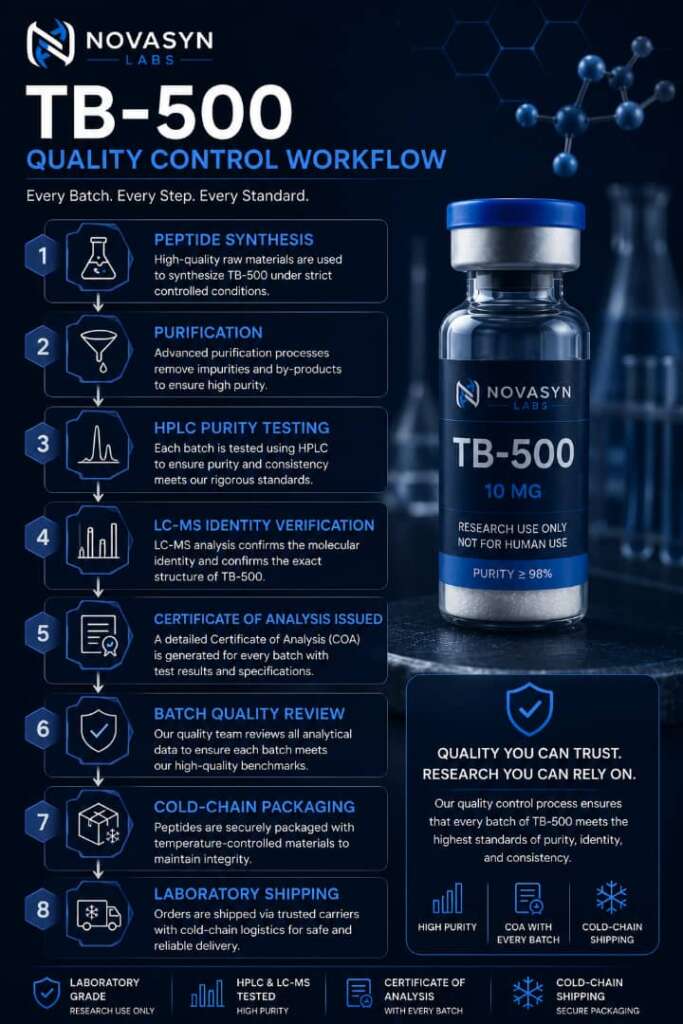
Every production batch supplied by NovaSyn Labs is supported by:
- High-Performance Liquid Chromatography (HPLC) purity testing
- Liquid Chromatography–Mass Spectrometry (LC-MS) identity verification
- Batch-specific Certificates of Analysis (COAs)
- Secure packaging
- Cold-chain shipping where appropriate
These quality assurance measures help researchers evaluate peptide identity and consistency before incorporating materials into laboratory workflows.
Important: This article is intended for educational and scientific purposes only. TB-500 discussed throughout this guide is presented in the context of laboratory research. The article does not claim approved medical uses or established clinical efficacy in humans.
What Is TB-500?
TB-500 is a synthetic research peptide developed to study biological processes associated with Thymosin Beta-4 (Tβ4), a naturally occurring protein found in many tissues throughout the body. Rather than being identical to the full Thymosin Beta-4 molecule, TB-500 is a shorter synthetic peptide designed for research applications.
Scientists have investigated TB-500 because of its relationship to biological pathways involved in:
- Tissue biology
- Cell migration
- Cytoskeletal organization
- Angiogenesis research
- Muscle and connective tissue research
Research involving TB-500 has largely been conducted using laboratory and animal models. These studies have generated scientific interest by helping researchers explore how peptide signaling may influence cellular processes under controlled experimental conditions.
Although these findings contribute to the growing field of peptide science, current evidence remains largely preclinical, and additional human clinical research is required before drawing conclusions regarding clinical safety or effectiveness.
Table 1. Basic Characteristics of TB-500
| Characteristics | Details |
| Peptide Name | TB-500 |
| Classification | Synthetic research peptide |
| Related Protein | Thymosin Beta-4 |
| Primary Research Areas | Tissue biology, cell migration, muscle research, angiogenesis |
| Analytical Documentation | HPLC, LC-MS, COA |
| Intended Use | Laboratory research |
Discovery and History of TB-500
Understanding TB-500 research begins with the discovery of Thymosin Beta-4, a naturally occurring peptide that has been studied for its role in cellular organization and biological signaling.
During investigations into naturally occurring proteins involved in tissue function, researchers identified Thymosin Beta-4 as an important molecule present in a wide range of cell types. As scientific interest expanded, researchers developed synthetic peptide fragments, including TB-500, to investigate specific biological processes under laboratory conditions.
Over time, TB-500 became the focus of numerous experimental studies examining:
- Cell migration
- Tissue biology
- Cytoskeletal dynamics
- Angiogenesis research
- Muscle tissue research
These investigations have contributed to a growing body of scientific literature indexed by reputable sources such as PubMed, NCBI, and peer-reviewed journals in orthopaedic and biomedical research.
While preclinical findings have been encouraging in certain experimental settings, they should not be interpreted as evidence of proven clinical outcomes in humans. Responsible scientific communication requires distinguishing laboratory observations from established therapeutic evidence.
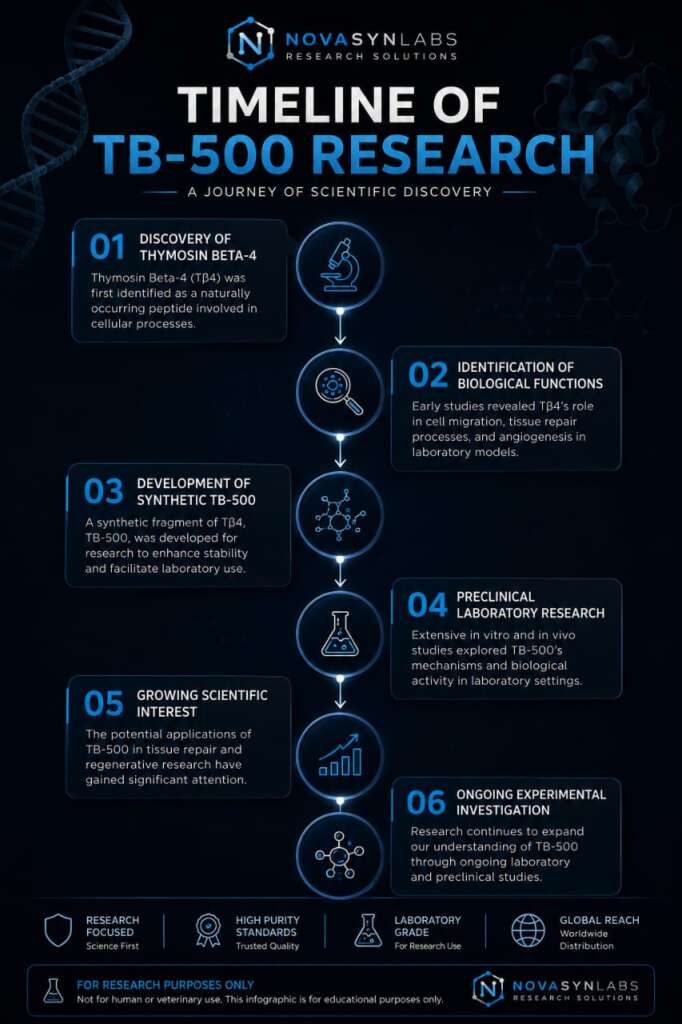
TB-500 and Thymosin Beta-4: Understanding the Relationship
One of the most common misconceptions surrounding TB-500 is that it is identical to Thymosin Beta-4. While the two are closely related, they are not the same molecule.
Thymosin Beta-4 is a naturally occurring peptide found throughout the body and has been studied for its role in cellular organization and tissue biology.
TB-500, by contrast, is a synthetic peptide developed for laboratory research. It was designed to investigate specific biological activities associated with regions of the larger Thymosin Beta-4 molecule.
This distinction is important because discussions of Thymosin Beta-4 research are sometimes incorrectly applied directly to TB-500 without acknowledging the differences between the compounds.
Researchers evaluating scientific literature should carefully identify which peptide was used in a given study before interpreting the findings.
Table 2. TB-500 vs. Thymosin Beta-4
| Feature | TB-500 | Thymosin Beta-4 |
| Type | Synthetic research peptide | Naturally occurring peptide |
| Origin | Laboratory synthesized | Produced naturally in the body |
| Primary Use | Experimental research | Biological protein studied in research |
| Current Research | Primarily preclinical | Extensive biological research |
| FDA Approved | No | No approved therapeutic use based solely on this relationship |
Why Researchers Study TB-500
Scientists continue to investigate TB-500 research because of its potential relevance to several biological processes observed in laboratory settings. Rather than focusing on a single area, TB-500 has been explored across multiple fields of experimental science.
Tissue Biology Research
A significant portion of published TB-500 research investigates tissue biology and how peptide signaling may interact with cellular processes involved in tissue organization.
Researchers continue studying these interactions to better understand fundamental biological mechanisms, although current findings remain primarily preclinical.
Muscle Research
Experimental studies have also examined TB-500 in models involving skeletal muscle. These investigations seek to understand how peptide signaling may influence cellular responses within muscle tissue under controlled laboratory conditions.
Additional research is necessary to determine whether observations from preclinical studies translate to human clinical settings.
Cell Migration Research
Cell migration is a fundamental biological process involved in development, maintenance, and tissue remodeling.
Researchers have explored whether TB-500 interacts with cellular pathways associated with movement and organization, making this one of the peptide’s most actively investigated research areas.
Tendon Research
TB-500 has also been evaluated in experimental models involving tendons and connective tissues.
Because tendons have unique structural properties and relatively slow biological turnover, they continue to be an important focus of laboratory research.
Table 3. Current Experimental Research Areas
| Research Area | Current Evidence |
| Tissue Biology | Primarily preclinical |
| Muscle Research | Experimental |
| Cell Migration | Experimental |
| Tendon Research | Primarily preclinical |
| Angiogenesis Research | Experimental |
Proposed Experimental Mechanisms
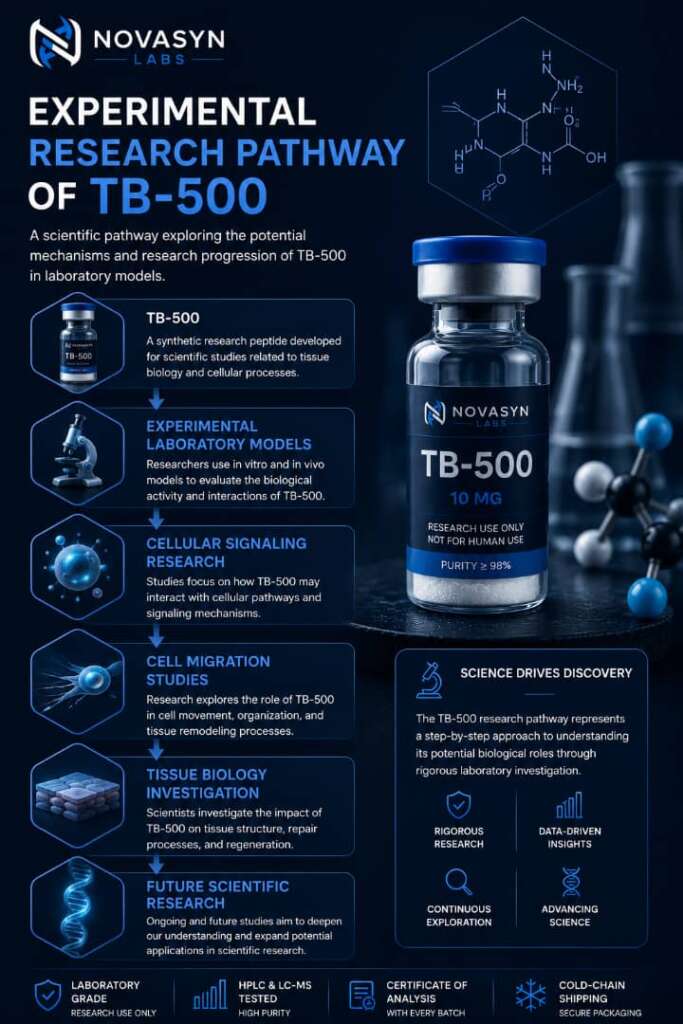
Researchers continue investigating how TB-500 may interact with biological systems in laboratory settings. Several mechanisms have been proposed based on preclinical studies, but these remain areas of active investigation rather than established facts.
Current research explores interactions involving:
- Cellular signaling pathways
- Cytoskeletal organization
- Cell migration
- Tissue remodeling
- Angiogenesis-related processes
Because biological systems are highly complex, no single mechanism fully explains the observations reported across all experimental studies. Additional laboratory research and well-designed clinical investigations will be necessary to clarify these relationships.
Current Scientific Evidence and Research Limitations
The growing interest in TB-500 research has resulted in hundreds of scientific publications discussing its potential role in tissue biology, cellular signaling, and regenerative science. However, understanding the current evidence requires distinguishing between preclinical laboratory research and proven clinical outcomes.
Many online articles blur this distinction by presenting laboratory findings as established human benefits. Responsible scientific communication requires a more balanced approach.
Most published TB-500 research has been conducted using:
- Cell culture studies (in vitro)
- Animal models (in vivo)
- Experimental tissue biology research
These studies provide valuable insights into biological mechanisms and generate hypotheses for future investigation. However, results observed under controlled laboratory conditions do not necessarily predict outcomes in humans.
For this reason, researchers should interpret the available literature carefully and recognize that additional human clinical studies are necessary before drawing conclusions regarding clinical safety or effectiveness.
Why Additional Research Is Needed
Scientific discovery progresses through multiple stages.
Early laboratory observations often identify promising biological pathways that require further validation through increasingly rigorous research. Before a compound can become an approved therapeutic agent, researchers typically conduct:
- Expanded preclinical investigations
- Phase I clinical trials
- Phase II clinical trials
- Large-scale Phase III clinical studies
- Long-term safety monitoring
At present, TB-500 research remains primarily within the preclinical stage.
Future investigations may focus on:
- Better understanding molecular signaling
- Long-term biological effects
- Comparative peptide research
- Human clinical studies
- Standardized research protocols
- Additional safety evaluations
Until further evidence becomes available, findings from laboratory models should not be interpreted as established medical conclusions.
Table 4. Current Evidence Status
| Research Area | Current Evidence |
| Cell Culture Studies | Extensive |
| Animal Research | Extensive |
| Human Clinical Evidence | Limited |
| FDA Approval | No |
| Ongoing Scientific Interest | High |
| Additional Research Needed | Yes |
Common Misconceptions About TB-500
As TB-500 research has become more widely discussed, several misconceptions have circulated online. Separating scientific evidence from marketing claims is important for researchers and laboratories alike.
Myth 1: TB-500 Is FDA Approved
Current Evidence
No.
TB-500 is not approved by the U.S. Food and Drug Administration (FDA) as a therapeutic medication. It is primarily supplied for laboratory and scientific research.
Myth 2: Human Benefits Are Fully Established
Current evidence does not support this claim.
Although experimental studies continue to investigate TB-500, much of the available evidence comes from laboratory and animal research.
Additional well-designed human clinical trials would be necessary before establishing therapeutic efficacy.
Myth 3: TB-500 and Thymosin Beta-4 Are Exactly the Same
This is one of the most common misunderstandings.
Although TB-500 was developed from research involving Thymosin Beta-4, the two are not identical molecules.
Researchers should carefully distinguish between studies involving the naturally occurring protein and studies investigating the synthetic research peptide.
Myth 4: All Research Peptides Have the Same Quality
Quality standards differ considerably between manufacturers.
Variables include:
- Manufacturing processes
- Purification methods
- Batch consistency
- Analytical testing
- Storage procedures
- Shipping conditions
Choosing suppliers based only on price may introduce unnecessary variability into research projects.
Myth 5: Certificates of Analysis Are Unnecessary
A Certificate of Analysis (COA) provides objective analytical information regarding a production batch.
For many laboratories, reviewing COAs before beginning experiments has become part of standard quality assurance procedures.
Table 5. Myths vs Current Scientific Evidence
| Myth | Current Evidence |
| TB-500 is FDA approved | No |
| Human benefits are fully established | Current evidence remains limited |
| TB-500 equals Thymosin Beta-4 | Related, but not identical |
| Every supplier provides identical quality | Manufacturing standards vary |
| COAs are unnecessary | COAs support laboratory quality assurance |
Why Peptide Quality Matters
One of the most overlooked aspects of TB-500 research is peptide quality.
Even carefully designed experiments can produce inconsistent findings if the research materials themselves vary between production batches.
Experienced laboratories often evaluate multiple quality indicators before incorporating peptides into research workflows.
Important considerations include:
- Purity
- Molecular identity
- Batch consistency
- Manufacturing standards
- Analytical documentation
- Appropriate storage and shipping
After supplying laboratory-grade TB-500 for more than 13 years to over 450 research customers, NovaSyn Labs has consistently observed that researchers place significant value on standardized quality documentation.
Rather than relying solely on marketing claims, researchers increasingly request objective analytical data before purchasing research peptides.
Understanding HPLC Purity Testing
High-Performance Liquid Chromatography (HPLC) is one of the most widely used analytical techniques in peptide manufacturing.
HPLC separates compounds according to their chemical characteristics, allowing analytical laboratories to estimate the percentage of the desired peptide relative to impurities.
The resulting chromatogram provides researchers with visual data that can be reviewed as part of quality assurance procedures.
Higher purity generally indicates fewer detectable impurities within a production batch, although purity should always be considered alongside other analytical results.
Why Researchers Review HPLC Results
HPLC testing helps laboratories:
- Evaluate peptide purity
- Compare production batches
- Support quality assurance
- Review manufacturing consistency
- Maintain research documentation
Because of its reliability, HPLC has become a standard analytical method throughout the peptide industry.
LC-MS Identity Verification
While HPLC focuses primarily on purity, Liquid Chromatography–Mass Spectrometry (LC-MS) is used to verify peptide identity.
Mass spectrometry measures molecular mass with high precision, helping analytical laboratories confirm that the synthesized peptide corresponds to its expected molecular structure.
Reviewing both HPLC and LC-MS results provides researchers with greater confidence before introducing materials into laboratory experiments.
Table 6. HPLC vs LC-MS
| Analytical Method | Primary Purpose | Information Provided |
| HPLC| | Purity Assessment | Purity percentage and chromatogram |
| LC-MS | Identity Verification | Molecular mass confirmation |
| Certificate of Analysis | Batch Documentation | Summary of analytical testing |
Understanding Certificates of Analysis (COAs)
A Certificate of Analysis is among the most valuable documents supplied with laboratory-grade research peptides.
Rather than relying on promotional statements, researchers can review objective analytical information specific to the production batch they receive.
A comprehensive COA typically includes:
- Product name
- Batch number
- Manufacturing date
- HPLC purity results
- LC-MS identity verification
- Appearance
- Storage recommendations
- Testing methodology
- Analyst approval
Maintaining COAs also simplifies laboratory documentation and internal quality reviews.
NovaSyn Labs Quality Assurance
Quality assurance extends beyond manufacturing.
At NovaSyn Labs, our objective is to provide researchers with transparent documentation that supports informed purchasing decisions and reproducible laboratory workflows.
Our quality process includes:
- High-purity laboratory-grade manufacturing
- HPLC purity testing
- LC-MS identity verification
- Batch-specific Certificates of Analysis
- Batch consistency monitoring
- Secure packaging
- Cold-chain shipping where appropriate
- Affordable pricing without compromising quality
For more than 13 years, these quality standards have supported over 450 research customers, including universities, biotechnology companies, and independent laboratories.
Proper Storage and Laboratory Handling of TB-500
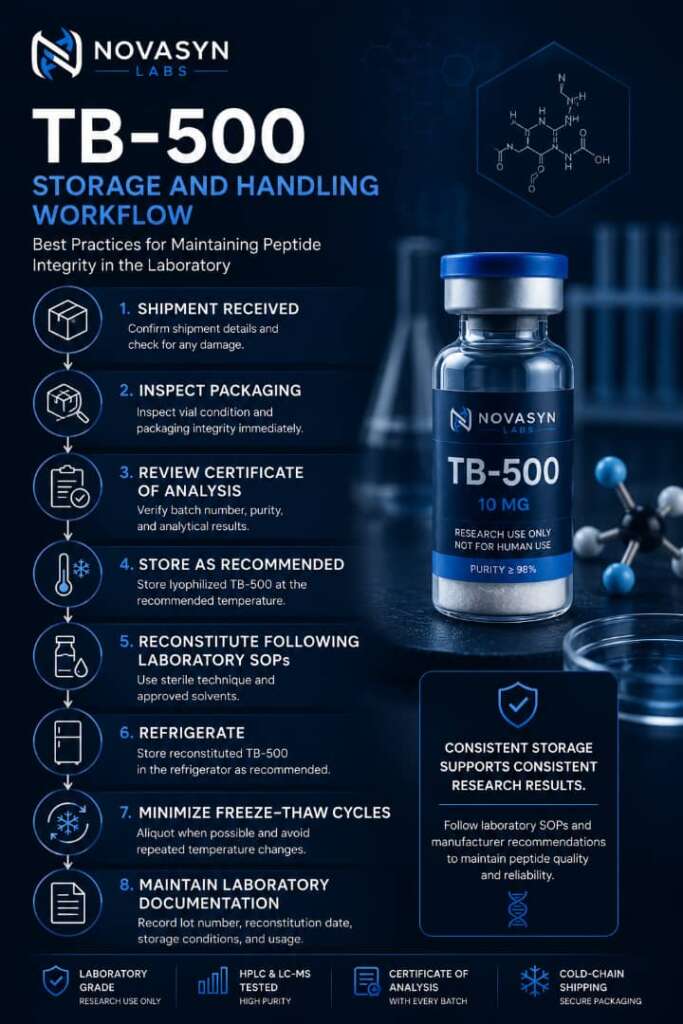
Maintaining peptide quality extends beyond manufacturing. Proper storage and laboratory handling are essential for preserving the integrity of TB-500 throughout its lifecycle. Even a well-manufactured peptide can be affected by improper storage conditions or inconsistent handling practices.
Laboratories should always follow the storage recommendations supplied with each production batch and maintain standardized handling procedures as part of their quality management systems.
Storage Before Reconstitution
Lyophilized (freeze-dried) TB-500 is generally more stable than reconstituted material when stored according to the manufacturer’s recommendations.
Best practices include:
- Store according to the temperature guidance provided with the product or Certificate of Analysis.
- Keep the vial sealed until use.
- Protect the product from prolonged exposure to excessive heat, moisture, and direct sunlight.
- Store in a clean, dry environment to reduce the risk of contamination.
Proper storage before reconstitution helps preserve product quality for future laboratory use.
Storage After Reconstitution
Once TB-500 has been reconstituted, additional care is required.
Laboratories should:
- Store the reconstituted peptide under the recommended refrigerated conditions.
- Clearly label each vial with the reconstitution date, lot number, and researcher initials where applicable.
- Avoid repeated freeze–thaw cycles whenever possible, as they may affect peptide stability.
- Follow internal laboratory standard operating procedures (SOPs) for storage, handling, and documentation.
Maintaining complete records throughout the handling process supports reproducibility and quality assurance.
Table 7. Recommended Storage Practices
| Research Stage | Best Practice |
| Receiving Shipment | Inspect packaging and verify documentation |
| Documentation | Review the Certificate of Analysis before use |
| Before Reconstitution | Store according to product guidance and protect from heat, light, and moisture |
| After Reconstitution | Refrigerate according to product recommendations |
| Laboratory Handling | Minimize repeated freeze–thaw cycles |
| Record Keeping | Document lot numbers, storage conditions, and preparation dates |
Case Study 1: Improved Experimental Reproducibility After Supplier Change
Organization: Anonymous Academic Research Laboratory
A university-affiliated laboratory conducting a multi-month peptide-based cell culture study began observing increased variability between experimental runs. Before attributing these inconsistencies to biological factors, the research team performed a comprehensive internal review.
They examined:
- Laboratory protocols
- Equipment calibration
- Cell culture procedures
- Operator consistency
- Environmental conditions
- Peptide procurement records
The review identified inconsistent analytical documentation and noticeable batch-to-batch variation from the previous peptide supplier as potential contributors.
The laboratory transitioned to a supplier providing:
- High-purity laboratory-grade peptides
- Lot-specific Certificates of Analysis
- HPLC purity testing
- LC-MS identity verification
- Consistent manufacturing documentation
Following implementation of standardized materials and documentation, the researchers reported improved consistency across multiple phases of the project and greater confidence when comparing experimental datasets.
Key Takeaway: Standardized peptide quality and comprehensive analytical documentation can help reduce one potential source of variability in laboratory research.
Case Study 2: Long-Term Research Project Requiring Consistent Batches
Organization: Anonymous University Research Group
A university research team initiated a peptide study expected to continue for more than twelve months. Since experiments would span multiple semesters, maintaining consistent procurement standards became a priority.
Before placing their first order, the researchers established supplier selection criteria that included:
- Standardized manufacturing procedures
- Reliable batch-to-batch consistency
- Lot-specific Certificates of Analysis
- HPLC purity reports
- LC-MS identity verification
- Clear storage recommendations
- Stable product availability
Throughout the project, every new production batch underwent the same documentation review before entering laboratory workflows.
This standardized procurement strategy reduced administrative delays, simplified quality reviews, and helped maintain consistent research practices throughout the study.
Key Takeaway: Long-term projects benefit from suppliers that emphasize consistent manufacturing practices and transparent analytical documentation.
Choosing a Reliable TB-500 Supplier
The supplier selected for a research project can influence documentation quality, procurement efficiency, and confidence in experimental materials.
When evaluating a TB-500 supplier, researchers should consider whether they provide:
- Batch-specific Certificates of Analysis
- HPLC purity testing
- LC-MS identity verification
- Transparent manufacturing standards
- Batch consistency
- Secure packaging
- Cold-chain shipping where appropriate
- Responsive technical support
- Clear storage recommendations
Price is only one factor. Comprehensive analytical documentation and consistent quality assurance often provide greater long-term value for research laboratories.
Table 8. Research Peptide Supplier Checklist
| Evaluation Criterion | Why It Matters |
| Certificate of Analysis | Documents analytical testing for each batch |
| HPLC Purity Testing | Supports purity assessment |
| LC-MS Verification | Confirms peptide identity |
| Batch Consistency | Helps support reproducible research |
| Manufacturing Standards | Promotes consistent quality |
| Cold-Chain Shipping | Helps maintain product integrity during transit where appropriate |
| Technical Support | Provides product and documentation assistance |
Comparing TB-500 with Other Research Peptides
TB-500 is one of several peptides investigated in laboratory research. Each peptide has distinct areas of scientific interest, and researchers select compounds based on their specific study objectives.
Table 9. Comparison of Common Research Peptides
| Peptide | Primary Research Focus | Documentation Available from NovaSyn Labs |
| TB-500 | Tissue biology, cell migration, muscle research | HPLC, LC-MS, COA |
| BPC-157 | Tissue biology, gastrointestinal research | HPLC, LC-MS, COA |
| GHK-Cu | Skin biology and cosmetic peptide research| | HPLC, LC-MS, COA |
| KPV | Inflammation-related laboratory research | HPLC, LC-MS, COA |
| ARA-290 | Experimental neurobiology research | HPLC, LC-MS, COA |
Each peptide should be evaluated within the context of its own body of scientific literature. Findings for one peptide should not automatically be applied to another.
Frequently Asked Questions
Is TB-500 FDA approved?
No. TB-500 is not approved by the U.S. Food and Drug Administration (FDA) as a therapeutic drug. It is commonly supplied for laboratory research.
Is TB-500 the same as Thymosin Beta-4?
No. TB-500 is a synthetic research peptide related to, but distinct from, the naturally occurring Thymosin Beta-4 protein.
Why is HPLC testing important?
HPLC helps laboratories evaluate peptide purity and supports quality assurance by identifying the proportion of the desired peptide relative to impurities.
What does LC-MS verify?
LC-MS confirms the molecular identity of a peptide by measuring its molecular mass with high precision.
Why is a Certificate of Analysis important?
A COA provides batch-specific analytical information, including purity results, identity verification, and other quality metrics that help laboratories assess research materials.
How should TB-500 be stored?
Researchers should follow the storage recommendations supplied with each batch, protect lyophilized material from adverse environmental conditions, and refrigerate reconstituted material according to the product guidance.
Why is batch consistency important?
Using consistent batches with documented analytical results can help reduce one potential source of variability in long-term research projects.
Related Articles
Conclusion
TB-500 research continues to expand as scientists investigate its relationship to tissue biology, cell migration, and other fundamental biological processes. While the current body of evidence is primarily preclinical, ongoing studies contribute valuable insights that may inform future scientific investigation.
For laboratories, universities, and biotechnology organizations, high-quality research begins with well-characterized materials. Batch-specific Certificates of Analysis, HPLC purity testing, LC-MS identity verification, standardized manufacturing practices, and proper storage all play important roles in supporting consistent laboratory workflows.
At NovaSyn Labs, we have supplied laboratory-grade TB-500 for more than 13 years, serving over 450 research customers with a focus on high purity, affordability, transparent analytical documentation, and dependable customer support.
If you’re looking for laboratory-grade TB-500, explore our Recovery Peptides collection or contact the NovaSyn Labs technical support team to learn more about our quality standards, Certificates of Analysis, and peptide testing procedures.
Scientific Disclaimer
This article is provided for educational and informational purposes only. TB-500 is discussed solely in the context of laboratory and scientific research. The content summarizes current scientific literature and should not be interpreted as evidence of approved medical uses, therapeutic efficacy, or safety in humans. Researchers should consult current peer-reviewed publications and applicable regulations when designing and conducting their studies.
References

