






No products in the cart.

What Role Do Peptides Play in Mitochondrial Research?

Table of Contents
What Role Do Peptides Play in Mitochondrial Research?
Mitochondria are often referred to as the “powerhouses” of the cell because they generate most of the energy required to sustain life. However, modern research has revealed that these organelles do far more than produce adenosine triphosphate (ATP). They also regulate cellular metabolism, calcium signaling, programmed cell death, oxidative stress, mitochondrial DNA maintenance, and numerous signaling pathways involved in healthy aging.
Because mitochondrial dysfunction has been associated with many biological processes studied in aging, metabolism, and tissue maintenance, researchers are increasingly investigating peptides that interact with mitochondrial biology. Rather than acting through a single mechanism, different research peptides are studied for their potential interactions with specific aspects of mitochondrial function, including energy production, mitochondrial membrane integrity, oxidative stress responses, and mitochondrial quality control.
At NovaSyn Labs, we have supplied laboratory-grade peptides since 2000. Over the past two decades, we have observed a substantial shift in scientific research. Universities and research institutions are increasingly requesting peptides that target mitochondrial biology, often combining mitochondrial-focused peptides with longevity and recovery peptides to better investigate the complex network of pathways involved in cellular function.
This guide explores the scientific foundations of mitochondrial research and examines why mitochondria have become one of the most exciting areas of peptide research today. All discussion is limited to scientific and laboratory research and should not be interpreted as evidence of established clinical efficacy.
Why Mitochondria Are Central to Cellular Health
Nearly every cell in the human body depends on mitochondria to convert nutrients into usable energy. Through a process known as oxidative phosphorylation, mitochondria generate ATP, the molecule that powers countless cellular activities.
However, mitochondria also influence many other biological processes, including:
- Cellular metabolism
- Calcium homeostasis
- Reactive oxygen species (ROS) regulation
- Cell signaling
- Programmed cell death (apoptosis)
- Mitochondrial DNA (mtDNA) maintenance
- Mitophagy (mitochondrial recycling)
- Mitochondrial biogenesis
Because these processes are interconnected, even subtle changes in mitochondrial function can influence overall cellular physiology.
Why Researchers Are Increasingly Studying Mitochondrial Peptides
One of the most significant trends observed by NovaSyn Labs is the rapid growth of mitochondrial research.
Compared with just a decade ago, today’s researchers are increasingly interested in:
- Mitochondrial longevity research
- Energy metabolism
- Oxidative stress biology
- Exercise physiology
- Healthy aging research
- Neurobiology
- Cardiovascular research
- Skeletal muscle biology
We have also seen a noticeable increase in university laboratories investigating combinations of mitochondrial peptides with recovery and longevity peptides, reflecting a broader understanding that cellular function depends on multiple interconnected biological pathways rather than a single molecular target.
The Structure of a Mitochondrion
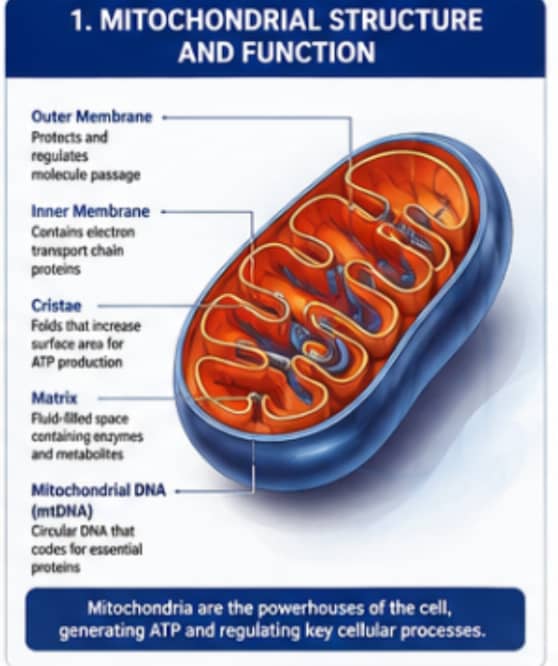
Although mitochondria are commonly described as simple energy-producing organelles, their structure is remarkably sophisticated.
Each mitochondrion consists of:
| Structure | Primary Function |
| Outer membrane | Separates mitochondria from the surrounding cytoplasm |
| Inner membrane | house the electron transport chain responsible for ATP production |
| Cristae | Folded inner membrane structures that increase surface area for energy generation |
| Matrix | Contains enzymes involved in metabolism and mitochondrial DNA |
| Mitochondrial DNA (mtDNA) | Encodes proteins essential for mitochondrial function |
The highly folded cristae allow mitochondria to produce ATP efficiently by accommodating numerous protein complexes involved in oxidative phosphorylation.
ATP: The Cell’s Energy Currency
Every biological process requiring energy depends on ATP.
Cells continuously consume ATP to support:
- Protein synthesis
- DNA replication
- Active transport
- Muscle contraction
- Cell signaling
- Tissue repair
- Cellular maintenance
Without sufficient ATP production, cellular function becomes less efficient, making mitochondrial energy metabolism a major focus of laboratory research.
How ATP Is Produced
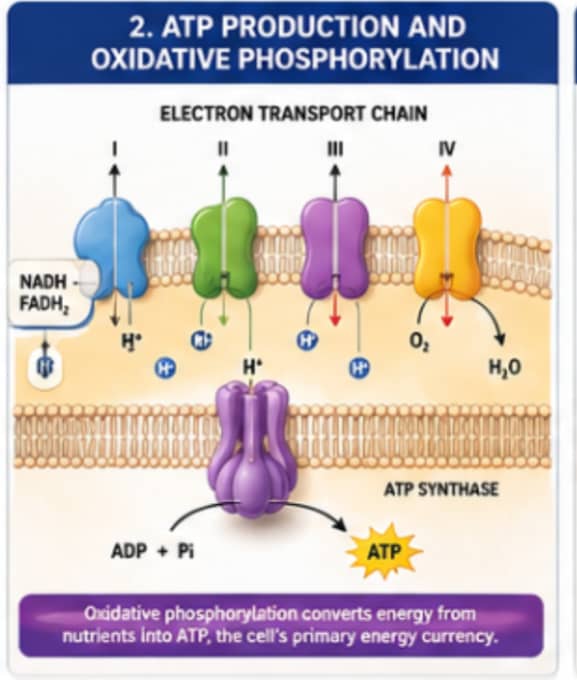
ATP production involves several coordinated stages:
- Nutrients are broken down during glycolysis and the citric acid cycle.
- Electrons are transferred to NADH and FADH₂.
- These molecules donate electrons to the electron transport chain.
- A proton gradient forms across the inner mitochondrial membrane.
- ATP synthase uses this gradient to generate ATP.
Because each step depends on mitochondrial integrity, researchers are interested in peptides that may influence these processes under experimental conditions.
Oxidative Phosphorylation
Oxidative phosphorylation is the primary mechanism by which mitochondria convert energy from nutrients into ATP.
The process involves five major protein complexes embedded within the inner mitochondrial membrane.
| Complex | Primary Function |
| Complex I | Accepts electrons from NADH |
| Complex II | Accepts electrons from FADH₂ |
| Complex III | Transfers electrons further down the chain |
| Complex IV | Uses oxygen as the final electron acceptor |
| Complex V (ATP Synthase) | Produces ATP |
This highly coordinated process allows cells to generate large amounts of usable energy while maintaining metabolic efficiency.
Reactive Oxygen Species (ROS)

During oxidative phosphorylation, mitochondria naturally produce reactive oxygen species (ROS).
Examples include:
- Superoxide
- Hydrogen peroxide
- Hydroxyl radicals
Contrary to popular belief, ROS are not inherently harmful.
At normal levels, ROS help regulate:
- Cell signaling
- Immune responses
- Cellular adaptation
- Stress responses
Problems arise when ROS production exceeds the cell’s antioxidant defenses, creating oxidative stress.
Oxidative Stress and Aging Research
Oxidative stress has become one of the most extensively studied aspects of mitochondrial biology.
Researchers investigate how excessive oxidative stress may influence:
- Protein damage
- Lipid oxidation
- DNA integrity
- Cellular signaling
- Mitochondrial efficiency
Several mitochondrial peptides are studied because of their interactions with pathways involved in oxidative stress regulation.
Mitochondrial DNA (mtDNA)
Unlike most cellular structures, mitochondria possess their own DNA.
Mitochondrial DNA contains genes required for:
- ATP production
- Electron transport proteins
- Mitochondrial protein synthesis
Because mtDNA is located close to the electron transport chain, it is continually exposed to reactive oxygen species.
Researchers continue investigating how mitochondrial DNA integrity influences cellular function and healthy aging.
Calcium Regulation
Calcium is one of the body’s most important intracellular signaling molecules.
Mitochondria help regulate calcium concentrations by temporarily storing calcium ions when needed.
Proper calcium regulation influences:
- Muscle contraction
- Cellular communication
- Enzyme activation
- ATP production
- Programmed cell death
Disturbances in calcium homeostasis are actively studied in laboratory models of mitochondrial dysfunction.
Mitophagy: Recycling Damaged Mitochondria
Cells continuously monitor mitochondrial quality.
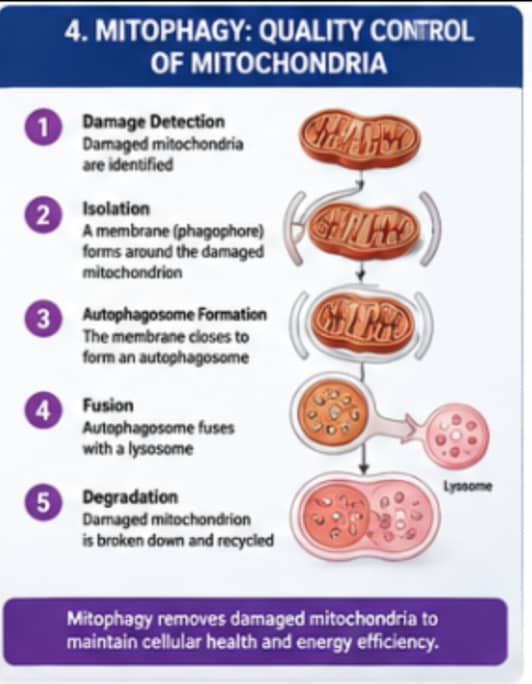
When mitochondria become damaged or inefficient, they can be removed through mitophagy, a specialized form of autophagy.
Mitophagy helps:
- Remove dysfunctional mitochondria
- Reduce oxidative stress
- Maintain efficient ATP production
- Preserve cellular health
Researchers consider mitophagy one of the body’s most important mitochondrial quality-control systems.
Mitochondrial Biogenesis
While mitophagy removes damaged mitochondria, mitochondrial biogenesis creates new ones.
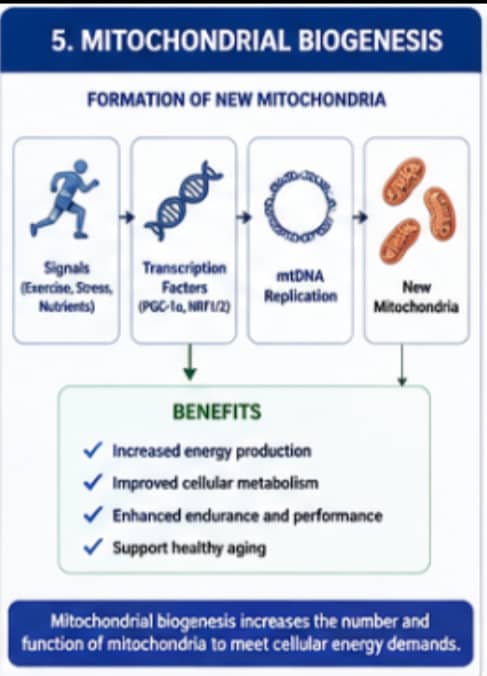
This process increases mitochondrial number and supports cellular energy requirements.
Researchers study mitochondrial biogenesis because it influences:
- Energy metabolism
- Exercise physiology
- Cellular adaptation
- Tissue maintenance
- Healthy aging research
Several peptides featured later in this guide are investigated for their relationship with mitochondrial biogenesis.
Cellular Metabolism
Mitochondria function as central regulators of cellular metabolism.
They help determine how cells use:
- Carbohydrates
- Fatty acids
- Amino acids
This metabolic flexibility enables cells to adapt to changing energy demands.
Because metabolism influences nearly every biological system, mitochondrial peptides continue attracting attention across numerous scientific disciplines.
Why Mitochondria Matter in Healthy Aging Research
One reason mitochondria receive so much attention is their close relationship with many hallmarks of aging.
Experimental studies have associated mitochondrial dysfunction with changes in:
- Energy metabolism
- Oxidative stress
- Cellular signaling
- Tissue maintenance
- Stem cell function
- Cellular resilience
Rather than viewing mitochondria simply as energy producers, researchers increasingly recognize them as central coordinators of cellular homeostasis.
Comparison Table: Major Areas of Mitochondrial Research
| Research Area | Why It Matters | Example Peptides Under Investigation |
| ATP Production | Supports cellular energy | SS-31, MOTS-c |
| Oxidative Phosphorylation | Generates ATP | SS-31 |
| Oxidative Stress | Maintains redox balance | Humanin, GHk-Cu, SS-31 |
| Mitophagy | Removes damaged mitochondria | MOTS-c, SS-31 |
| Mitochondrial Biogenesis | Creates new mitochondria | MOTS-c |
| Mitochondrial DNA | Supports mitochondrial proteins | Epitalon (indirect areas of investigation) |
| Cellular Metabolism | Coordinates energy use | MOTS-c |
| Calcium Regulation | Cellular signaling | SS-31 (active area of research) |
Note: The peptides listed above are examples of compounds being investigated in research settings. Their inclusion does not imply established clinical effects.
NovaSyn Labs Insight
Over more than two decades supplying laboratory-grade peptides, NovaSyn Labs has observed that mitochondrial research is becoming increasingly multidisciplinary.
Researchers no longer focus solely on ATP production. Instead, many laboratories investigate how mitochondrial biology intersects with oxidative stress, inflammation, tissue maintenance, cellular metabolism, and healthy aging. This broader perspective has led to growing interest in combining mitochondria-targeting peptides with longevity and recovery peptides to better understand these interconnected systems.
Key Takeaways
- Mitochondria are essential regulators of cellular energy, metabolism, and signaling—not just ATP production.
- Mitochondrial dysfunction is a major area of investigation in healthy aging, exercise physiology, neurobiology, and metabolic research.
- Processes such as oxidative phosphorylation, mitophagy, mitochondrial biogenesis, calcium regulation, and mtDNA maintenance are central to mitochondrial research.
- Different research peptides target different aspects of mitochondrial biology, making peptide selection dependent on the specific scientific question being investigated.
- The next section explores the leading mitochondria-focused peptides—including SS-31 (Elamipretide), MOTS-c, and Humanin—their mechanisms under investigation, and how researchers are studying their roles in mitochondrial function.
SS-31 (Elamipretide)
Overview
SS-31, also known as Elamipretide, is one of the most extensively studied mitochondria-targeting peptides. Unlike many peptides that interact with cell surface receptors, SS-31 is investigated because it selectively accumulates within mitochondria and interacts with cardiolipin, a unique phospholipid found in the inner mitochondrial membrane.
Because cardiolipin is essential for maintaining the structure and function of the electron transport chain, SS-31 has become a major focus in mitochondrial bioenergetics research.
Mitochondrial Pathways Under Investigation
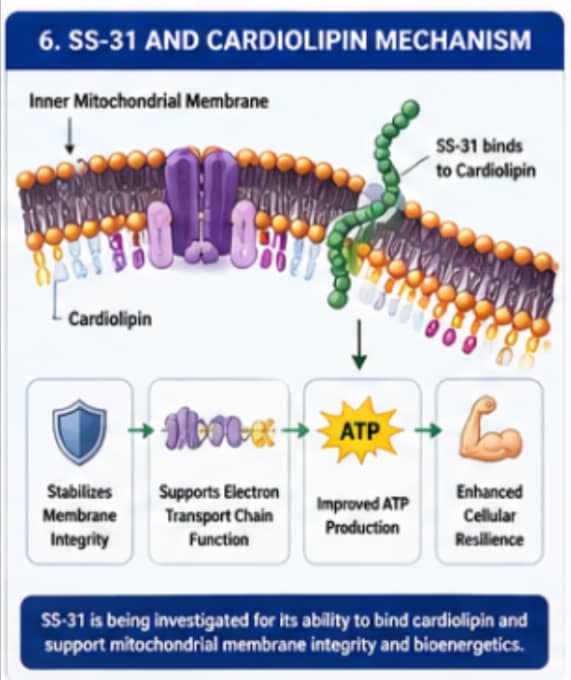
Researchers have investigated SS-31 in relation to:
- Mitochondrial membrane integrity
- Cardiolipin stabilization
- ATP production
- Oxidative phosphorylation
- Reactive oxygen species (ROS)
- Calcium regulation
- Mitophagy
- Cellular resilience
Why Cardiolipin Matters
Cardiolipin helps organize the protein complexes responsible for oxidative phosphorylation.
When cardiolipin integrity is disrupted, researchers have observed changes in:
- ATP synthesis
- Electron transport efficiency
- Reactive oxygen species production
- Mitochondrial membrane stability
Understanding these interactions has made cardiolipin one of the most actively studied components of mitochondrial biology.
Current Research Highlights
Experimental studies have explored whether SS-31 may:
- Support mitochondrial membrane stability
- Influence mitochondrial bioenergetics
- Reduce markers associated with oxidative stress
- Improve mitochondrial efficiency in laboratory models
These findings continue to be investigated across different experimental systems.
Summary Table: SS-31
| Characteristics | Details |
| Primary Target | Cardiolipin |
| Main Pathways | Oxidative phosphorylation, ATP production, oxidative stress |
| Research Focus | Mitochondrial bioenergetics |
| Laboratory applications | Healthy aging, cardiovascular, skeletal muscle, neurology |
MOTS-c
Overview
MOTS-c is a naturally occurring peptide encoded by mitochondrial DNA (mtDNA), making it unique among research peptides.
Rather than simply participating in mitochondrial function, MOTS-c is believed to act as a signaling molecule that helps cells adapt to metabolic stress.
Because metabolism and mitochondrial health are closely connected, MOTS-c has become one of the fastest-growing areas of mitochondrial peptide research.
NovaSyn Labs has observed rapidly increasing demand for MOTS-c among university laboratories studying longevity, exercise physiology, and metabolic regulation.
Mitochondrial Pathways Under Investigation
Current research includes:
- AMPK activation
- Cellular metabolism
- Mitochondrial biogenesis
- Exercise physiology
- Oxidative stress
- Energy homeostasis
Why AMPK Matters
AMPK functions as the cell’s primary energy sensor.
When energy availability declines, AMPK shifts cellular activity toward:
- Energy conservation
- ATP production
- Autophagy
- Mitochondrial maintenance
Researchers continue investigating how MOTS-c interacts with these adaptive pathways.
Current Research Highlights
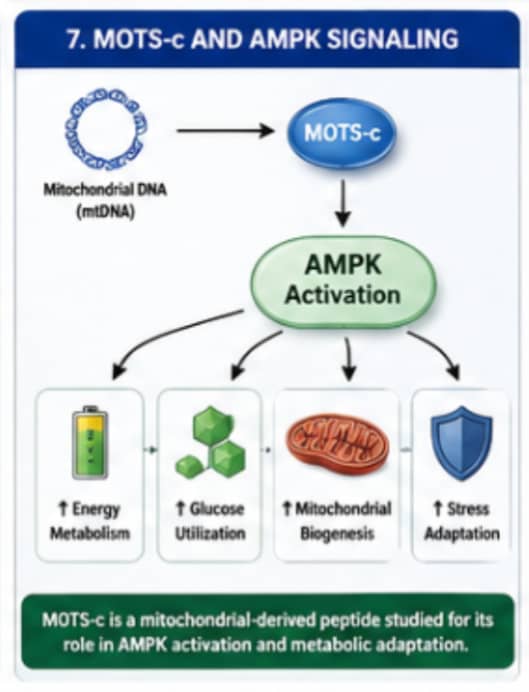
Studies have explored whether MOTS-c may:
- Influence metabolic flexibility
- Support mitochondrial adaptation
- Promote AMPK-associated signaling
- Affect cellular responses to metabolic stress
These observations remain active areas of scientific investigation.
Summary Table: MOTS-c
| Characteristics | Details |
| Primary Target | Cellular metabolism |
| Main Pathways | AMPK, mitochondrial biogenesis, oxidative stress |
| Research Focus | Energy metabolism |
| Laboratory Applications | Exercise physiology, metabolism, healthy aging |
Humanin
Overview
Humanin is another peptide encoded within mitochondrial DNA.
Unlike peptides primarily investigated for ATP production, Humanin has attracted scientific attention because of its interactions with cellular stress responses and mitochondrial signaling.
Researchers are studying Humanin across several disciplines, including neurobiology, cardiovascular biology, and healthy aging.

Mitochondrial Pathways Under Investigation
Current research includes:
- Oxidative stress
- Cellular stress responses
- Mitochondrial signaling
- Apoptosis regulation
- Cellular homeostasis
Why Cellular Stress Responses Matter
Cells constantly encounter:
- Oxidative stress
- DNA damage
- Protein misfolding
- Metabolic challenges
Humanin is being investigated to better understand how cells respond to these stresses while maintaining mitochondrial integrity.
Current Research Highlights
Researchers have examined whether Humanin may:
- Influence mitochondrial stress signaling
- Support cellular resilience
- Interact with oxidative stress pathways
- Affect programmed cell death mechanisms
Additional research is needed to clarify these mechanisms across different biological models.
Summary Table: Humanin
| Characteristics | Details |
| Primary Target | Cellular stress responses |
| Main Pathways | Oxidative stress, apoptosis, mitochondrial signaling |
| Research Focus | Cellular resilience |
| Laboratory Applications | Neurobiology, cardiovascular research, healthy aging |
Comparing SS-31 and MOTS-c
Although both peptides are investigated in mitochondrial research, they target different aspects of mitochondrial biology.
| Feature | SS-31 | MOTS-c |
| Primary Target | Cardiolipin | Cellular metabolism |
| Main Focus | Mitochondrial membrane integrity | AMPK signaling |
| ATP Production | Indirect area of investigation | Indirect area of investigation |
| Mitochondrial Biogenesis | Limited investigation | Major area of research |
| Exercise Physiology | Active research | Major research focus |
| Oxidative Stress | Yes | Yes |
| Healthy Aging Research | Yes | Yes |
Rather than viewing one peptide as “better,” researchers typically select between them according to the biological questions being investigated.
Why Researchers Combine Mitochondrial Peptides
NovaSyn Labs has observed a growing trend toward combination-based mitochondrial research.
Instead of studying isolated pathways, researchers increasingly investigate complementary peptide combinations.
Examples include:
| Research Objective | Peptides Commonly Investigated |
| ATP production + mitochondrial integrity | SS-31 + MOTS-c |
| Oxidative stress + cellular resilience | Humanin + SS-31 |
| Mitochondrial function + healthy aging | MOTS-c + Humanin |
This systems-based approach reflects the understanding that mitochondrial biology involves interconnected pathways rather than a single molecular mechanism.
Mitochondrial Peptides vs. Recovery Peptides
Researchers frequently ask how mitochondrial peptides differ from recovery peptides.
| Mitochondrial Peptides | Recovery Peptides |
| Focus on mitochondrial biology | Focus on tissue repair biology |
| Investigate ATP production | Investigate regenerative pathways |
| Examine oxidative phosphorylation | Examine extracellular matrix remodeling |
| Study mitophagy | Study tissue regeneration |
| Explore metabolic adaptation | Explore healing-related biology |
Although these categories overlap in some research settings, they are designed to investigate different biological questions.
NovaSyn Labs Insight
During the past several years, NovaSyn Labs has observed a notable increase in requests from university laboratories investigating mitochondrial function. Many research groups now combine mitochondria-targeting peptides with recovery or longevity peptides to explore how mitochondrial biology interacts with tissue maintenance, oxidative stress, and cellular metabolism.
This trend reflects a broader shift toward systems biology, where researchers examine how multiple pathways work together rather than studying isolated mechanisms.
Key Takeaways
- SS-31 is primarily investigated for its interactions with cardiolipin and mitochondrial membrane integrity.
- MOTS-c is a mitochondrial-derived peptide studied for AMPK signaling, energy metabolism, and mitochondrial biogenesis.
- Humanin is investigated for its role in cellular stress responses, oxidative stress, and mitochondrial signaling.
- Each peptide has distinct biological targets, making research objective–based selection essential.
- Increasingly, researchers combine mitochondrial peptides to explore the complex interactions among metabolism, oxidative stress, and healthy aging.
BPC-157
Overview
BPC-157 is a synthetic peptide widely investigated for its role in tissue biology, angiogenesis-related signaling, and cellular repair. Although it is not considered a mitochondria-specific peptide, researchers are exploring how tissue repair and mitochondrial function interact in experimental models.
Healthy mitochondria provide the energy required for tissue maintenance and regeneration. Conversely, efficient tissue repair depends on adequate cellular energy production. This relationship has made BPC-157 an area of growing interest in studies examining the connection between regeneration and mitochondrial biology.
Mitochondrial Pathways Under Investigation
Current laboratory research has explored BPC-157 in relation to:
- Cellular metabolism
- Oxidative stress
- Angiogenesis-related signaling
- Tissue regeneration
- Cellular resilience
Research Highlights
Experimental studies have investigated whether BPC-157 may:
- Influence cellular responses to oxidative stress
- Support tissue maintenance in laboratory models
- Affect signaling pathways involved in regeneration
- Complement studies involving mitochondrial function
Further investigation is needed to understand these interactions across different experimental systems.
Summary Table: BPC-157
| Characteristic | Details |
| Primary Focus | Tissue repair biology |
| Main Pathways | Oxidative stress, cellular metabolism |
| Research Interest | Regenerative biology |
| Laboratory Applications | Tissue maintenance and recovery research |
ARA-290
Overview
ARA-290 is an erythropoietin-derived peptide investigated for its interactions with tissue-protective signaling pathways. Researchers are particularly interested in how inflammatory signaling influences mitochondrial health and cellular resilience.
Because mitochondria help coordinate cellular stress responses, ARA-290 has become an important subject in studies examining tissue protection and metabolic adaptation.
Mitochondrial Pathways Under Investigation
Current research includes:
- Cellular stress responses
- Oxidative stress
- Inflammatory signaling
- Tissue protection
- Cellular metabolism
Research Highlights
Laboratory investigations have explored whether ARA-290 may:
- Influence tissue-protective pathways
- Modulate inflammatory signaling
- Affect oxidative stress responses
- Support studies of mitochondrial resilience
Summary Table: ARA-290
| Characteristics | Details |
| Primary Focus | Tissue protection |
| Main Pathways | Oxidative stress, inflammation |
| Research Interest | Cellular resilience |
| Laboratory Applications | Regenerative and metabolic research |
GHK-Cu
Overview
GHK-Cu is a naturally occurring copper-binding peptide investigated for its effects on cellular signaling, extracellular matrix biology, and oxidative stress.
Although GHK-Cu is best known for tissue biology research, scientists are increasingly examining how oxidative stress influences mitochondrial function and healthy aging.
Mitochondrial Pathways Under Investigation
Researchers have explored GHK-Cu in relation to:
- Oxidative stress
- Cellular signaling
- Gene expression
- Tissue maintenance
- Stem cell biology
Research Highlights
Studies have investigated whether GHK-Cu may:
- Influence antioxidant-related pathways
- Affect gene expression associated with cellular maintenance
- Support extracellular matrix organization
- Interact with oxidative stress mechanisms relevant to mitochondrial research
Summary Table: GHK-Cu
| Characteristics | Details |
| Primary Focus | Cellular signaling |
| Main Pathways | Oxidative stress, gene expression |
| Research Interest | Tissue biology and healthy aging |
| Laboratory Applications | Regenerative research |
Epitalon
Overview
Epitalon has become one of the best-known peptides in longevity research because of studies examining telomere biology and cellular aging.
Although Epitalon does not directly target mitochondria, researchers increasingly investigate how telomere maintenance and mitochondrial function influence one another during healthy aging.
Mitochondrial Pathways Under Investigation
Experimental research has examined Epitalon in relation to:
- Mitochondrial DNA integrity
- Oxidative stress
- Cellular senescence
- Healthy aging
- Cellular metabolism
Research Highlights
Scientists continue investigating whether Epitalon may:
- Influence cellular stress responses
- Affect telomere-related pathways
- Interact indirectly with mitochondrial function
- Support healthy aging research models
Summary Table: Epitalon
| Characteristics | Details |
| Primary Focus | Telomere biology |
| Main Pathways | Oxidative stress, cellular senescence |
| Research Interest | Healthy aging |
| Laboratory Applications | Longevity research |
Why Researchers Combine Mitochondrial and Longevity Peptides
One of the most noticeable trends observed by NovaSyn Labs is the increasing use of peptide combinations designed to investigate complementary biological pathways.
Instead of focusing on one pathway, researchers frequently study combinations that examine mitochondrial function alongside tissue maintenance, oxidative stress, inflammation, or cellular aging.
Examples include:
| Research Objective | Peptides Commonly Investigated |
| Mitochondrial integrity + metabolism | SS-31 + MOTS-c |
| Mitochondrial function + tissue repair | SS-31 + BPC-157 |
| Oxidative stress + cellular signaling | Humanin + GHK-Cu |
| Healthy aging + mitochondrial biology | MOTS-c + Epitalon |
| Tissue protection + mitochondrial resilience | ARA-290 + SS-31 |
The selection of peptide combinations depends on the experimental hypothesis and should be evaluated within carefully controlled laboratory studies.
Mitochondrial Peptides vs. Longevity Peptides
Although there is overlap, these peptide categories generally focus on different research questions.
| Mitochondrial Peptides | Longevity Peptides |
| Investigate ATP production | Investigate cellular aging |
| Study mitochondrial integrity | Study telomere biology |
| Examine oxidative phosphorylation | Examine senescence |
| Focus on bioenergetics | Focus on healthy aging pathways |
| Explore mitophagy | Explore stem cell signaling |
Many researchers now combine these approaches to better understand how mitochondrial biology contributes to aging.
Expert Insights from NovaSyn Labs
Why Peptide Purity Matters in Mitochondrial Assays
One lesson we’ve learned from supplying laboratory-grade peptides since 2000 is that peptide quality can significantly influence research consistency.
Mitochondrial assays often measure subtle biological changes. Variability in peptide quality may introduce unnecessary experimental noise, making it more difficult to interpret results accurately.
For this reason, NovaSyn Labs provides:
- ≥98% purity
- Batch-specific Certificates of Analysis (COAs)
- Cold-chain shipping where appropriate
- Storage recommendations designed to help maintain peptide stability
Why Storage Conditions Matter
Researchers sometimes underestimate the importance of proper peptide handling.
Recommended practices include:
- Maintaining recommended storage temperatures
- Preparing single-use aliquots where appropriate
- Avoiding repeated freeze-thaw cycles
- Allowing lyophilized vials to reach room temperature before opening to minimize moisture condensation
These procedures can help maintain sample integrity and support reproducible laboratory research.
Why Experimental Design Matters More Than Peptide Selection Alone
Even high-quality peptides cannot compensate for weaknesses in experimental design.
Reliable mitochondrial research depends on:
- Clearly defined research objectives
- Appropriate controls
- Standardized laboratory protocols
- Consistent sample preparation
- Proper statistical analysis
Peptide selection is only one component of producing meaningful scientific data.
Exclusive NovaSyn Labs Case Study
Improved Consistency in Mitochondrial Research
A university-affiliated research laboratory investigating mitochondrial function experienced variability in peptide-based assays across multiple experimental runs.
After reviewing their workflow, the team implemented standardized peptide handling procedures, including:
- Storing lyophilized peptides at recommended temperatures
- Preparing single-use aliquots
- Minimizing repeated freeze-thaw cycles
- Allowing vials to reach room temperature before opening to reduce moisture condensation
Observed Outcome
Over the following weeks, researchers reported:
- More consistent assay performance
- Reduced variability between experimental replicates
- Improved confidence in data interpretation
- Better workflow standardization
Although experimental outcomes continued to depend on study design, reagent quality, and laboratory technique, the standardized handling protocol contributed to improved reproducibility.
Key takeaway: Proper peptide storage and handling are important factors in maintaining sample integrity and supporting reproducible mitochondrial research workflows. Individual laboratory results may vary depending on experimental conditions.
Comprehensive Comparison of Featured Peptides
| Peptide | Primary Target | Main Mitochondrial Pathway | Primary Research Focus |
| SS-31 | Cardiolipin | Oxidative phosphorylation | Bioenergetics |
| MOTS-c | AMPK | Mitochondrial biogenesis | Energy metabolism |
| Humanin | Cellular stress | Oxidative stress | Cellular resilience |
| BPC-157 | Tissue biology | Cellular metabolism | Regenerative biology |
| ARA-290 | Tissue protection | Oxidative stress | Cellular resilience |
| GHK-Cu | Cellular signaling | Oxidative stress | Tissue maintenance |
| Epitalon | Telomere biology | Healthy aging pathways | Longevity research |
Key Takeaways
- Not all peptides investigated in mitochondrial research act directly on mitochondria; many influence complementary biological pathways such as oxidative stress, inflammation, tissue maintenance, and cellular metabolism.
- Researchers increasingly combine mitochondrial and longevity peptides to study the complex interactions underlying healthy aging and cellular resilience.
- High peptide purity, proper storage, and standardized laboratory protocols are essential for obtaining reproducible mitochondrial research results.
- Experimental design remains one of the most important factors influencing research quality and data interpretation.
Common Misconceptions About Mitochondrial Peptides
As mitochondrial peptide research has expanded, several misconceptions have become increasingly common. Understanding these misconceptions helps researchers design more rigorous studies and interpret findings more appropriately.
Misconception 1: Every Mitochondrial Peptide Works the Same Way
One of the most common misunderstandings is assuming that all mitochondrial peptides share identical mechanisms.
In reality, each peptide is investigated for different biological targets.
| Peptide | Primary Research Focus |
| SS-31 | Cardiolipin and mitochondrial membrane integrity |
| MOTS-c | AMPK signaling and energy metabolism |
| Humanin | Cellular stress responses |
| Epitalon | Telomere biology and healthy aging |
| BPC-157 | Tissue biology and cellular repair |
| GHK-Cu | Oxidative stress and cellular signaling |
| ARA-290 | Tissue-protective signaling |
Selecting a peptide should always begin with the scientific question being investigated rather than assuming one peptide is universally applicable.
Misconception 2: More Peptide Always Produces Better Results
Increasing the amount of a peptide does not necessarily improve experimental outcomes.
Reliable studies depend on:
- Appropriate experimental controls
- Standardized dosing protocols
- Proper statistical analysis
- Validated laboratory methods
Dose selection should be based on published research protocols and the objectives of the study rather than assuming that larger quantities produce stronger or more meaningful findings.
Misconception 3: Mitochondrial Peptides Directly “Boost Energy”
Mitochondrial peptides are being investigated because they may interact with biological pathways involved in mitochondrial function.
However, research findings should not be interpreted as evidence that these peptides directly increase energy in people. Laboratory studies explore mechanisms under controlled experimental conditions, and those findings should not be generalized beyond the scope of the research.
Misconception 4: Storage Conditions Have Little Impact
One of the most overlooked aspects of peptide research is storage.
Even high-quality peptides can lose stability if handled improperly.
To help maintain sample integrity:
- Store peptides according to the manufacturer’s recommendations.
- Minimize repeated freeze-thaw cycles.
- Use single-use aliquots when appropriate.
- Allow refrigerated or frozen lyophilized vials to reach room temperature before opening to reduce moisture condensation.
Misconception 5: One Peptide Can Answer Every Mitochondrial Research Question
Mitochondrial biology is extraordinarily complex.
Researchers may investigate:
- ATP production
- Mitophagy
- Oxidative stress
- Calcium signaling
- Mitochondrial DNA
- Cellular metabolism
- Healthy aging pathways
No single peptide addresses every research objective. Selecting the most appropriate peptide depends on the specific hypothesis and experimental design.
Laboratory Best Practices for Mitochondrial Peptide Research
Based on NovaSyn Labs’ experience supplying laboratory-grade peptides since 2000, several practices consistently support high-quality, reproducible research.
1. Select Peptides Based on Research Objectives
Begin with a clearly defined hypothesis before selecting peptides.
For example:
| Research Goal | Example Peptide(s) Under Investigation |
| Mitochondrial membrane integrity | SS-31 |
| Energy metabolism | MOTS-c |
| Cellular stress responses | Humanin |
| Healthy aging | Epitalon |
| Tissue biology | BPC-157 |
| Oxidative stress | GHK-Cu |
2. Review the Certificate of Analysis (COA)
A batch-specific COA provides important quality information, including:
- Peptide identity
- Purity
- Analytical testing results
- Batch traceability
Reviewing this documentation helps researchers maintain confidence in the materials used throughout a study.
3. Maintain the Cold Chain
Temperature can affect peptide stability.
Where appropriate, maintain recommended cold-chain conditions during shipping, storage, and laboratory handling.
4. Minimize Freeze-Thaw Cycles
Repeated freeze-thaw cycles may contribute to peptide degradation over time.
Preparing single-use aliquots can help preserve peptide integrity during long-term research projects.
5. Standardize Laboratory Procedures
Consistency across experiments is essential.
Standardize:
- Sample preparation
- Storage conditions
- Reconstitution procedures
- Instrument calibration
- Data collection methods
Reducing variability improves reproducibility and confidence in research findings.
Frequently Asked Questions
What role do peptides play in mitochondrial research?
Researchers investigate peptides to better understand mitochondrial biology, including ATP production, oxidative stress, mitochondrial biogenesis, cellular metabolism, and healthy aging pathways.
Which peptides are commonly studied in mitochondrial research?
Frequently studied peptides include:
- SS-31 (Elamipretide)
- MOTS-c
- Humanin
- BPC-157
- ARA-290
- GHK-Cu
- Epitalon
Each peptide is investigated for different biological pathways and research applications.
Why is mitochondrial research important?
Mitochondria regulate energy production, metabolism, cellular signaling, oxidative stress, and programmed cell death. Understanding these processes may provide valuable insights into cellular biology and healthy aging.
Why is peptide purity important?
High-purity peptides help reduce unwanted variability in laboratory experiments and support reproducible research. NovaSyn Labs supplies peptides manufactured to ≥98% purity, with a batch-specific Certificate of Analysis (COA).
How should research peptides be stored?
Storage recommendations vary by product, but researchers commonly:
- Store peptides at the recommended temperature.
- Minimize freeze-thaw cycles.
- Prepare aliquots when appropriate.
- Follow the manufacturer’s handling guidance.
Why do researchers combine mitochondrial peptides?
Combination studies allow researchers to investigate complementary biological pathways, such as mitochondrial function, oxidative stress, tissue biology, and healthy aging, within the same experimental framework.
Conclusion
Mitochondria are far more than cellular powerhouses. They regulate energy metabolism, oxidative phosphorylation, calcium signaling, mitophagy, mitochondrial DNA maintenance, and numerous biological pathways essential to cellular function.
As scientific understanding of mitochondrial biology continues to evolve, peptides have become valuable research tools for exploring these interconnected systems. Rather than focusing on a single mechanism, today’s researchers increasingly investigate how mitochondrial integrity interacts with oxidative stress, tissue maintenance, metabolism, and healthy aging.
At NovaSyn Labs, we have witnessed this shift firsthand. Since 2000, demand for mitochondria-focused peptides has grown steadily, particularly among universities and research laboratories studying longevity, bioenergetics, and exercise physiology. Researchers are also increasingly combining mitochondria-targeting peptides with recovery and longevity peptides to better understand the complex biology underlying cellular function.
Regardless of the peptide selected, successful mitochondrial research depends on more than the compound itself. High peptide purity, proper storage, standardized laboratory protocols, and carefully designed experiments all contribute to producing reliable, reproducible scientific data.
As the field continues to advance, these best practices will remain fundamental to high-quality mitochondrial research.
Related Articles
- How Do Peptides Influence Cellular Aging Pathways
- How Is Peptide Purity Maintained During Storage
- Most Studied Peptides For Tissue Repair Research
References

